
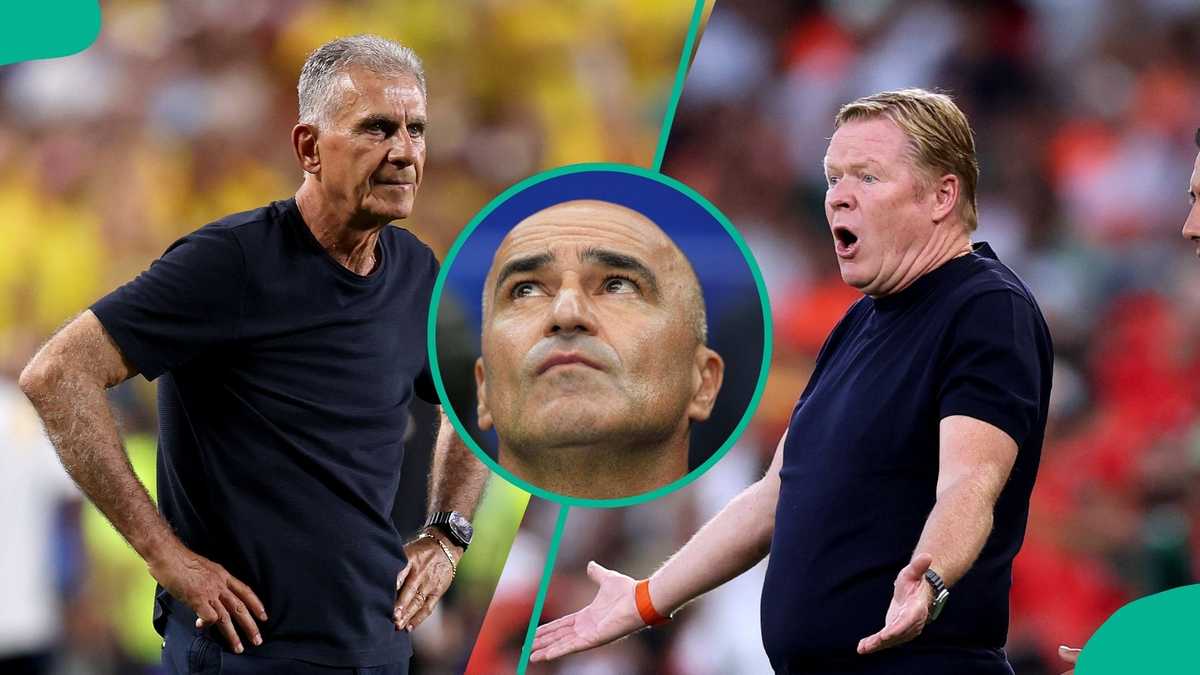
What happened to coaches at the 2026 World Cup?
The 2026 FIFA World Cup, hosted across the United States, Canada and Mexico, did not just produce drama on the pitch — it ended careers in the dugout. Nine national team coaches lost their jobs during or immediately after the tournament, either through resignation or dismissal. Six managed European sides, one led an African nation, one a South American team and one an Asian squad.
Their exits ranged from group-stage humiliations to painful penalty shootout defeats in the knockout rounds. Here is a full account of who went, why, and how their teams performed.
Which coaches resigned or were sacked, and what went wrong?
Carlos Queiroz — Ghana
Portuguese tactician Carlos Queiroz resigned after Ghana’s 1-0 defeat to Colombia in the Round of 32. The Black Stars had actually performed creditably in the group stage, finishing second in Group L with five points. They drew with Croatia, beat Panama and held England — a respectable set of results.
The Colombian hurdle proved one step too far. Queiroz accepted full responsibility for the defeat and walked away. Ghana’s prize money from the tournament was still substantial: the GFA collected $13.5 million in participation and preparation funding, with a further $11 million for reaching the Round of 32.
Julian Nagelsmann — Germany
Germany’s exit was the tournament’s most shocking managerial casualty. Julian Nagelsmann stepped down after the four-time world champions were knocked out in the Round of 32 by Paraguay — on penalties. Before that defeat, Germany had topped Group E with seven points, beating Curacao and Ivory Coast while drawing with Ecuador.
The penalty shootout loss was historic for the wrong reasons: it was Germany’s first-ever World Cup knockout defeat on spot kicks. Nagelsmann did not survive the embarrassment.
Sebastian Beccacece — Ecuador
Ecuador’s campaign ended before the knockout rounds, and Sebastian Beccacece paid the price. The South Americans finished third in Group E with just two points — draws against Germany and Curacao, followed by a defeat to Ivory Coast that ended their involvement.
Beccacece departed following the group-stage exit, his project unable to survive the pressure of a World Cup stage.
Ronald Koeman — Netherlands
Ronald Koeman resigned after the Netherlands were eliminated by Morocco on penalties in the Round of 32. The Dutch had looked sharp in the group stage, topping Group F with seven points — wins over Japan and Sweden, plus a draw against Tunisia.
The penalty exit against Morocco brought an abrupt end to what had seemed a promising campaign, and Koeman chose not to continue.
Miroslav Koubek — Czechia
Veteran coach Miroslav Koubek left his position after Czechia failed to advance from Group A. The Czechs lost to both South Korea and Mexico before salvaging a consolation win over South Africa, finishing bottom of the group on three points.
The result confirmed that Koubek’s tenure had run its course at the highest level of international competition.
Steve Clarke — Scotland
Steve Clarke stepped down after Scotland narrowly missed out on the knockout rounds. The Scots accumulated four points in Group C — drawing with Haiti, losing to Morocco and then beating Brazil in a result that briefly raised hopes of progression.
That victory over Brazil was not enough. Scotland fell short of qualification as one of the best third-placed teams, and Clarke ended his tenure on that bittersweet note.
Hong Myung-bo — South Korea
Former South Korea international Hong Myung-bo resigned following a deeply disappointing campaign. His side opened with a win over Czechia but then lost to both Mexico (1-0) and South Africa (1-0), finishing third in Group A and failing to reach the Round of 32.
The early exit was a bitter outcome for a squad that had come through qualifying unbeaten, and Hong paid for the underperformance with his job.
Zlatko Dalic — Croatia
Zlatko Dalic brought his successful tenure to a close after Croatia were eliminated in the Round of 16. The 2018 finalists had progressed from Group L with five points — draws against England and Panama, plus a win over Ghana — but could not replicate their earlier World Cup heroics.
Dalic leaves with a strong legacy in Croatian football, even if this tournament did not end as he would have hoped.
Roberto Martínez — Portugal
Roberto Martínez completed the list of departures after Portugal lost to Spain in the Round of 16. The Portuguese had advanced from Group K as runners-up, beating DR Congo and Uzbekistan before losing to Colombia in their final group match.
The defeat to Spain ended Portugal’s tournament and brought Martínez’s tenure to a close. His exit was expected given the manner of the knockout loss.
What does this wave of sackings tell us?
Nine coaches losing their jobs in a single tournament reflects the unforgiving nature of World Cup football. Expectations are high, the margins are thin and results — not performances — determine survival. For the coaches involved, the 2026 World Cup marked the end of a chapter.
For their nations, the search for the right successor begins now, with the next cycle of qualification already on the horizon.