
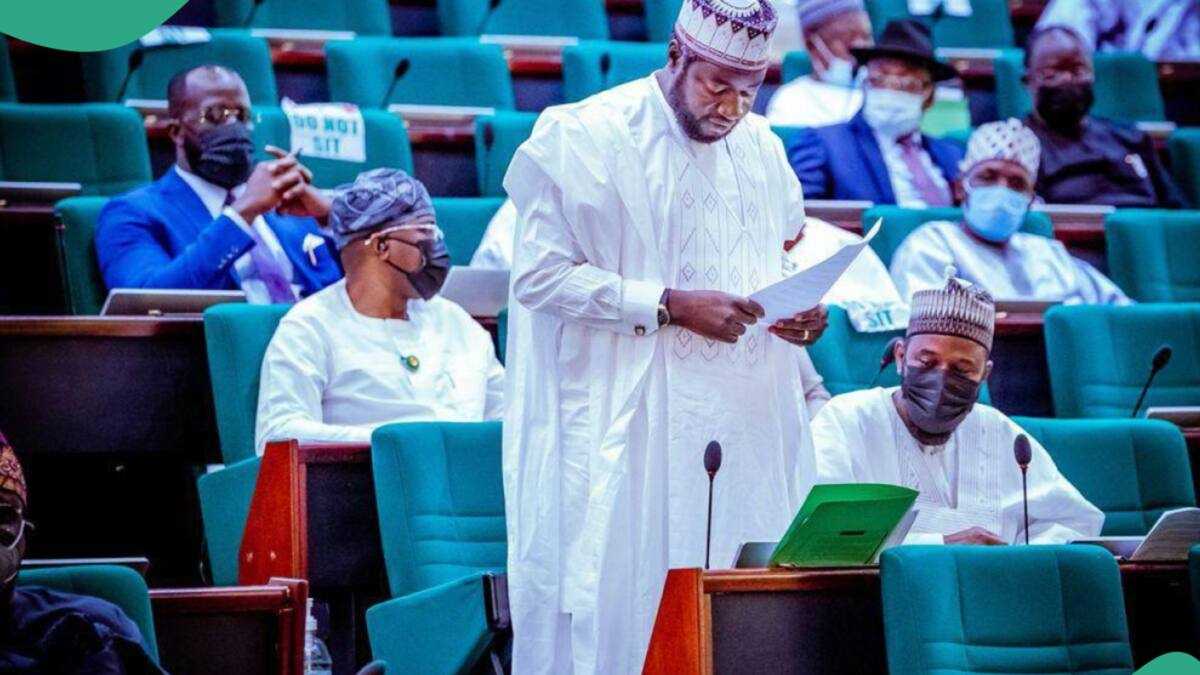
A federal lawmaker has drawn a hard line in the sand: Nigerians who deliberately take lives should forfeit their own. No rehabilitation, no reintegration — just justice.
Hon Yusuf Gagdi, who represents the Pankshin/Kanke/Kanam Federal Constituency in the House of Representatives, made his position clear during an interview on Silverbird Rhythm 93.7 FM in Jos on Saturday, 4 July 2026. Speaking without equivocation, he argued that the death penalty — not rehabilitation — is the only credible response to insurgents, bandits and violent criminals who murder Nigerian citizens. His thesis is simple and, to many Nigerians living under the shadow of insecurity, entirely reasonable: if the state had been executing killers consistently, the country’s security crisis would be far less severe today.
Gagdi’s argument rests on three interlocking points. The first is moral. In his view, the deliberate taking of a life forfeits any claim to state-funded second chances. “Any criminal, anybody that takes somebody’s life, should not be rehabilitated in the first instance,” he said plainly. This is not a fringe position — it reflects the frustration of millions of Nigerians in the North-Central and North-West who have watched their communities destroyed while the government funds rehabilitation programmes for the very people responsible.
The second point is practical, and it cuts to the heart of a genuine security failure. Gagdi alleged that security operatives have refused to participate in operations because they do not trust rehabilitated Boko Haram members embedded within their units. More damaging still, he claimed there are documented instances of so-called repentant fighters passing operational intelligence to criminal networks — intelligence used to ambush military convoys. “There are instances where those so-called rehabilitated people are the same people giving information to the criminals on how to ambush convoys of security agencies,” he stated. If those allegations are accurate, Nigeria’s rehabilitation programme is not merely wasteful; it is actively dangerous.
The third point is financial. The Nigerian government spent N1.4 billion over eighteen months rehabilitating repentant terrorists and constructing trial facilities. That figure sits uncomfortably alongside the scale of ongoing violence in affected communities. The Defence Headquarters recently confirmed that 117 repentant terrorists from Borno State completed the Disengagement, Rehabilitation and Reintegration programme under Operation Safe Corridor, with the Chief of Defence Staff, Gen Olufemi Oluyede, defending structured reintegration as essential to sustaining security gains. The government’s position is not without logic — some security analysts argue that reintegration, done properly, can dry up recruitment pipelines. But “done properly” is doing considerable heavy lifting in a country where oversight is weak and accountability for programme outcomes is rarely demanded.
The uncomfortable reality Gagdi is pointing at is this: Nigeria has spent public money, staked military trust and absorbed genuine operational risk on a rehabilitation model that has yet to demonstrate convincing results at scale. Secret trials at the Kainji Detention Facility convicted 325 terrorists, drawing criticism from civil society over transparency — a legitimate concern, but one that should not distract from the more fundamental question of whether the entire policy framework is fit for purpose. Gagdi’s call for capital punishment may not survive legal or constitutional scrutiny in its bluntest form, but the underlying demand — that the Nigerian state take the lives of its citizens seriously enough to impose severe, consistent consequences on those who destroy them — is one the Tinubu administration cannot afford to dismiss.