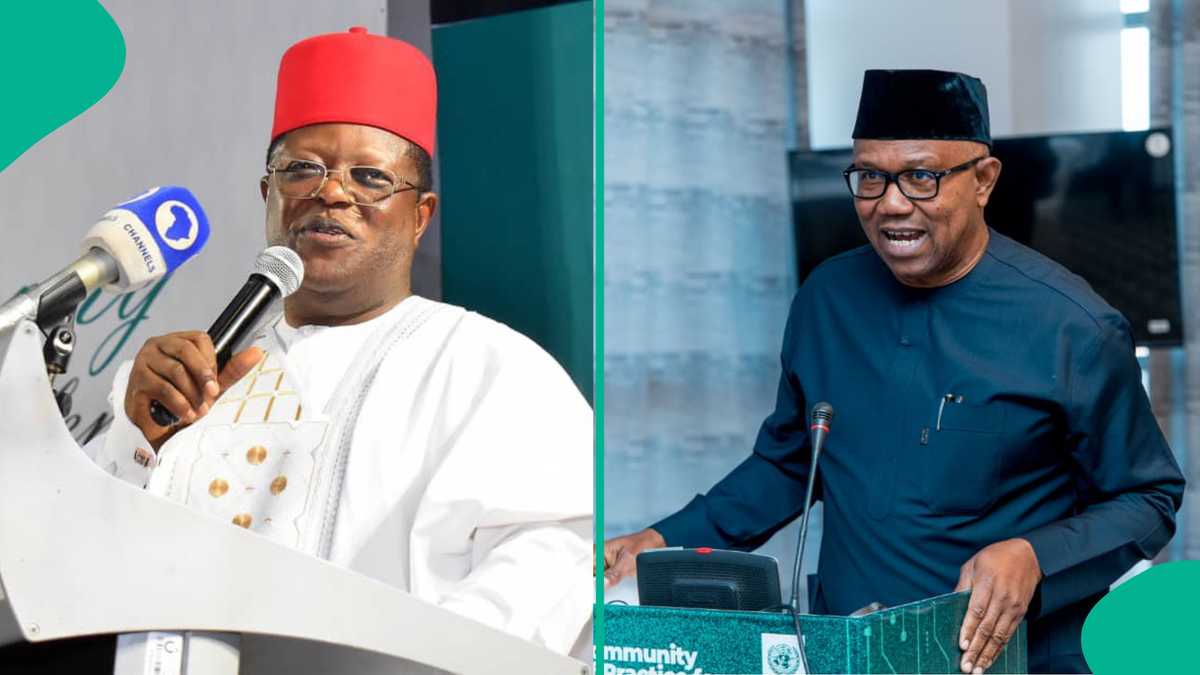
Minister of Works David Umahi has publicly challenged Peter Obi’s refusal to engage in a governance debate, claiming the Labour Party leader is avoiding direct comparison because his record as Anambra governor would not hold up under scrutiny. The row has sharpened ahead of the 2027 elections and raises pointed questions about what either man actually delivered in office.
The substance of Umahi’s challenge is straightforward: place both records side by side and let Nigerians decide. Obi’s World Cup analogy is clever, but it sidesteps the actual question. A debate about governance does not require both parties to be on the same ballot. The minister has stated his willingness to appear on any credible platform; the ball is firmly in Obi’s court.
The Savings Argument Under Pressure
Peter Obi built much of his political brand on fiscal prudence — the image of a governor who saved rather than squandered. That narrative has proven durable, particularly among younger voters frustrated by decades of looting and waste. Umahi is not the first to challenge it, but he is doing so in unusually direct terms.
The minister’s argument is that saving is not governing. Infrastructure left unbuilt, contractors left unpaid and local government democracy suspended for the bulk of a tenure are not footnotes — they are central to any honest assessment of what a governor actually did. Whether or not that critique lands with Obi’s supporters is another matter, but it is a legitimate line of scrutiny that deserves a public answer.
What Obi’s Refusal Signals
Obi’s position — that Umahi must first become a presidential candidate before any debate is warranted — is politically convenient but intellectually weak. Governance records are public property. They belong to Nigerians, not to campaign strategists deciding which comparisons are tactically useful.
Umahi has suggested that Obi’s reluctance raises questions about his readiness to contest the 2027 presidency against President Bola Tinubu. That may be a stretch, but the optics are not flattering. A man positioning himself as Nigeria’s next president ought to welcome scrutiny of his past performance, not deflect it on procedural grounds.
The 2027 race is still taking shape, but this exchange has already drawn a clear line. Umahi is demanding accountability on concrete terms. Obi, for now, is declining to engage. Nigerians watching this unfold will draw their own conclusions.