
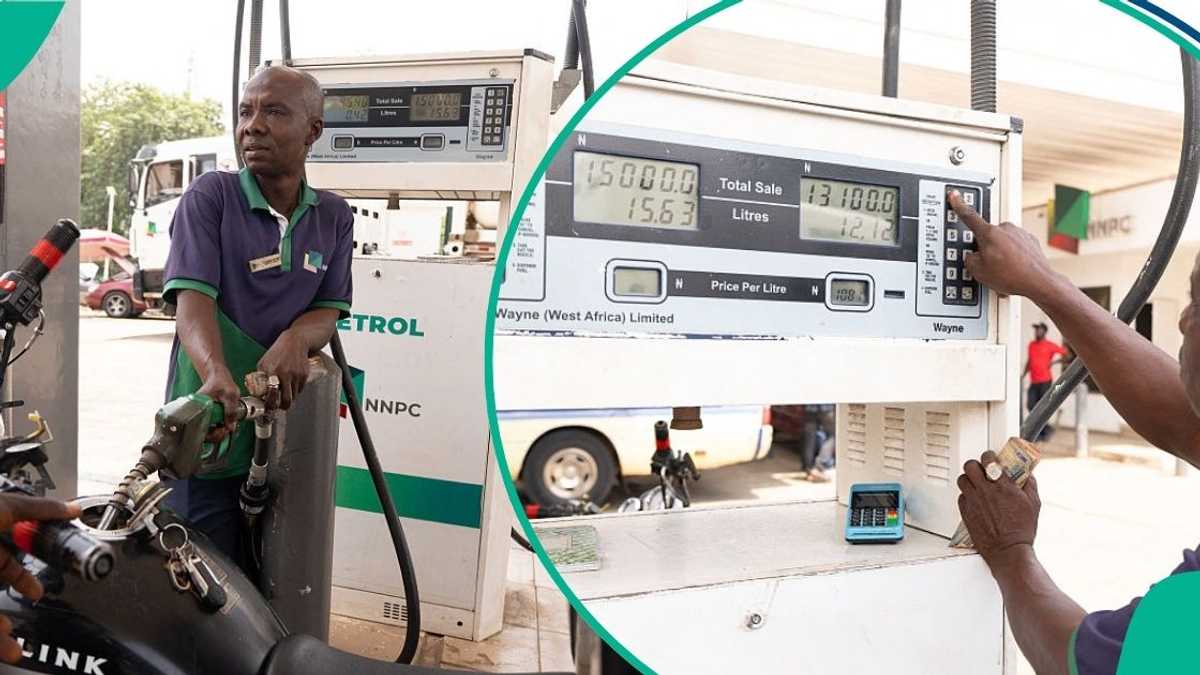
For much of the past year, Nigerian fuel marketers had been operating against a relatively stable backdrop of ex-depot petrol prices hovering around N1,075 per litre, an uneasy equilibrium that consumers and logistics operators had grudgingly accepted as the new normal under a deregulated market. That benchmark has now shifted, and the circumstances behind the change stretch far beyond Nigeria’s borders, rooted in a rapidly deteriorating confrontation between the United States and Iran that has placed one of the world’s most critical energy corridors directly in the line of fire.
The trouble began when Iran announced the closure of the Strait of Hormuz, citing the expiration of its ceasefire arrangement with Washington and accusing a commercial vessel of violating its maritime regulations and conducting what Tehran described as hostile activities. The Islamic Revolutionary Guard Corps intercepted and struck the ship, declaring that the vessel had travelled through an unapproved route and had deliberately switched off its tracking systems — a move Iran characterised as a provocation. The IRGC stated that the Strait would remain closed “until further notice” and until what it called an end to American interference in the region, a declaration that sent immediate tremors through global energy markets.
Washington did not stand idle. The United States Central Command confirmed that it carried out military strikes on more than 140 Iranian military targets, a list that included missile launch sites, drone facilities, naval assets, ammunition depots and surveillance infrastructure, with officials insisting the operation was designed to protect civilian and commercial shipping through the waterway. The Strait of Hormuz carries an enormous share of the world’s seaborne oil exports, and any sustained disruption to passage through it sends shockwaves through every market that depends on crude imports — Nigeria’s included, despite the country’s own hydrocarbon wealth.
It was against this backdrop that fresh pricing data from PetroleumPriceNG, released on Friday, 10 July 2026, confirmed that depot operators across Nigeria had moved to adjust their ex-depot costs for Premium Motor Spirit upward, with an average increase of 0.46 per cent compared to previous rates. Pinnacle Depot moved to N1,085 per litre, Prudent Oghara to N1,100 per litre, while Sahara Depot and Bono Depot both settled at N1,074 per litre, figures that collectively mark a clear departure from the N1,075 benchmark that had previously anchored the market.
Industry observers were candid in their assessment of what was driving the adjustments, characterising them as largely precautionary rather than a direct response to costs already incurred. Marketers, they explained, were seeking to shield themselves against the financial exposure that would follow any sharp spike in international crude prices should the Gulf crisis deepen further, a calculation that reflects the structural vulnerability of Nigeria’s fuel supply chain to external price shocks, even as the country produces its own crude in significant volumes.
The practical consequences for ordinary Nigerians are straightforward and uncomfortable. If the standoff between Washington and Tehran persists, if the Strait of Hormuz remains closed or contested, and if international crude prices continue their upward trajectory, then the adjustments seen at the depots this week are unlikely to be the last. Pump prices at filling stations would follow, transport costs would climb, and the inflationary pressure on household budgets — already stretched after years of subsidy removal — would intensify further. The geopolitics of the Gulf, once a distant concern, now sits squarely on the kitchen table.