
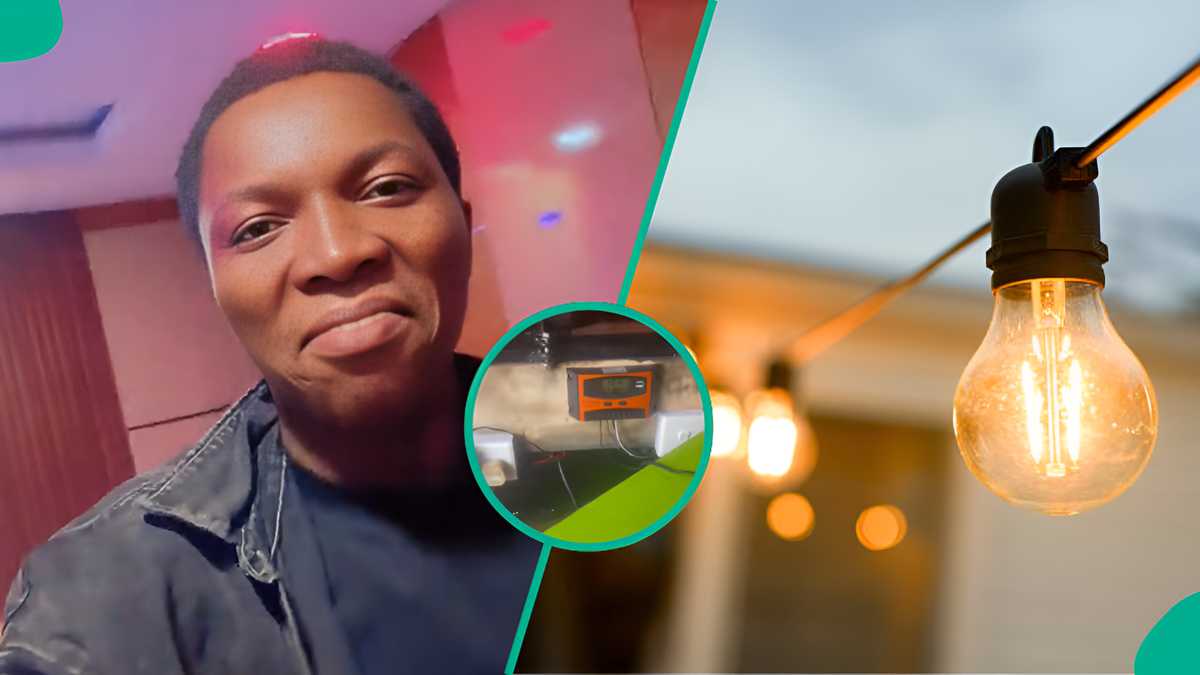
A Nigerian man has set social media alight with a video showing a self-built generator he claims can run silently for a full 24 hours — without fuel or solar panels.
The story begins simply enough. The TikTok user known as @itzsmileboy filmed himself inside a partially finished structure — exposed wood, bare concrete walls — standing before a small gathering of onlookers. The setting was informal, the energy was high, and the claim was bold: a homemade, portable power unit capable of running household appliances around the clock.
During the walkthrough, he pointed to a television and a refrigerator as examples of what the unit could support simultaneously. He made a point of highlighting two qualities that resonate deeply with Nigerian households: the device operated in complete silence, and it was portable enough to move between rooms. For communities that have long endured the noise and running costs of petrol generators, those two features alone were enough to draw attention.
The video spread quickly across TikTok. Nigeria’s chronic electricity crisis gave the clip an immediate context that viewers understood without explanation — power outages are not an occasional inconvenience here, they are a daily fact of life. The prospect of a quiet, self-built unit that could last through the night struck a nerve, and the comments section filled rapidly.
Viewers raised practical questions almost immediately. One user, @Dkoncept Dezigns, cut straight to the point, asking how much the unit would cost and who could repair it if something went wrong — an electrician, or someone else entirely. Another commenter, @constructKES concepts, urged the inventor to broaden his reach and communicate in a language accessible beyond his local area. A third, @Lonchy Aniekwe chidi, pushed the ambition further, wondering whether a version could be scaled up to power a business running fifteen fans and bulbs at once.
The video has not been independently verified, and the precise technology behind the device remains unclear from the footage alone. What is clear is that it tapped into something real. Nigerians are not simply waiting for the national grid to improve — many are actively looking for alternatives, and a homemade solution that sidesteps both fuel costs and solar investment carries obvious appeal. Whether this particular device delivers on its claims is another matter, but the appetite it exposed is genuine and growing.