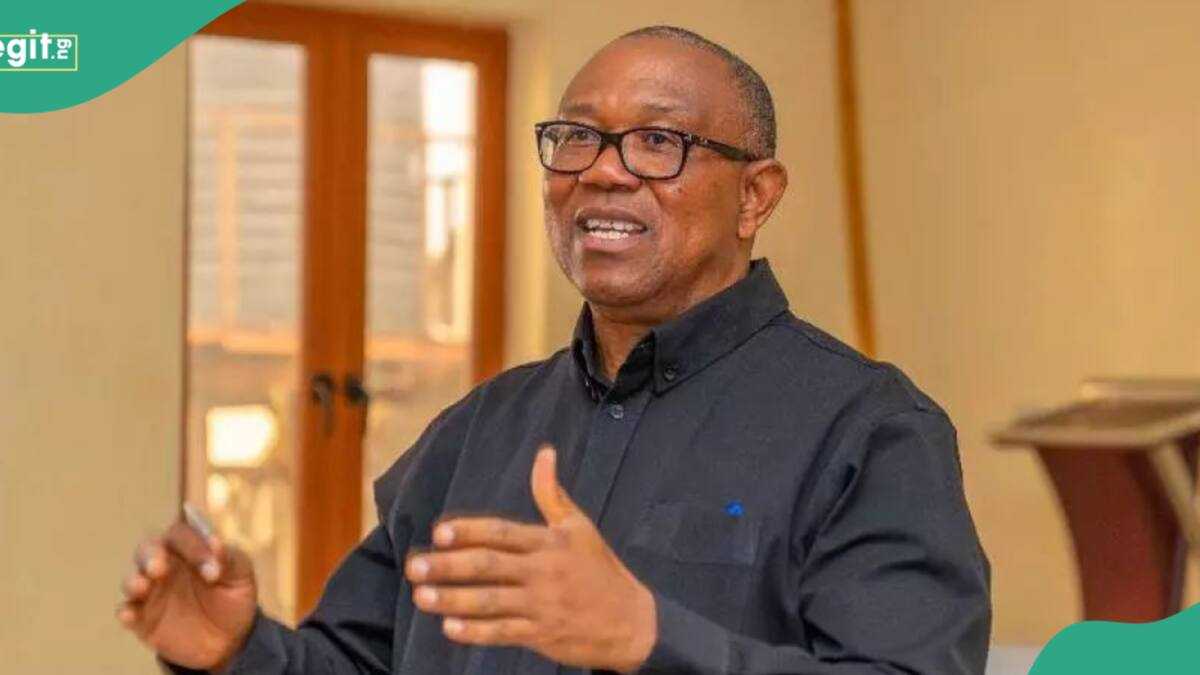
Peter Obi, the presidential candidate of the Nigeria Democratic Congress (NDC) for the 2027 elections, has flatly denied allegations that he harbours a secessionist agenda, pushing back publicly against accusations made by Ali Modu Sheriff, a former governor of Borno State. Obi made the denial on Sunday night, 26 July, during an appearance on Channels Television‘s Politics Today programme, where he confronted the claims directly and set out his case for national unity.
The row began after Obi called on President Bola Tinubu to resign or step aside, citing the country’s deteriorating security situation. Sheriff responded sharply, questioning Obi’s standing to make any such demand. The former governor alleged that Obi privately believes in Biafra and is using his presidential ambition as a cover for a separatist project, adding that Obi has never publicly condemned the activities of the proscribed Indigenous People of Biafra (IPOB). Sheriff went further, describing Obi as “the most unqualified person” to call on the president to leave office — a characterisation clearly designed to undermine Obi’s credibility as a national figure rather than a regional one.
Obi rejected the accusations in full, pointing to his personal visits to some of the most insecurity-ravaged communities in northern Nigeria as concrete evidence of his commitment to all Nigerians, not merely those from his native south-east. He argued that travelling to areas of intense conflict in the north — where many politicians fear to venture — was itself a demonstration that his concern for the country’s welfare extends well beyond Igbo territory. His rebuttal was pointed and unapologetic, aimed squarely at dismantling the narrative that his political ambitions are a smokescreen for ethnic or regional interests.
Speaking directly on national television, Obi said: “I know what it takes to unite Nigeria. I will change the North. I have an idea of what is happening in the North, and nobody can drive that process in Nigeria better than me. I will work with them and ensure the unity, security and prosperity they desire are achieved.” The statement was a deliberate attempt to reframe his candidacy as a national project, positioning himself as someone with both the knowledge and the resolve to address the country’s deep structural problems.
Obi’s political journey to this point has been turbulent. He was ratified as the NDC’s presidential candidate on 29 May 2026, just weeks after resigning from the African Democratic Congress (ADC) on 2 May 2026 — a sequence of moves that reflects the fluid and often unpredictable nature of Nigerian opposition politics ahead of 2027. Whether his television rebuttal will be enough to put the secessionist allegation to rest remains to be seen, but Obi has clearly decided that silence is not an option when his national credentials are under direct attack.