One Year On: What Has Mosan-Okunola’s Executive Chairman Actually Delivered?
The National Youth Council of Nigeria has issued a formal assessment of Adunni Opeyemi Akindele’s first year running the Mosan-Okunola Local Council Development Area in Lagos — and the verdict is broadly positive. But what exactly has changed on the ground, and what still needs to be done?
Who is marking this milestone, and why does it matter?
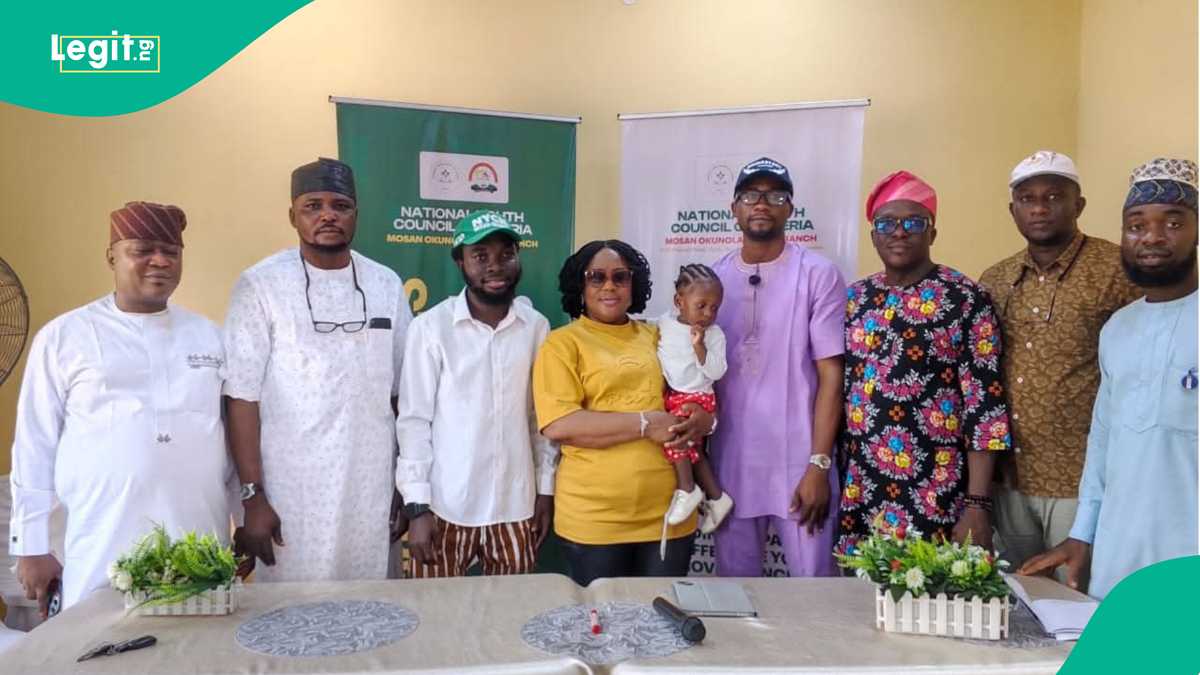
Akindele completed her first year as executive chairman of Mosan-Okunola LCDA on 28 July 2026. To mark the occasion, the NYCN’s Mosan-Okunola Local Branch released a statement signed by its coordinator, Comrade Olowoyobiojo Kayode. The council described the past twelve months as a period of purposeful leadership that has measurably improved conditions for residents — particularly young people — across the council area in Alimosho, Lagos State.
Local government anniversaries rarely attract serious scrutiny in Nigeria. Too often, they pass with nothing more than self-congratulatory press releases from the administration itself. A formal assessment from a youth body, however, carries a different weight — it reflects whether ordinary residents and organised civil society feel the impact of governance at the grassroots level.
What has the administration built and repaired?
Infrastructure sits at the centre of the NYCN’s commendation. The council acknowledged the rehabilitation and construction of several roads within the LCDA, among them Modupe Street, Adunni Drive, Lion of Judah/Odemuyiwa Street, 51 Road, the four-lane 2nd Avenue, Retail Market Road, and the Keda Bus Stop–Water Corporation Road. Streetlights were also installed along Adunni Drive — a practical intervention that the council noted has improved both safety and commercial activity in the area.
On education, the administration renovated deteriorating classroom blocks, constructed modern toilet facilities, repaired school fences, and distributed writing materials and school bags to pupils. The sponsorship of students through Free GCE and UTME registration programmes was also cited — a direct cost reduction for families who would otherwise struggle to afford examination fees.
Healthcare: modest but concrete gains
The council pointed to the provision of a standard ambulance to the Primary Health Centre in Okunola, the upgrading of the Opeki Primary Health Centre, and the establishment of sick bays in primary schools. These are not transformative investments, but they represent the kind of functional, community-level infrastructure that local government exists to provide — and frequently fails to deliver.
What has been done specifically for young people?
The NYCN gave particular attention to the administration’s youth-facing initiatives. Skills acquisition programmes and financial support schemes were launched during the year, alongside the opening of an Empowerment Centre designed to equip residents with practical skills for self-reliance and economic growth. Whether these programmes have reached sufficient scale to make a dent in youth unemployment — a chronic problem across Lagos — is a question the council did not address directly.
On security, the administration supplied patrol and utility vehicles to security agencies operating within the LCDA. Comrade Kayode framed this as a meaningful contribution to community safety, and in an environment where local security outfits routinely operate without adequate resources, the gesture is not trivial.
What is still being asked of the chairman?
Comrade Kayode was careful to pair praise with expectation. He urged Akindele to deepen investment in entrepreneurship, digital innovation, sports, vocational training, and employment creation — arguing that empowering young people is the most reliable path to a prosperous and stable community. The council also signalled its readiness to partner with the LCDA on civic engagement, leadership development, volunteerism, and community service.
The statement from the NYCN read: “As representatives of the youth constituency, we celebrate this milestone with our Executive Chairman and commend her unwavering commitment to building a safer, more inclusive, and more prosperous Mosan Okunola.”
What does this tell us about local governance in Lagos?
The Mosan-Okunola assessment is, at its core, a reminder of how low the baseline for local government performance has been set in Nigeria. Road construction, school repairs and an ambulance — these are the fundamentals of what a council should deliver as a matter of routine. That they are being celebrated as achievements reflects the depth of the governance deficit that administrations like Akindele’s are working against.
That said, delivery matters more than narrative. If the roads are built, the classrooms are functional, and the health centres are equipped, residents benefit regardless of the political context. The NYCN’s message is ultimately a challenge as much as a commendation: the first year has demonstrated capacity; the next must demonstrate ambition.