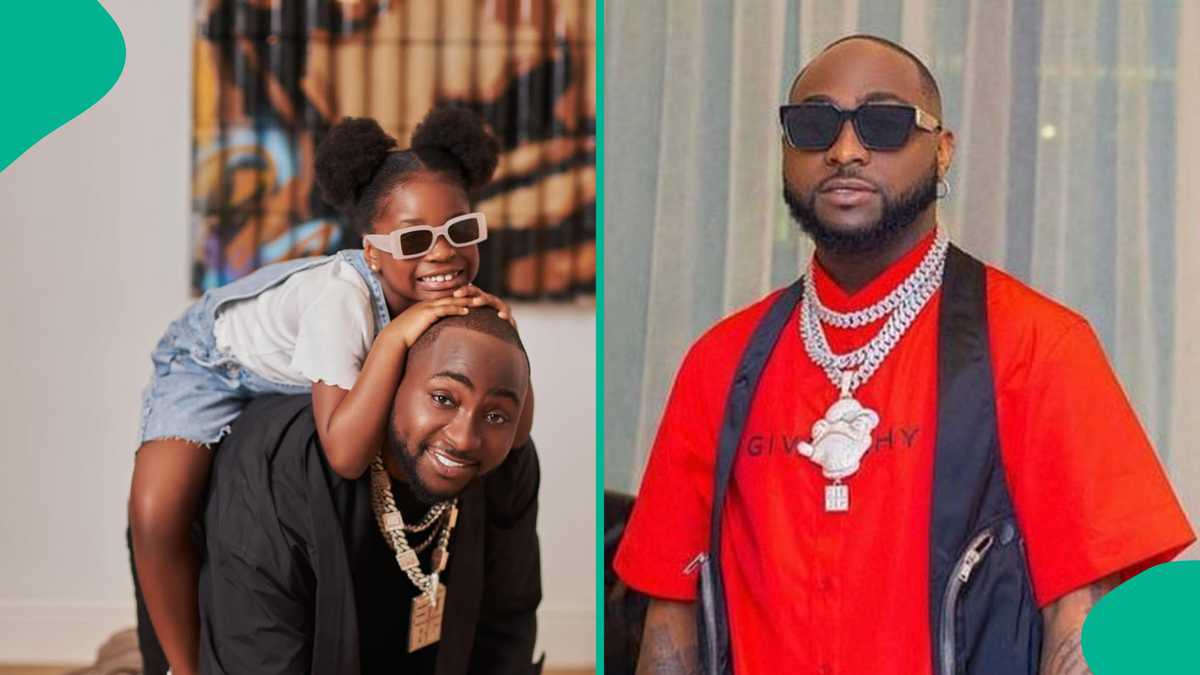
Nigerian superstar Davido has spoken candidly about one of the more personal tensions in his life: the fact that his own hard-won success in music has made him reluctant to see his children follow the same path. Speaking on a recent episode of The Vibe podcast, the Afrobeats heavyweight admitted that what he endured to reach the top is precisely what gives him pause whenever he thinks about his six children entering the industry.
His second daughter, Hailey Veronica Adeleke, is already showing the signs. Davido described her as the life of the party, someone who mirrors his personality closely and already carries a good singing voice — qualities that would, in almost any other household, be nurtured without a second thought. Yet Davido’s instinct is to hesitate. “I know what I went through,” he said plainly. “Can you go through what I go through? Knowing what I have been through, I’m sceptical about encouraging any of my children to do music.” It is a rare moment of vulnerability from an artist who has built his entire public persona on confidence and ambition, and it carries weight precisely because it is so unguarded.
That scepticism, however, does not translate into control. Davido was quick to draw the line between caution and obstruction, pointing to his own upbringing as the reason he would never block a child’s dream. His parents and wider family eventually gave him the freedom to chase music despite their reservations, and he considers that freedom foundational to everything he has built. “If they are good, why not?” he added — a concession that is short on words but long on meaning, suggesting that talent, ultimately, would settle the argument for him.
A Billionaire’s Son Who Made His Own Name
Elsewhere in the same conversation, Davido revisited a claim he has made before but pressed it with fresh conviction. He acknowledged openly that his background as the son of a billionaire was a liability in the early stages of his career, particularly in African markets where audiences instinctively champion the underdog and tend to be suspicious of inherited privilege. The expectation, as he framed it, was that a rich man’s son had no business asking for sympathy or support — that the struggle simply did not belong to him. Against that backdrop, he argues, what he achieved becomes all the more remarkable.
“Not to brag, but which other billionaire’s child do you know, not just in Africa but in the world, that has made a name for himself and also made a lot of money? You can’t name one apart from me,” he said. It is a bold assertion and, depending on your view, either a statement of genuine fact or a provocation dressed up as confidence. What is harder to dispute is that Davido built a catalogue, a brand and a global fanbase largely on the strength of his output rather than his father’s chequebook — and that, in the music industry, is no small thing. Whether or not one agrees with the sweep of his claim, the underlying point about carving an independent identity from a privileged starting point is not without substance.
Separately, Davido has previously disclosed that his personal monthly expenditure runs between $200,000 and $300,000, a figure that excludes spending on his wife, his children, jewellery and vehicles. He noted that his outgoings fluctuate depending on where in the world he is based at any given time, with life in the United States tending to be quieter and less expensive than periods spent travelling or performing. The revelation generated considerable reaction online, though for a man of his earning power and profile, the numbers are perhaps less surprising than the candour with which he shared them.