
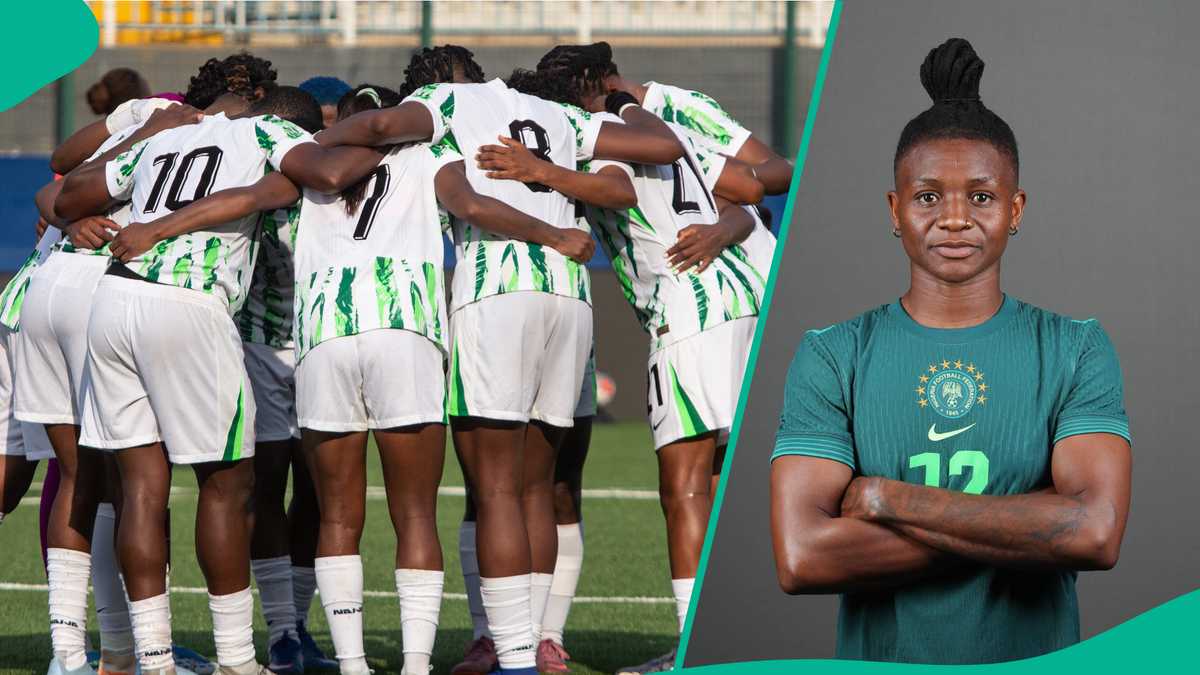
Nigeria’s Women’s Africa Cup of Nations campaign is already at a crossroads, and the Super Falcons have not even played their second group-stage match. A 3-2 opening defeat to Malawi — a nation making its WAFCON debut — has turned what should have been a routine title defence into a salvage operation, and the pressure bearing down on the 10-time champions ahead of their fixture against Zambia is considerable. Into that pressure stepped forward Uchenna Kanu, who scored in the loss to Malawi and has now spoken plainly about what the team must do next.
Kanu’s message, delivered to journalist Femi Pereira, was measured and deliberate rather than defiant or defensive — the tone of someone who understands exactly what is at stake without being consumed by it. “I think every team is good and it’s important that we take every game seriously,” she said. “It doesn’t matter who we’re playing. Playing Zambia is another game, another challenge, another opportunity to be ourselves on the field. It doesn’t matter when they lost or didn’t; we’re focusing on getting the points.” That clarity of purpose is precisely what the Falcons need, given that a second dropped result would almost certainly end their tournament.
Why Zambia makes this harder than it sounds
The difficulty is that Zambia are not merely a capable side — they arrive at this fixture in extraordinary form, having dismantled Egypt 6-0 in their opening match, with Barbra Banda producing a standout performance that confirmed the Copper Queens as genuine contenders in Morocco. Nigeria’s players are therefore being asked to reset psychologically from a painful defeat and immediately face opponents who are riding a wave of confidence and momentum. That is a significant ask of any squad, let alone one carrying the weight of a nation’s expectations and a decade-long legacy to protect.
Kanu addressed that weight directly, appealing to Nigerian supporters to move past the Malawi result and rally behind the team. “We know what is at stake and how Nigerians feel about the loss to Malawi,” she said. “The whole point is that we take it one game at a time. We are ready and will make Nigerians proud.” The appeal matters because the relationship between the Super Falcons and the Nigerian public can curdle quickly when results disappoint, and the team will need backing rather than recrimination if they are to recover. History, at least, offers some comfort: Nigeria have beaten Zambia in three of their four previous meetings, including a 5-0 elimination victory in the preceding WAFCON edition, which suggests the Falcons know how to handle this particular opponent when they are functioning properly.
The honest question, of course, is whether they are functioning properly right now. A single match does not define a squad, and the Malawi defeat may yet prove to be the kind of early shock that galvanises rather than destroys — but that outcome depends entirely on what the Falcons produce against the Copper Queens. Kanu’s composure in front of the microphone is encouraging. What happens on the pitch will tell a far more consequential story.