
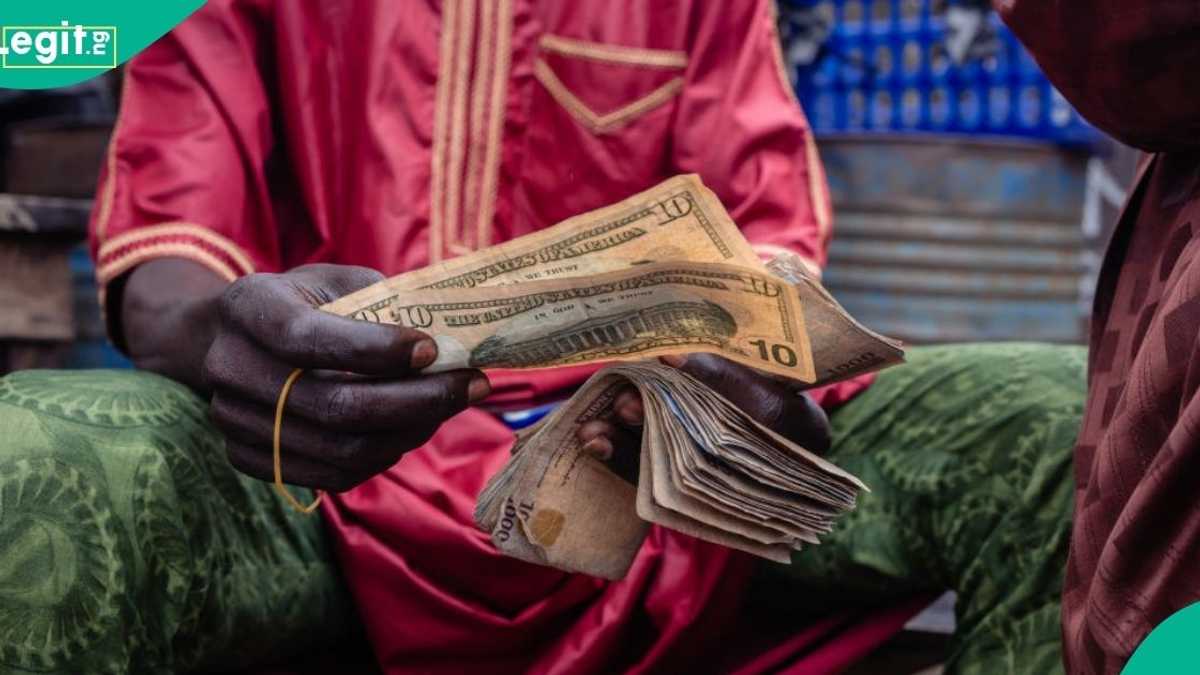
On the last trading day of July 2026, Nigeria’s naira closed weaker against the dollar at the official market, and the numbers told a familiar story. The currency settled at N1,368.22 to the dollar — a N1.49 slip from the N1,366.73 recorded the session before. Modest as that figure sounds, it extended a losing streak that has become something of a fixture at the Nigerian Foreign Exchange Market (NFEM), and it arrived despite the Central Bank of Nigeria’s ongoing efforts to shore up liquidity. The pressure, in short, has not gone away.
The naira’s troubles were not confined to the dollar. Against the British pound, it fell N3.50 to close at N1,837.79, compared with N1,834.29 the previous day. The euro told a similar tale, with the naira losing 90 kobo to settle at N1,573.87, from N1,572.97 on Thursday. These are not catastrophic single-session moves, but taken together they paint a picture of a currency under sustained, broad-based demand pressure — not a one-off blip.
The Parallel Market Tells Its Own Story
Away from the official window, the parallel market was less forgiving. The naira fell by N5 to trade at N1,405 to the dollar, compared with N1,400 the day before. GTBank’s retail foreign exchange desk also adjusted its quoted rate upward by N4 to N1,374 per dollar, signalling that even institutional retail channels are feeling the strain. The spread between the official and parallel rates — hovering at roughly N37 — remains a live indicator of how much pent-up demand the official market is still failing to fully absorb.
It is worth being clear about what this spread means in practice. When ordinary Nigerians and businesses cannot source dollars at the official rate, they turn to the parallel market and pay the premium. That premium is a tax on everyday commerce — on imported goods, on school fees paid abroad, on medicines sourced from overseas suppliers. The numbers on a trading screen have very direct consequences on the ground.
Turnover Ticks Up, Reserves Tick Down
There was one mildly encouraging data point in Friday’s session. Interbank foreign exchange turnover rose by 0.97 per cent to $58.99 million, up from $58.42 million the previous session. More dollars changing hands in the official market is broadly positive — it suggests some degree of supply is reaching the system. However, the number of completed deals actually fell, from 71 transactions on Thursday to 69 on Friday, which tempers any enthusiasm about a meaningful improvement in market depth.
Nigeria’s external reserves edged lower to $51.922 billion from $51.938 billion, according to the latest CBN data. The dip is marginal, and the overall reserve position remains substantial. But the direction of travel matters. Reserves that are being drawn upon — even gently — to manage exchange rate pressure represent a finite buffer, and the CBN will be watching that figure closely as it calibrates its interventions going forward.
What the CBN Has Said
CBN Governor Olayemi Cardoso addressed the naira’s position at a press briefing following the most recent Monetary Policy Committee meeting in Abuja. His message was pointed: the naira is not being artificially propped up, and whatever stability has been achieved in recent months is the result of genuine market reforms and improved liquidity rather than managed suppression. Cardoso argued that the foreign exchange market has grown more transparent over the past two years, a claim that the CBN’s decision to unify exchange rate windows lends some credibility to.
That said, a market-driven rate that keeps drifting weaker is still a weaker rate. Transparency and reform are necessary conditions for a functioning FX market, but they are not sufficient on their own to reverse the structural imbalances — import dependency, thin export diversification, dollar-denominated debt obligations — that keep demand for foreign currency elevated. The CBN’s reform narrative is not wrong, but it does not yet answer the harder question of when supply will consistently meet demand at a rate that does not keep squeezing Nigerian households and businesses.
Official Exchange Rates as at 31 July 2026
The Central Bank of Nigeria published the following official closing rates for Friday, 31 July 2026. The naira stood at N1,368.22 against the US dollar, N1,837.79 against the pound sterling and N1,573.87 against the euro. The SDR was quoted at N1,860.45 and the WAUA at N1,852.30. The Swiss franc closed at N1,692.18, the UAE dirham at N372.27 and the Saudi riyal at N364.37. The Chinese yuan came in at N202.56, the Danish krone at N210.52, the South African rand at N83.14, the Japanese yen at N8.53 and the CFA franc at N2.37.
These figures will reset when markets open again, and the direction they move will depend on whether the forces pushing demand upward — import bills, debt servicing, capital outflows — ease sufficiently to allow the naira room to recover. For now, the pressure holds.