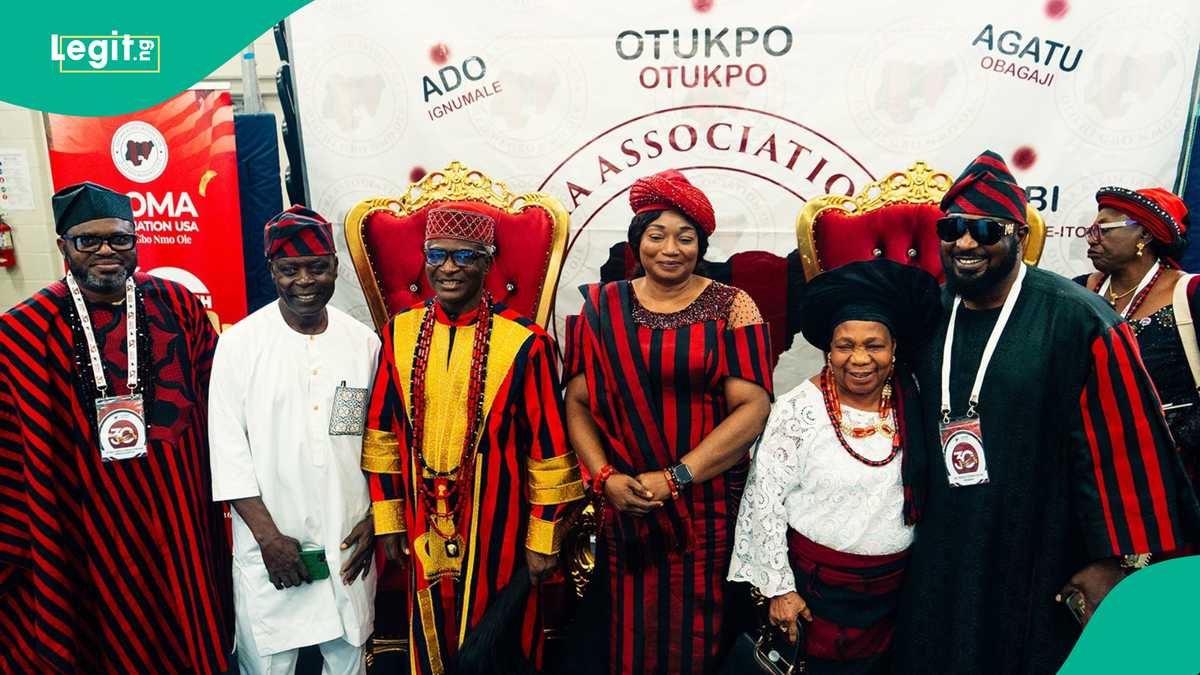
The ballroom of a Virginia Beach hotel might seem an unlikely place to launch an international campaign over killings on the Benue plains, but that is precisely what happened when the Idoma Association USA gathered for its 30th Annual Convention last week. Delegates, traditional rulers, government representatives and members of the Idoma diaspora came together under the banner of “Building Unity Through Accountability” — and left with a clear mandate: take the bloodshed in Benue South to the highest offices in Washington.
The association resolved to formally petition President Donald Trump, calling on his administration to pay attention to what its communiqué described as “persistent insecurity, incessant killings, and displacement of innocent citizens” across Benue South Senatorial District. The language was measured, but the underlying message was not. The convention made plain that “such loss of life must never be normalised” — a pointed rebuke, however diplomatically phrased, of the slow international response to a crisis that has ground on for years.
The petition is only the opening move.
IAUSA also announced plans to arrange for the Och’Idoma V, His Royal Majesty Agaba’Idu John Elaigwu Odogbo Obagaji, to appear before relevant committees of the US Congress and present the security and humanitarian concerns of the Idoma people directly to American lawmakers. Bringing a traditional ruler before Congress is not a routine diplomatic gesture — it signals that the association wants its case heard as a matter of record, not merely acknowledged in a courtesy meeting.
The convention drew visible solidarity from within Virginia itself. Statesman J. P. Paige of Norfolk was present and pledged personal support in facilitating delivery of the petition to the President, conveying what he described as the solidarity of the people of Norfolk with the Idoma Nation. That kind of local American political backing, however symbolic at this stage, gives the campaign a foothold it would otherwise lack.
IAUSA was careful to frame its international advocacy as “factual, responsible, and directed towards practical outcomes,” promising sustained engagement with governments, international organisations, human rights bodies, policymakers and the media. The association is clearly aware of the risk of diaspora campaigns drifting into noise — and appears determined to avoid that fate.
Practical intervention sits alongside the advocacy push. The convention resolved to organise a medical mission to Idoma land in December 2026, providing free consultations, medications, healthcare services and health education to underserved communities. The convention was explicit on the point: “advocacy and practical intervention must advance together, so that the voice of the diaspora is matched by measurable relief in the lives of our people at home.” It is a sensible principle, and one that separates serious diaspora organisations from those that merely issue statements.
On domestic governance, the convention urged voters in Benue South to judge candidates by integrity and competence rather than ethnicity, political affiliation or financial inducement — a familiar appeal in Nigerian electoral politics, though no less necessary for that. IAUSA also committed to voter education and civic awareness campaigns ahead of forthcoming elections, and passed a unanimous vote of confidence in its President, Prince Dr Edwin Ochai, and the executive committee.
The association confirmed that its next annual convention will be held in Canada, widening the geographic footprint of a campaign that is clearly thinking beyond American shores.
This effort does not emerge in isolation. Governor Hyacinth Iormem Alia of Benue state has himself hosted US lawmakers who visited the region specifically to assess the security and humanitarian situation. The governor confirmed that discussions covered “the urgent need for sustainable peace, justice, and security” across Benue and the broader North Central region. Whether those conversations produce concrete action remains to be seen — but the convergence of diaspora advocacy, traditional leadership and state-level engagement suggests that the international pressure on this crisis is beginning to build in a more coordinated way than before.
For the communities still living under threat in Benue South, that coordination cannot come soon enough.