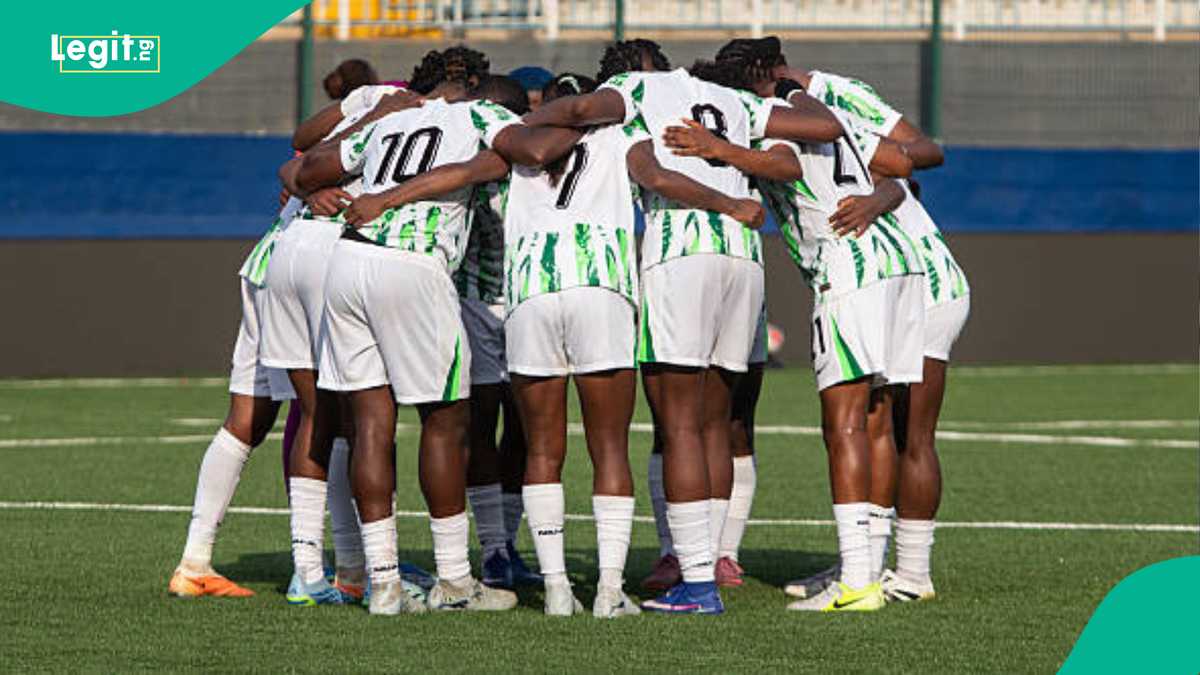
Nigeria’s Super Falcons will not be at the 2027 FIFA Women’s World Cup. For the first time since the tournament came into existence, the most decorated women’s side in African football has failed to qualify — and the manner of their exit makes it all the more difficult to swallow.
South Africa’s Banyana Banyana ended Nigeria’s hopes in the African intercontinental playoff, winning 2-1 in a match that was largely comfortable for the South Africans until a late red card complicated the final minutes. Thembi Kgatlana opened the scoring in the 56th minute, and Refiloe Jane doubled the lead in the 77th, putting the tie firmly in South Africa’s hands. A penalty converted by Christy Ucheibe gave Nigeria a consolation, but it arrived too late and too narrowly to force extra time. The Falcons were out.
The defeat did not arrive without warning. Nigeria had already stumbled badly at the 2026 Women’s Africa Cup of Nations, where Cameroon eliminated them at the quarter-final stage. That exit cost them automatic qualification and pushed them into the playoff — a second chance that, in the end, they could not take. The road to Brazil 2027 is now closed to them entirely.
What makes this moment historic is not simply the loss but what it represents. Nigeria had appeared at every single edition of the Women’s World Cup since the tournament began. That unbroken record is now gone. It is a sobering milestone for a programme that once set the standard for African women’s football and carried the continent’s flag on the global stage more consistently than any other nation.
The parallel with the Super Eagles is uncomfortable but unavoidable. The men’s team has now missed two consecutive FIFA World Cups, a run that prompted widespread criticism of the Nigeria Football Federation and the broader structure of the game in the country. The Falcons were supposed to be different. Earlier this year, NFF official Justine Madugu publicly promised that the women’s side would not repeat the men’s failures. That promise has now collapsed in the most emphatic fashion possible, and the questions that follow will be just as pointed.
South Africa, meanwhile, advance to the intercontinental playoff alongside Ghana’s Black Queens, where both sides will compete for a place at the tournament. They join Malawi, Cameroon, Morocco and Algeria — all of whom secured automatic berths through the Women’s AFCON — as the African nations still in contention for Brazil. Nigeria’s name is not among them.
The reckoning for Nigerian women’s football begins now. Missing one World Cup might be explained away as a bad cycle. Allowing the same structural failures that derailed the men’s programme to swallow the women’s game as well is something else entirely. Those in charge of Nigerian football owe the public a clear account of how the Falcons arrived at this point — and a credible plan for ensuring it does not happen again.