
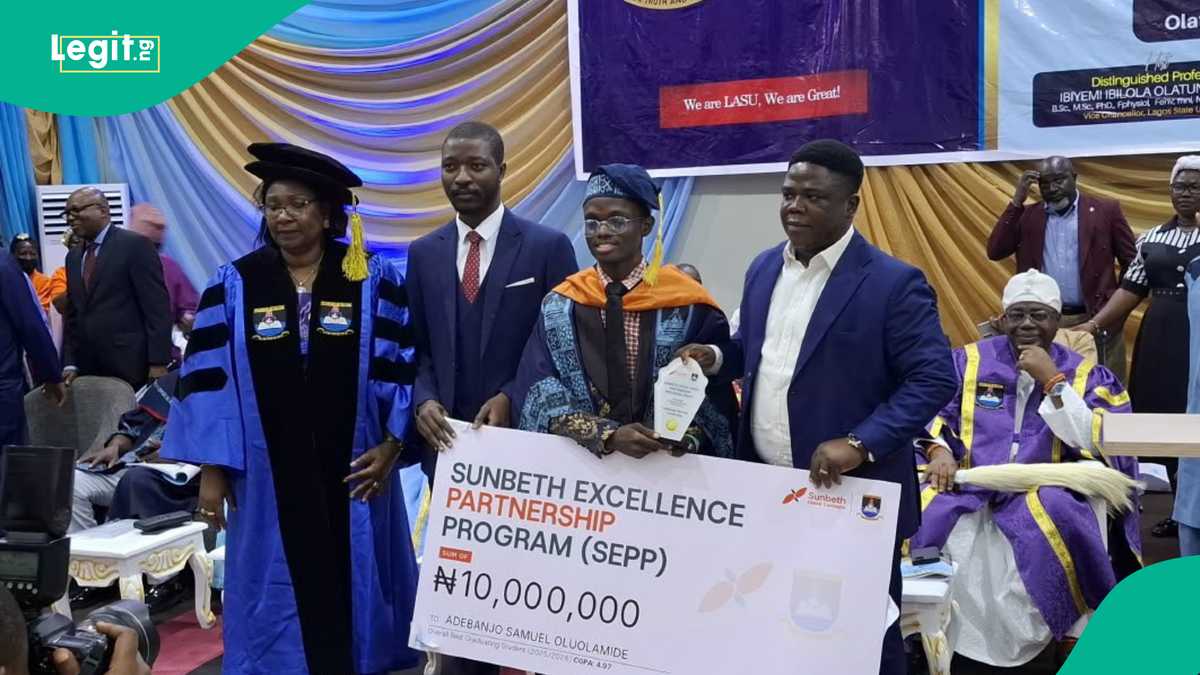
An Aerospace Engineering student at Lagos State University has graduated with a near-perfect CGPA of 4.97, claimed the title of overall best graduating student across all faculties, and walked away with a N10 million cash prize — all in a single afternoon.
Adebanjo Samuel Oluolamide received his First-Class Honours degree and the Sunbeth Excellence Partnership Programme (SEPP) prize at LASU’s combined 29th and 30th Convocation Ceremony, held on Monday, 17 August 2026, at the Olatunji Bello Auditorium on the university’s Epe Campus. His CGPA of 4.97 out of a possible 5.0 placed him above every other graduate across all departments and faculties for the 2025/2026 academic session.
SEPP presented the N10 million award directly to Oluolamide at the event, citing his exceptional academic record as the sole basis for the recognition. The programme, which operates in partnership with corporate sponsors, said the initiative exists to celebrate outstanding achievement at LASU and to build a culture of sustained academic excellence within the institution. In plain terms: they want other students to see what is possible and be motivated to match it.
The scale of this year’s convocation underlines just how competitive that field was. LASU graduated a combined total of 20,604 students across the two academic sessions, including 3,383 postgraduate students, and produced 494 First-Class graduates from its first-degree programmes. Prominent figures, including business magnate Aliko Dangote, are among those set to receive honorary doctorate degrees at the ceremonies.
Oluolamide’s result also edges out last session’s best graduate. For the 2024/2025 academic session, Ayilara Lawal Olawale of the Project Management Department topped the class with a CGPA of 4.96, earning First-Class Honours. Oluolamide surpassed that mark by a single hundredth of a point — a small number that, in competitive academic terms, represents a meaningful distinction.
What Oluolamide’s achievement demonstrates, above all, is that Nigerian public universities remain capable of producing world-class graduates when students apply themselves and institutions create the right incentives. A N10 million reward for academic merit sends a clear signal — excellence in the classroom has tangible value, and it ought to be celebrated accordingly.