Four years ago, the National Institute for Policy and Strategic Studies began quietly mapping what it would take to grow Nigeria’s economy to $1 trillion by 2030. That long-running research effort has now produced something concrete: a national summit, a presidential mandate, and a major financial institution ready to back the whole thing.
The National Summit and Exhibition on Orange Economy is scheduled for 6 to 8 October 2026 at the Wole Soyinka Centre for Culture and the Creative Arts — the National Theatre — in Lagos. It is not a talking shop dreamt up overnight. The groundwork has been building steadily, and the partnership announced this week signals that serious institutional weight is now behind it.
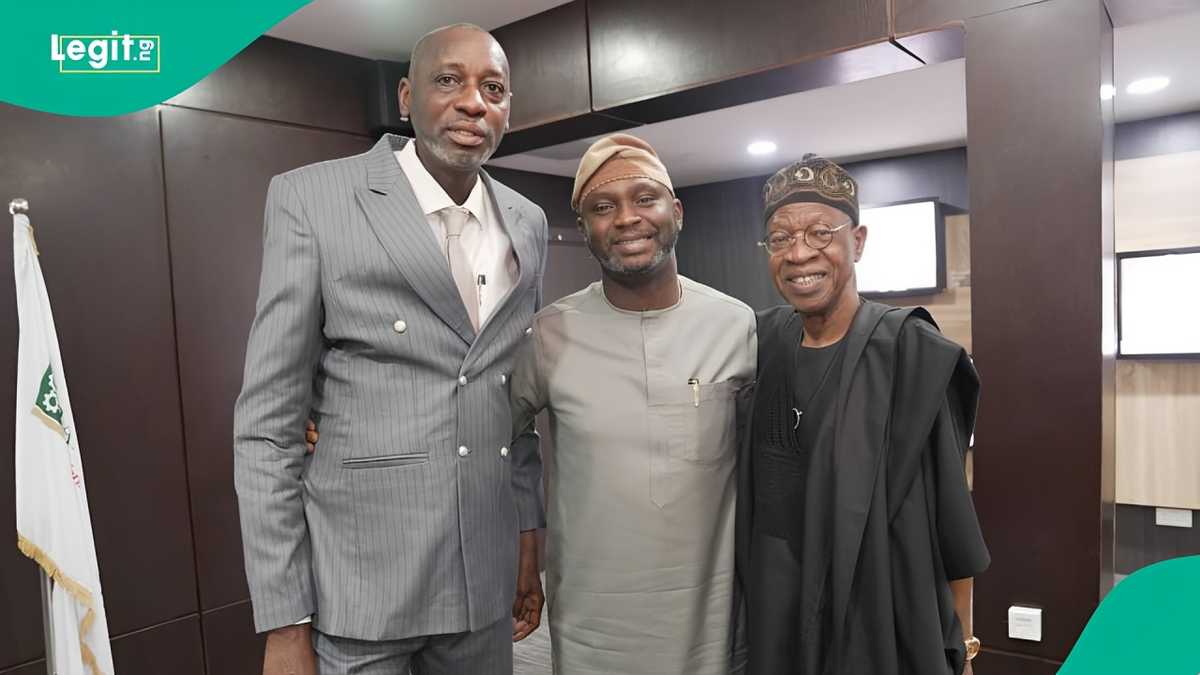
On Monday, 17 August, Bank of Industry Managing Director Dr Olasupo Olusi received the summit’s organising committee at BOI’s Lagos headquarters. The delegation was led by NIPSS Director-General Prof. Ayo Omotayo. What followed was not a routine courtesy visit.
Olusi committed BOI to the summit as a full partner, not merely a cheque-writer. “We don’t just want to be a sponsor but partners,” he said. “We want to play a key role in forming the whole event and all the activities around it.” He noted that BOI operates a dedicated creative sector division and described the bank as Nigeria’s most active development finance institution in that space.
Prof. Omotayo laid out the scale of what NIPSS has been doing. Seven groups of fifteen participants each have already completed field visits — covering institutions in Abuja, seven Nigerian states, and fourteen countries across Africa and beyond. The research is now being compiled. Findings are due to reach President Bola Tinubu in November. The October summit is designed to build momentum around that work before the final report lands on the President’s desk.
Tinubu personally approved the Orange Economy as NIPSS’s theme of study for this year and directed the institute to begin work immediately. That presidential endorsement matters. It means this is not a peripheral academic exercise — it sits inside the administration’s economic strategy.
Former Minister of Information and Culture Alhaji Lai Mohammed, now Managing Partner of Bruit Costaud, the consulting firm engaged for the summit, explained the venue choice plainly. The National Theatre has been the historic centre of African arts and culture since FESTAC ’77. Lagos, he argued, is the undisputed creative capital of Nigeria and one of Africa’s leading hubs for music, film, fashion and digital creativity. The logic is hard to dispute.
Mohammed also put the Orange Economy’s scope in perspective. It spans 48 subsectors and, when informal sector activity is counted, has the potential to account for tens of millions of jobs. That figure alone should command serious policy attention. Nigeria’s youth unemployment problem will not be solved through traditional industries alone.
Other committee members present at the BOI meeting included Prof. Sola Adeyanju, Mr Gabriel Idahosa, Mr Nosakhare Uwadiae, Mr Steve Babaeko, Mrs Olayemi Alaka, and Mr Segun Adeyemi. The breadth of that group — spanning academia, business and the creative industries — suggests the summit is being built with genuine cross-sector intent rather than as a government vanity project.
The $1 trillion target remains ambitious. Nigeria’s GDP currently sits well below that figure, and the structural challenges are real. But the Orange Economy, long undervalued in official policy circles, represents one of the few sectors where Nigeria holds a genuine global competitive advantage. Getting that argument in front of the President, backed by four years of research, is at least a credible starting point.