
Opposition Caught Bargaining Before the Ballot
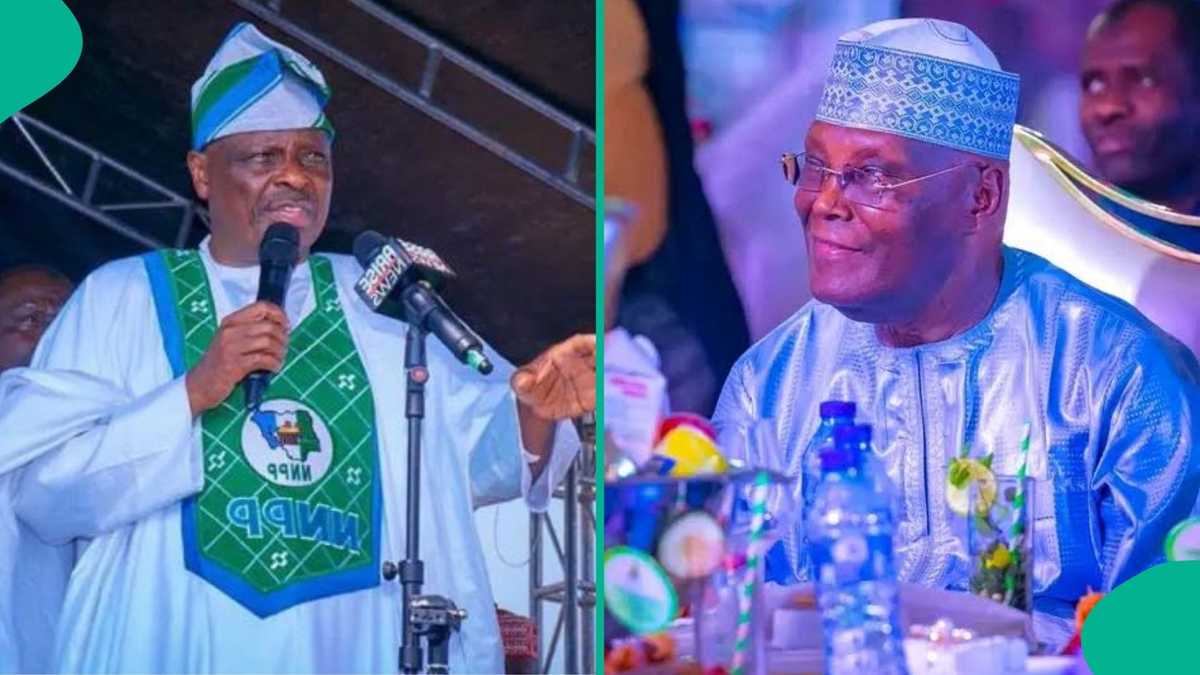
The All Progressives Congress has turned its fire on Rabiu Musa Kwankwaso after the Nigeria Democratic Congress vice-presidential candidate made a very public appeal to former Vice President Atiku Abubakar — urging him to abandon his 2027 presidential ambition and throw his weight behind the Peter Obi-Kwankwaso ticket. APC spokesman Felix Morka responded sharply on Saturday, 12 September, via a post on X, questioning why opposition figures are already dividing up an office that Nigerians have not yet been asked to decide. His central charge was blunt: this is horse trading over a prize the opposition has not won and shows no clear path to winning.
What Kwankwaso Actually Said
Kwankwaso’s appeal, made publicly on the Monday preceding Morka’s response, cited Atiku’s age and health as reasons the veteran politician should stand aside. Atiku will turn 81 next year, and Kwankwaso framed his intervention as a form of concern, sweetening it with a promise that the NDC would attend to Atiku’s welfare if the Obi-Kwankwaso ticket ultimately prevails. It was an unusual offer to make in public — part political manoeuvre, part unsolicited advice — and it landed with all the subtlety of a sledgehammer. Atiku, for his part, has not budged. He has stated clearly that 2027 represents his final attempt at the presidency, a race he has entered before in 2007, 2019 and 2023 without success.
The APC’s Calculated Response
Morka’s rebuttal was less a defence of the ruling party’s own record and more an opportunity to highlight what the APC sees as chronic disarray within the opposition. By labelling the exchange “horse trading,” Morka sought to frame opposition alliance-building not as strategic coalition politics but as cynical back-room dealing dressed up in public language. The APC clearly intends to mine this internal opposition friction for political capital as 2027 approaches, presenting every public negotiation between opposition figures as evidence of a movement that cannot organise itself, let alone govern a country. Whether that framing will resonate with voters who have their own grievances against the ruling party remains a separate and rather more important question.
What This Reveals About the 2027 Landscape
The episode lays bare the fragmented state of opposition politics ahead of the general election. The NDC is working to consolidate a credible ticket around Obi and Kwankwaso, but publicly pressuring a rival of Atiku’s stature to stand down — and doing so by referencing his age — is a gamble that risks alienating the very constituencies Atiku commands, particularly in the north. Atiku’s camp has offered no public response to Kwankwaso’s offer, a silence that speaks volumes about how seriously the proposal was received. Meanwhile, the APC, facing its own questions about economic performance and governance, has every incentive to keep the spotlight trained on opposition squabbles rather than on its own record in office.
The Bigger Picture
Nigeria’s 2027 election cycle is still taking shape, but the early manoeuvring already reveals a familiar pattern: alliances formed on convenience, public statements that double as private negotiations, and a political class more visibly absorbed in positioning than in policy. The APC’s intervention over Kwankwaso’s remarks is itself a form of positioning — an attempt to define the opposition as chaotic before a single vote has been cast. What Nigerian voters ultimately make of all this theatre, from both sides of the divide, will matter far more than any statement posted on X.