
The Spark That Started It
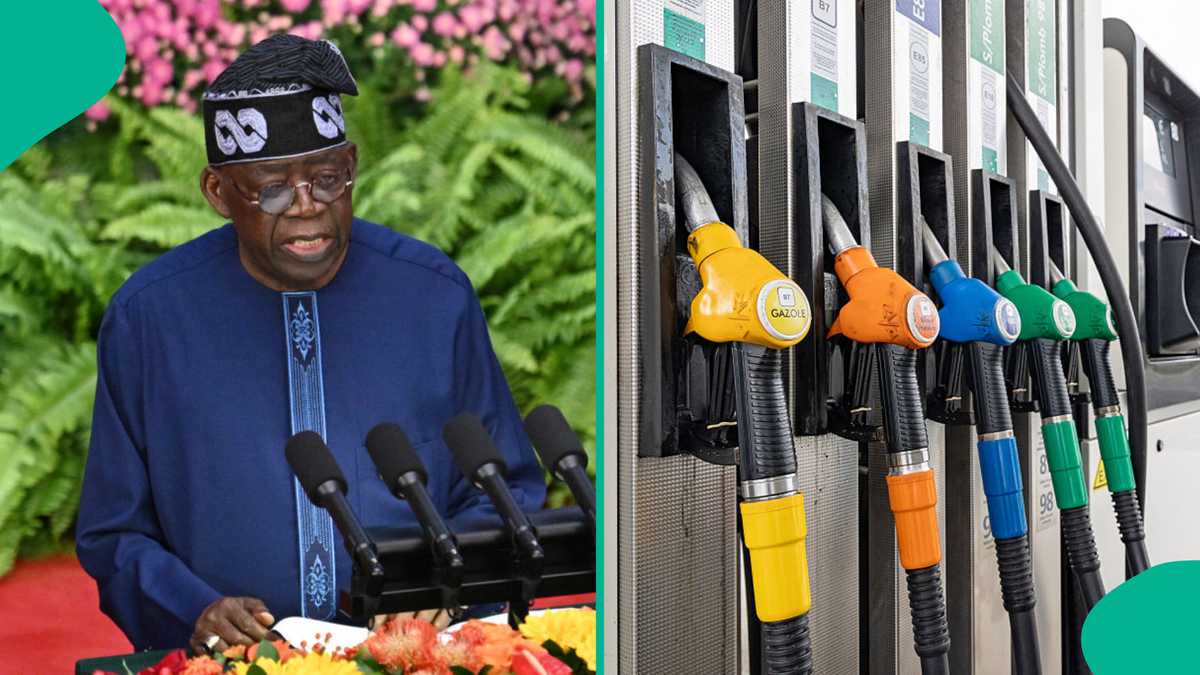
On 29 May 2023, the day he was sworn into office, President Bola Tinubu uttered five words that would reshape the daily lives of every Nigerian: “Subsidy is gone.” It was a declaration with immediate consequences — petrol prices began climbing almost overnight, the naira buckled under the pressure of a liberalised foreign exchange market, and ordinary Nigerians found themselves paying dramatically more for fuel, food and transport. The government insisted the pain was necessary and temporary. Nearly two years on, prices in several states have reached N1,400 per litre, and the political argument over whether any of it was worth it has exploded back into the open.
The trigger this time was Atiku Abubakar.
Atiku’s Reversal and the Presidency’s Response
Now the presidential candidate of the African Democratic Congress (ADC), Atiku had actually supported subsidy removal during the 2023 election campaign. He has since changed his position entirely, arguing that Nigerians were promised tangible benefits that have simply not materialised. On the campaign trail for 2027, he pledged to restore petrol subsidy — albeit through a controlled mechanism tied to domestic refining, in which crude oil allocations would be tracked to ensure that any savings reach consumers rather than vanish into the same opaque system that characterised the old regime.
The Presidency did not take that quietly. Presidential spokesperson Bayo Onanuga fired back in a series of public posts, dismissing Atiku’s proposal as retrogressive, fiscally unsustainable and driven, in his words, by “desperation to win the presidency.” Onanuga argued that any reversal of the current policy would unravel ongoing petroleum sector reforms, create serious legal and fiscal complications, and deter investment in local refining capacity — including the Dangote Refinery, which the government has repeatedly cited as central to its energy strategy.
President Tinubu himself went further. Receiving Osun State Governor Ademola Adeleke at the State House, he described Atiku’s position as a reflection of “his high level of ignorance in governance and economy.” It was a characteristically blunt dismissal, and it set the tone for everything that followed.
The Numbers the Government Is Citing
Finance Minister Taiwo Oyedele provided the fiscal case for the policy in concrete terms. According to Oyedele, scrapping the subsidy freed up N15.8 trillion for the federation between June 2023 and December 2025. Of that sum, N5.4 trillion went to the Federal Government, while N10.4 trillion was distributed among states and local governments across the country.
Those are significant figures. Whether they have translated into better roads, stronger public services or improved welfare for ordinary Nigerians is, of course, an entirely different question — and one that the government has been far less precise in answering.
What the Economists Say
The academic and professional economics community is divided, though not in the way the government might prefer to present it.
Professor Uche Uwaleke, President of the Capital Market Academics of Nigeria, acknowledged that the old subsidy regime had been a serious burden on public finances, enabling smuggling, rent-seeking and elite capture of resources nominally intended for the poor. He did not argue for its restoration. But he drew a sharp distinction between ending a bad policy and replacing it with something better. “The success of subsidy removal should not be measured simply by whether government stopped paying the subsidy,” he said. “It should be measured by whether it succeeded in converting that difficult sacrifice into a more productive economy, stronger public services, increased domestic production and a better quality of life for the ordinary Nigerian.”
Development economist Professor Ken Ife was equally opposed to blanket subsidy restoration, framing the argument in structural terms. “In broad macroeconomic terms, and even in development economies, you do not subsidise consumption. What you subsidise is production,” he said. He also warned that funding any new subsidy through borrowing would breach the Fiscal Responsibility Act — a legal constraint that proponents of Atiku’s plan have not adequately addressed.
Both economists, in other words, oppose a simple return to the old system. Neither, however, offered a ringing endorsement of what has replaced it.
What Ordinary Nigerians Are Actually Feeling
On the ground, the mood is considerably less nuanced. Civil servant Ibrahim Abbas said that the only tangible outcome he and his colleagues had experienced since May 2023 was economic hardship and a collapse in the naira’s purchasing power. He described Atiku’s proposal as “attractive to ordinary Nigerians” — not because people are naive about the old system’s flaws, but because the current one has delivered visible pain without visible gain.
Retired civil servant Sule Aliu echoed that sentiment, noting that retirees on fixed incomes had been hit particularly hard by the combination of fuel price increases and currency depreciation. For people in that position, macroeconomic arguments about long-term structural reform offer little practical comfort.
This is the uncomfortable reality the government has yet to confront directly. The N15.8 trillion figure is real. So is the N1,400 per litre price at the pump.
The Question That Remains Unanswered
Atiku has sharpened his political attack by demanding that President Tinubu account publicly for the proceeds of subsidy removal — a challenge that has gained traction precisely because the government’s communication on how those funds have been deployed remains vague and inconsistent.
The debate, at its core, is not really about petrol prices. It is about whether a government that makes a painful demand of its citizens — sacrifice now for gain later — has held up its end of the bargain. On that question, the Presidency’s response has been loud, but not yet convincing.