
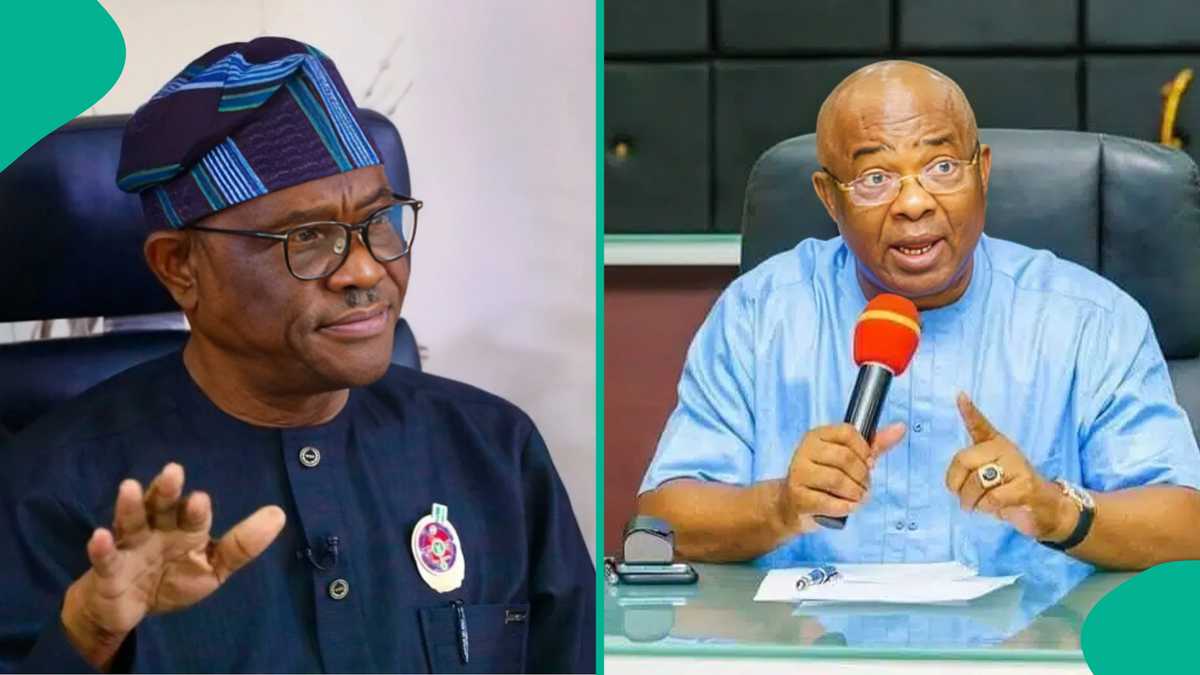
A Public Spat That Serves Nobody
Ima Niboro, the spokesperson for the APC Presidential Campaign Council, has had enough of the noise. Speaking on Arise Television’s The Morning Show, he delivered a blunt message to both FCT Minister Nyesom Wike and the All Progressives Congress governors currently locked in a very public row: stop the television performances and go and do actual political work. “When I said tone down the rhetoric, I do not mean stop working,” Niboro said. “Stop talking, go and work.” It was the kind of straight-talking intervention that the unfolding dispute sorely needed — and one that exposed just how much energy is being wasted on posturing rather than preparation for 2027.
What Started the Fight
The dispute has its immediate origin in Wike’s push for what he calls a Rainbow Coalition — a cross-party arrangement designed to bring politicians from multiple parties behind President Bola Tinubu’s re-election bid without dismantling existing party structures or interfering in governorship and legislative races. Wike has framed it as a pragmatic, inclusive strategy that broadens Tinubu’s base beyond APC loyalists alone. The APC governors see it differently. They have rejected the proposal outright, insisting that their political operations will remain focused exclusively on the party and its candidates across every tier of the 2027 elections.
The disagreement quickly turned personal. Wike called the governors “politically lazy” for their stance — a characterisation that did not go unanswered. Progressive Governors’ Forum Chairman Senator Hope Uzodimma defended the governors’ position publicly, and Wike responded by questioning Uzodimma’s record in delivering electoral support for Tinubu during the 2023 presidential race. What began as a strategic disagreement has since descended into a contest of credentials, with each side questioning the other’s political worth.
The Deeper Background: Wike’s Unusual Position
To understand why this dispute carries such heat, it helps to trace Wike’s political journey since 2023. During the presidential election cycle, Wike and four other PDP governors — Seyi Makinde, Samuel Ortom, Okezie Ikpeazu and Ifeanyi Ugwuanyi — broke ranks with their party’s presidential candidate, Atiku Abubakar, forming the group widely known as the G5. That defection was consequential. Wike subsequently joined Tinubu’s administration as a minister, yet he retained his PDP membership rather than crossing to the APC, creating an arrangement that sits awkwardly within the normal logic of Nigerian party politics.
That ambiguity has never fully resolved itself, and it now shapes how APC governors read Wike’s Rainbow Coalition proposal. From their vantage point, the man championing a cross-party alliance is himself a living example of why such arrangements breed confusion and competing loyalties. Wike, for his part, sees his position as proof that the coalition model works — and that the governors’ resistance is less principled than it is territorial. Neither reading is entirely wrong, which is precisely why the argument keeps going in circles.
Niboro’s Challenge: Prove Your Influence, Don’t Just Claim It
Niboro’s intervention was carefully calibrated. He was not telling either side to abandon their campaign work — he was telling them to redirect it somewhere useful. “All this shouting is not taking anybody anywhere,” he said. “Go and work. Go and establish your authority on your political base.” His argument was straightforward: any political leader who claims influence over voters should be able to demonstrate it through actual grassroots mobilisation, not through television appearances and quotable insults.
He was specific about what that mobilisation should look like. Political leaders needed to engage voters directly — in communities, in markets, in the streets where ordinary Nigerians live and make decisions. “Get off the TV cameras. Go to the people. Go to the streets. Go to the marketplaces. Go and win the people,” he said. The message carried an implicit challenge that neither Wike nor the governors could easily dismiss: if you are truly a political force, show it where it counts, not where the cameras are pointing.
What This Tells Us About 2027 Preparations
The fact that this dispute is happening at all — and happening so loudly, so early — says something uncomfortable about the state of Tinubu’s re-election machinery. A campaign apparatus that is already generating internal friction over coalition strategy and personal credibility, more than two years before the election, is one that has structural questions to answer. Niboro’s call for discipline is sensible, but it does not resolve the underlying tension between Wike’s expansionist vision and the APC governors’ instinct to protect their own party lanes.
There is also the matter of Wike’s additional grievance — his claim that APC governors have actively worked against him and undermined Rivers State Governor Siminalayi Fubara, tracing the conflict back to his ministerial appointment. That allegation adds a further layer of personal and institutional antagonism to what is already a complicated set of relationships. Whether Tinubu’s team can contain these competing interests without letting them damage the broader campaign effort remains an open question — and one that will only grow more pressing as 2027 approaches.