
What has actually happened?
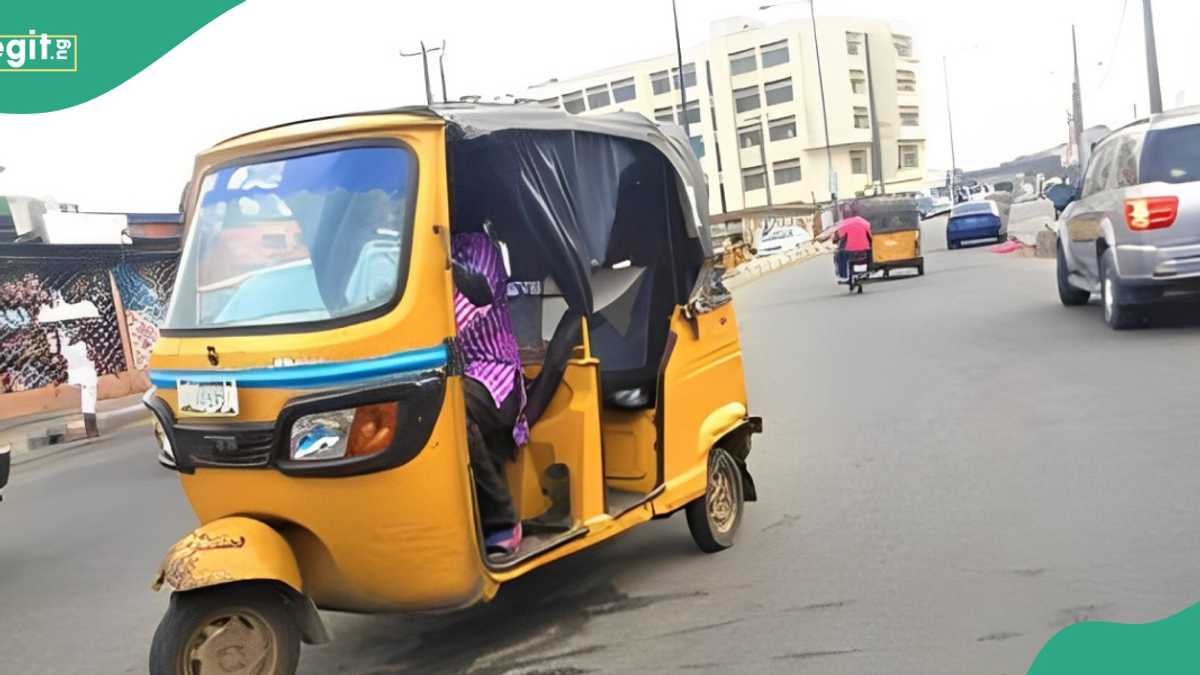
Commercial tricycle operators — known widely as keke riders — across the Federal Capital Territory have raised their fares by between N100 and N200 on multiple routes. The trigger is straightforward: petrol prices at filling stations in Abuja have climbed to between N1,410 and N1,450 per litre, making it financially untenable for operators to hold their previous rates.
The increases took effect on Sunday, following a N85 rise in the gantry price at Dangote Petroleum Refinery — the ex-depot price moved from N1,265 to N1,350 per litre. That upstream shift feeds directly into what riders pay at the pump, and they have passed the cost on to passengers without apology.
Which routes are affected?
These are not marginal adjustments. For a commuter making two return trips daily, the cumulative weekly cost rises sharply — and most of these passengers are on fixed or informal incomes.
What are the riders saying?
Three operators in different parts of the FCT gave consistent accounts. Saidu Mohamed, who works the Kubwa corridor, said the combination of fuel costs and rising spare-parts prices left him no room to absorb losses. Haruna Abdullahi, operating in Dutse, confirmed he purchased petrol at N1,430 per litre — a figure he described as a direct hit on his daily earnings.
Ibrahim Dauda, who operates in Kabusa and also bought fuel at N1,430 per litre at an AY Shafa filling station, made a broader point: the effects of expensive petrol do not stop at transport fares. Businesses and households across the board are absorbing the same pressure.
Their logic is sound. These are small operators with no hedging mechanism, no subsidy and no buffer. When the pump price rises, the fare rises. That is the arithmetic of informal transport in Nigeria.
How are commuters coping?
Not well, by most accounts. Daniel Aaron, a Kubwa resident, put it plainly: “I find it very difficult to move around for my daily bread again because of the increase in transportation.” That sentence captures the real-world consequence more clearly than any economic index.
Tony Akinbode said he has reduced how often he leaves home, and noted that market traders are also reporting higher costs tied to fuel prices. Jimoh Bashir, also in Kubwa, pointed out that workers, students and market-goers are being forced to revise their daily budgets — often with little or no notice from operators.
The strain is cumulative. Every fare increase compounds existing pressure from food inflation, utility costs and a weakened naira.
What is driving the global side of this?
The domestic picture does not exist in isolation. Brent crude is trading at approximately $103.21 per barrel, while US West Texas Intermediate (WTI) sits at around $100 per barrel. Elevated global crude prices push up the cost of refined products, which feeds into what Dangote and other suppliers charge at the gantry — and ultimately into what a keke rider pays at the pump in Kubwa or Kabusa.
Nigeria’s exposure to global oil price swings remains acute, not least because domestic refining capacity — even with Dangote now operational — has not yet stabilised the market sufficiently to insulate everyday Nigerians from external shocks.
What is the government promising — and is it credible?
The Federal Government has set an October 1 deadline to reduce intra-state transport fares through the adoption of Compressed Natural Gas (CNG) vehicles and electric alternatives. The ambition is real. The delivery, so far, is not matching the rhetoric.
Checks on busy Lagos routes tell the story. Commuters travelling from Sango-Ota to Oshodi are paying between N1,500 and N1,700. The Atan-Ota to Abule-Egba corridor costs N1,200 to N1,500. The Sango-Abeokuda trip runs to about N2,000, and passengers heading from Ojodu Berger to Ibadan are paying roughly N2,500.
None of those fares suggest a market on the verge of relief. With weeks to go before the government’s own deadline, the gap between policy announcement and street-level reality remains wide. Commuters in Abuja and Lagos are not waiting for CNG rollouts — they are paying higher fares today, with no certainty that October will bring any change at all.