
A Calculated Arrangement
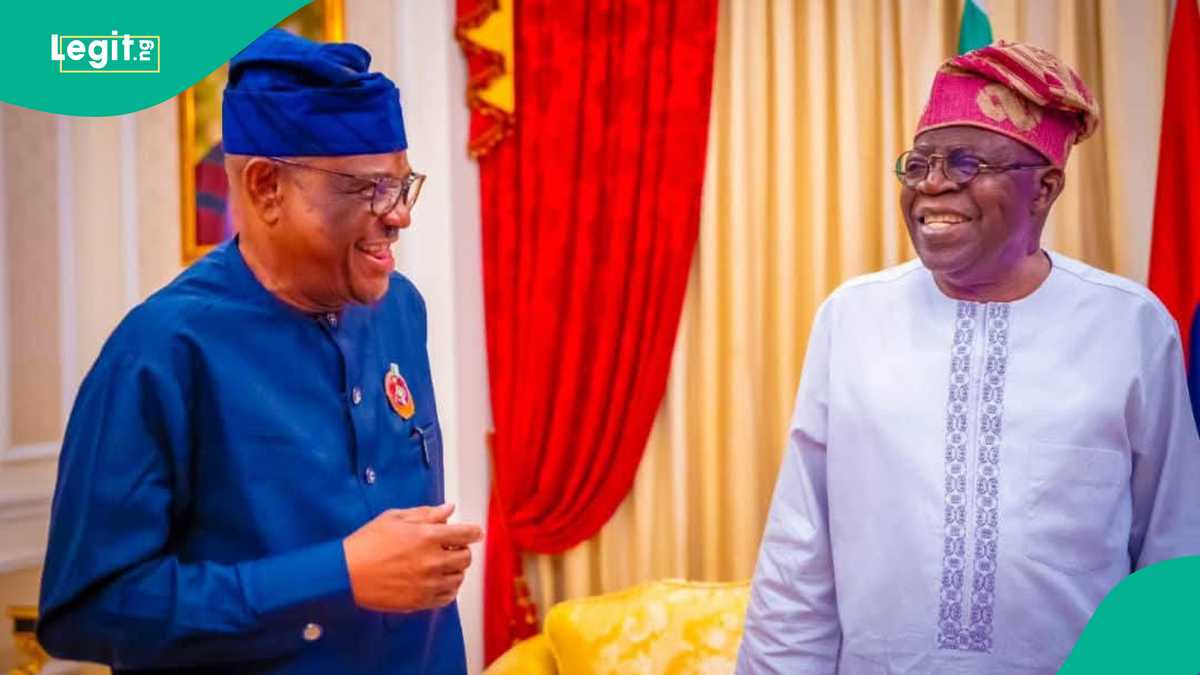
President Bola Tinubu is manoeuvring to give FCT Minister Nyesom Wike a defined role in his 2027 re-election campaign — one that keeps the former Rivers State governor useful without granting him formal standing inside the All Progressives Congress. That distinction matters enormously, and it tells us something significant about how Tinubu intends to manage the contradictions his coalition has generated.
Sources familiar with the emerging structure say Wike will be tasked with coordinating campaign efforts in Rivers State and the Federal Capital Territory, the two territories he has loudly claimed as his political turf. The arrangement is designed to exploit his networks whilst keeping him outside the APC’s official hierarchy — a necessity, given that Wike remains a card-carrying member of the Peoples Democratic Party.
This is not an accident of administration. It is a deliberate political calculation, and understanding it requires looking squarely at the fault lines it is meant to paper over.
Wike’s Ambition and the APC’s Discomfort
Wike has never been shy about his self-assessment. Earlier in September, he declared himself the “General Commander of the Political Infantry” and insisted he remains in charge of political structures in both Rivers and the FCT, APC membership or not. “You do not need to be governor before you can be in charge,” he said. The remark was characteristically blunt — and it landed badly in APC circles.
APC governors have pushed back hard. The Progressives Governors Forum, chaired by Imo State Governor Hope Uzodimma — whom Wike has singled out as working against him — moved swiftly to distance itself from Wike’s so-called Rainbow Coalition, a cross-party arrangement designed to rally support for Tinubu beyond the APC’s formal structures. The forum resolved unanimously that its members would not participate in or endorse any alliance capable of “undermining the reelection of Mr President, weakening the APC or adversely affecting any candidate of the party at all levels.” The language was diplomatic. The intent was not.
Wike also named Kwara State Governor AbdulRahman AbdulRazaq among those he believes are working against him. The friction is real, and it is growing.
Tinubu’s reported response is to contain the damage by narrowing Wike’s brief: secure votes for the president in two territories, and go no further. It is a leash dressed up as an appointment.
A Decentralised Campaign With Its Own Tensions
The wider 2027 campaign architecture is worth scrutinising in its own right. Former Zamfara State Governor Abdulaziz Yari is set to serve as Director General of the Presidential Campaign Council, yet Senate President Godswill Akpabio and Deputy Senate President Jibrin Barau are expected to operate independently of his authority, each with direct lines of accountability within the broader structure. A Director General who does not command the Senate’s leadership is a Director General in title more than in practice.
Aviation Minister Festus Keyamo is being considered for a senior spokesperson role. He served as Director of Public Affairs in Tinubu’s 2023 campaign and held a communications brief during former President Muhammadu Buhari’s 2019 re-election bid, so his return would bring institutional continuity to the campaign’s messaging operation — one of the few genuinely coherent threads in an otherwise fragmented structure.
Wike’s alliance with Tinubu dates to the 2023 election, when he and four other PDP governors — the so-called G5 — withheld support from PDP presidential candidate Atiku Abubakar. Tinubu rewarded him with the FCT ministerial portfolio, making him one of the most prominent opposition politicians ever to sit in a federal cabinet. That relationship has been mutually beneficial, but it has never been without tension, and the current arrangement suggests both men understand its limits.
What This Tells Us About 2027
The emerging picture is of a campaign that is powerful in resources but complicated in structure — one where personal loyalties, party boundaries and competing ambitions must all be managed simultaneously. Tinubu is trying to keep Wike close enough to be useful and distant enough not to destabilise the APC’s internal order. Whether that balance holds through a full campaign cycle is another matter entirely.
What is clear is that the 2027 election is already being fought on the ground, in the corridors and in the quiet negotiations over who controls what. Nigeria deserves to watch this process closely — because the architecture of a campaign reveals the architecture of governance that follows it.