A Market That Should Be Cheaper
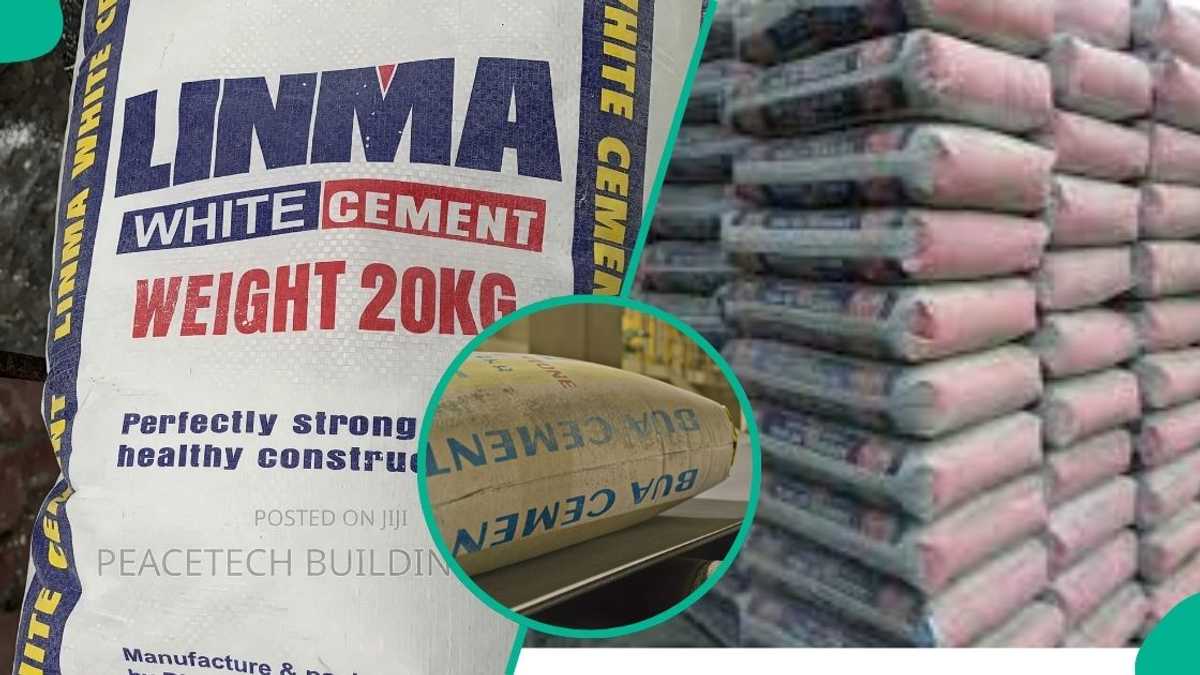
Walk into any building materials market in Lagos, Abuja or Port Harcourt, and the price of a 50kg bag of cement will still make you wince. At up to ₦15,000 per bag, it is a figure that has become a running grievance for contractors, self-builders and developers alike. Now, one of the sector’s newer players has stepped forward to explain why prices remain stubbornly elevated — and what it intends to do about it.
HBM Nigeria, the Chinese-owned cement and readymix concrete company, broke its silence on the issue at the Experiencing Panterra event in Lagos, where its Chief Executive Officer, Lolu Alade-Akinyemi, set out the structural pressures that keep production costs — and therefore retail prices — painfully high.
The Foreign Exchange Problem
At the heart of HBM’s explanation is a problem familiar to almost every Nigerian manufacturer: dependence on foreign currency. Alade-Akinyemi, represented at the event by the company’s General Manager of Readymix Concrete, Emmanuel Ilaboya, was direct about how deep that exposure runs.
A significant proportion of what cement and concrete producers use in their operations is either imported outright or priced in dollars, regardless of where it originates. That includes energy. “The gas and the oil, despite the fact that they are made locally, will be paid in dollars,” Alade-Akinyemi said — a detail that strips away any comfortable assumption that Nigeria’s domestic hydrocarbon resources insulate local manufacturers from currency risk.
When the naira weakens, input costs rise automatically, and those costs must eventually find their way into the price of every bag that leaves the factory gate. Alade-Akinyemi acknowledged, however, that the relative exchange rate stability of the past year had at least given manufacturers a clearer view of their cost base, making forward planning more manageable than it had been during periods of sharp naira depreciation.
The Power Infrastructure Burden
Foreign exchange exposure is only part of the story. Nigeria’s chronic electricity crisis adds a second, equally punishing layer of cost. In markets where public power supply is reasonably reliable, cement manufacturers can draw from the grid and keep their energy bills within predictable limits. In Nigeria, that option barely exists.
“There is no cement manufacturer in Nigeria that can rely on that,” Alade-Akinyemi said, referring to grid electricity. “You have to build your own power plant to produce the power that you can use — that costs money.” The capital required to construct and maintain captive power generation is enormous, and it is a cost that Nigerian producers carry entirely on their own balance sheets, with no equivalent burden falling on competitors in more power-stable markets.
Together, the foreign exchange exposure and the self-generated power requirement form a structural floor beneath which production costs cannot easily fall, regardless of how efficiently a company manages its other operations. HBM says it is focused on operational efficiency to limit how much of these input costs are passed on to consumers, but it stops short of suggesting the underlying pressures will disappear any time soon.
An Underdeveloped Market With Room to Grow
What makes Nigeria’s cement market particularly striking is not just its high prices but its low consumption. Alade-Akinyemi put the figure at below 150 kilogrammes per person annually — a fraction of Egypt’s roughly 500kg per capita and South Africa’s approximately 700kg. For a country of more than 200 million people with a vast housing deficit and ageing infrastructure, that gap represents an enormous volume of unmet demand.
Industry capacity utilisation compounds the picture further. Alade-Akinyemi estimated that manufacturers across the sector are operating at between 20% and 30% of their installed capacity. In other words, the physical means to produce far more cement already exists; the barriers are economic and infrastructural rather than a shortage of factories or equipment.
It is against this backdrop that HBM has launched a fresh distributor recruitment drive, seeking to build out a distribution network capable of reaching a larger share of the market. Prospective distributors are being asked to demonstrate at least ₦250 million in working capital, a 500-square-metre warehouse and access to a fleet of five heavy-goods vehicles. The requirements signal that HBM is not looking for small operators — it wants partners with the scale to move serious volumes.
Competition, Transparency and What Comes Next
HBM’s push for market share puts it squarely in competition with Dangote Cement and BUA Cement, the two dominant forces in Nigeria’s building materials sector. Whether a more active HBM will translate into meaningfully lower prices for consumers remains to be seen, but increased competition in a market operating well below capacity is rarely bad news for buyers.
At the same Lagos event, Panterra CEO Tayo Odunsi pressed for greater transparency across Nigeria’s real estate sector, arguing that investors need reliable data before they can commit capital with confidence. Panterra’s Chief Investment Officer, Ayo Ibaru, pointed to currency stability, access to financing, security conditions and partnerships with investors from the Global South as the forces increasingly shaping West Africa’s property landscape.
The broader message from the event was clear enough: Nigeria’s construction and real estate sectors hold genuine promise, but that promise will remain largely unrealised until the structural costs — power, foreign exchange, fragmented distribution — are honestly confronted rather than politely glossed over. HBM, at least, appears willing to name them plainly.