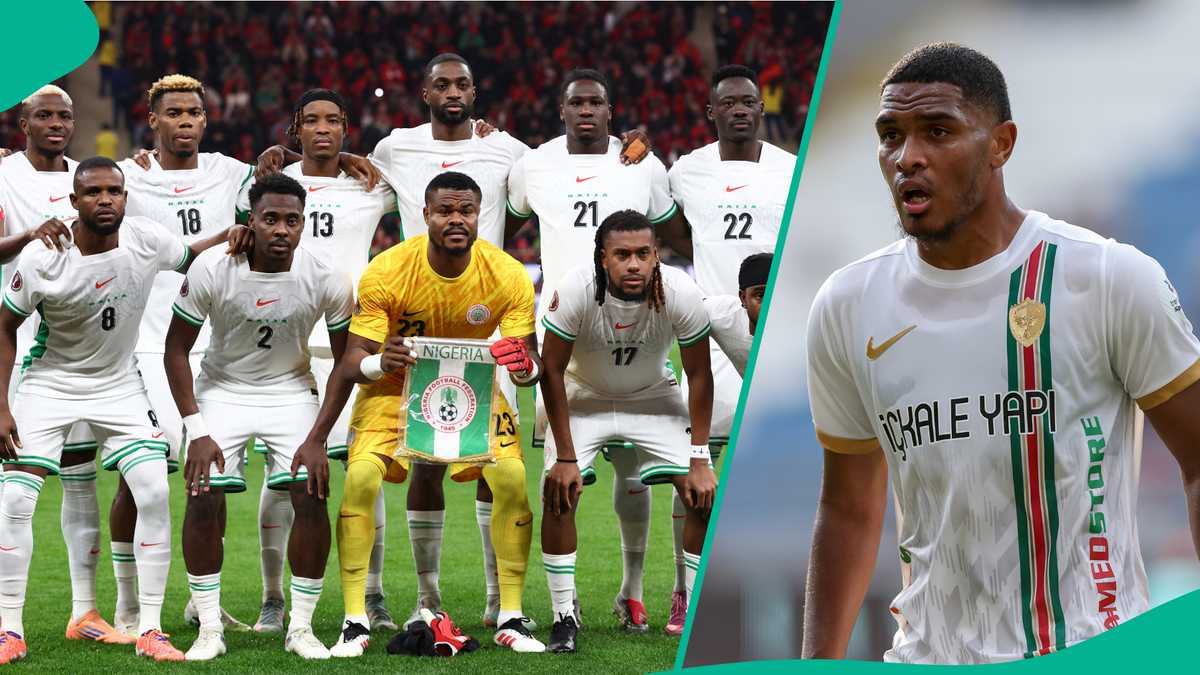
When the Madagascar squad touched down at Murtala Muhammed International Airport in Lagos, they arrived not as tourists but as a side with a point to prove. Led by French coach Corentin Martins, the Malagasy players flew in ahead of their 2027 Africa Cup of Nations qualifier against Nigeria, with the Godswill Akpabio Stadium in Uyo set to host the contest on Friday, 25 September.
The build-up had been dominated by one question: would Madagascar be overawed by facing the Super Eagles on their own patch? Midfielder Rayan Raveloson answered that question before his boots had barely touched Nigerian soil.
Speaking to Brila FM on arrival in Uyo, the Amedspor midfielder was blunt. “No, it is football, they are humans like us, guys. No, we’re not scared, why should we?” His tone was matter-of-fact rather than theatrical — the kind of confidence that tends to be more unsettling than chest-thumping bravado.
Both sides came into the fixture chasing a winning start to the qualifying campaign. Nigeria head coach Eric Chelle had named a 24-man squad, while Martins called up 25 players for Madagascar’s challenge. The match carried real weight for both camps — an early stumble in qualification can take months to recover from.
The absence of Victor Osimhen had already drawn considerable attention. The Galatasaray forward withdrew from the Super Eagles squad ahead of the qualifier, and Raveloson acknowledged the significance of that development. He stopped well short of gloating, however. When pressed on whether Osimhen is currently the best player on the African continent, the Madagascar man deflected cleanly. “I don’t know, it’s not for me to say, you have to ask all Africans,” he said — a diplomatic sidestep that nonetheless confirmed he had thought about the question.
Nigeria’s preparations were complicated not just by Osimhen’s withdrawal but by the broader expectation that surrounds every Super Eagles fixture at home. Losing to Madagascar in Uyo would be a serious embarrassment, and everyone in Nigerian football knew it.
After the Uyo clash, Nigeria’s focus would shift to a second qualifying match against Guinea-Bissau. Madagascar, for their part, would face a trip to Tanzania — one of the three co-hosts of the 2027 Africa Cup of Nations — in their following fixture, making their opening result in Nigeria all the more consequential.
Raveloson’s message, stripped of sentiment, was simple: Madagascar came to compete, not to make up the numbers.