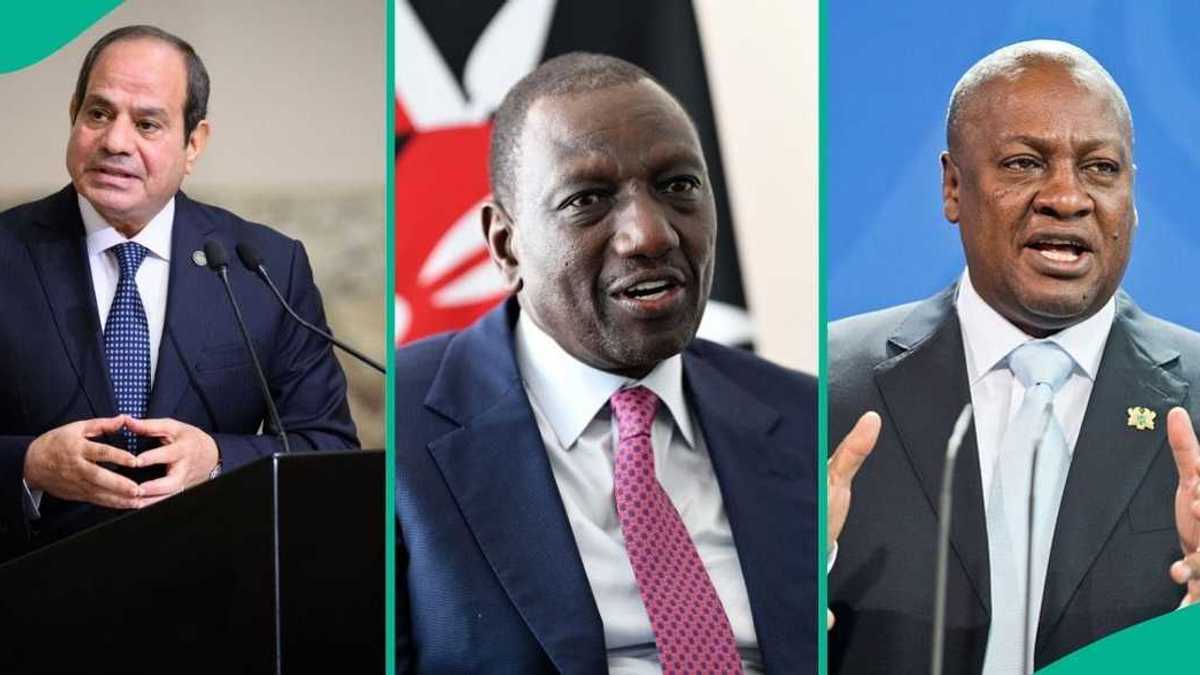
Egypt remains Africa’s single largest borrower from the International Monetary Fund, carrying outstanding credit of approximately SDR 7.86 billion — equivalent to $10.76 billion, or roughly ₦14.30 trillion — as of 15 September 2026. The latest IMF figures show that the continent’s ten heaviest debtors collectively owe around SDR 28.62 billion, or about $39.17 billion (₦52.06 trillion), out of a total African outstanding balance of SDR 39.9 billion ($54.62 billion). That means ten countries account for roughly 72 per cent of all IMF credit extended across the continent — a concentration that deserves scrutiny.
The IMF’s SDR exchange rate on 15 September stood at $1.36895 per SDR, while the official naira-dollar rate was approximately ₦1,328.65 to the dollar, placing one SDR at about ₦1,818.85. These rates underpin all naira conversions cited here. One notable absence from the top ten is Nigeria — Africa’s largest economy by GDP — which does not appear among the continent’s biggest holders of outstanding IMF credit at this reporting date.
Egypt, West Africa and the East African bloc
Egypt’s position at the top is not accidental. Its IMF financing flows primarily through an Extended Fund Facility (EFF) and a Resilience and Sustainability Facility (RSF) arrangement, both of which reflect Cairo’s prolonged struggle to stabilise an economy battered by foreign-currency shortages, subsidy reform pressures and the aftershocks of global commodity disruptions. The SDR 7.86 billion figure at end-August followed additional disbursements under the programme, cementing Egypt’s status as the Fund’s most exposed African client by a considerable margin.
Côte d’Ivoire’s second-place ranking — SDR 4.14 billion, or ₦7.53 trillion — is striking for a country often cited as a West African growth story. Ghana, in third place with SDR 2.99 billion, has been repaying incrementally: IMF data show it returned about SDR 6.64 million during the first half of September alone, a modest but meaningful sign of programme compliance. Kenya ranks fourth at SDR 2.85 billion, continuing to draw on IMF support even as its government has faced domestic political turbulence over fiscal policy. Taken together, these four countries alone account for more than half the continent’s total outstanding IMF credit — a striking illustration of how debt exposure clusters among the more economically active African states rather than only the most fragile ones.
The Democratic Republic of Congo sits fifth with SDR 2.43 billion. The IMF has channelled support through its Extended Credit Facility (ECF) and RSF, and a June 2026 programme review unlocked a further $348.5 million in financing, pushing total ECF disbursements to approximately $1.03 billion. Angola follows in sixth place at SDR 2.23 billion, with its IMF exposure drawn largely from the Fund’s General Resources Account; the country’s economic trajectory remains tightly bound to oil output and revenues, making its debt sustainability highly sensitive to commodity price swings. Ethiopia, seventh at SDR 2.09 billion, is using IMF backing to anchor a broader reform agenda targeting macroeconomic imbalances and debt sustainability — and IMF officials noted in July 2026 that macroeconomic outcomes had exceeded expectations, though external shocks remain a live risk.
Tanzania, Zambia and Cameroon complete the list. Tanzania (SDR 1.66 billion) is implementing reforms under ECF and RSF programmes, while Zambia (SDR 1.27 billion) has focused its IMF engagement on fiscal consolidation and restoring debt sustainability as part of a wider external-debt restructuring. Cameroon rounds out the ten with SDR 1.10 billion, drawing on a combination of General Resources Account financing, the Poverty Reduction and Growth Trust and the Resilience and Sustainability Trust — a layered exposure that reflects both structural economic weaknesses and the country’s ongoing security challenges in its anglophone regions.
What the full picture reveals is an Africa in which IMF dependency is neither random nor confined to the smallest or poorest states. Several of the ten countries on this list are regarded as regional economic anchors. The aggregate bill — $39.17 billion for the top ten alone — is a number that ought to sharpen minds in Abuja, Accra, Nairobi and beyond about the long-term cost of external financing and the urgency of building the domestic revenue bases that would make such borrowing unnecessary.