
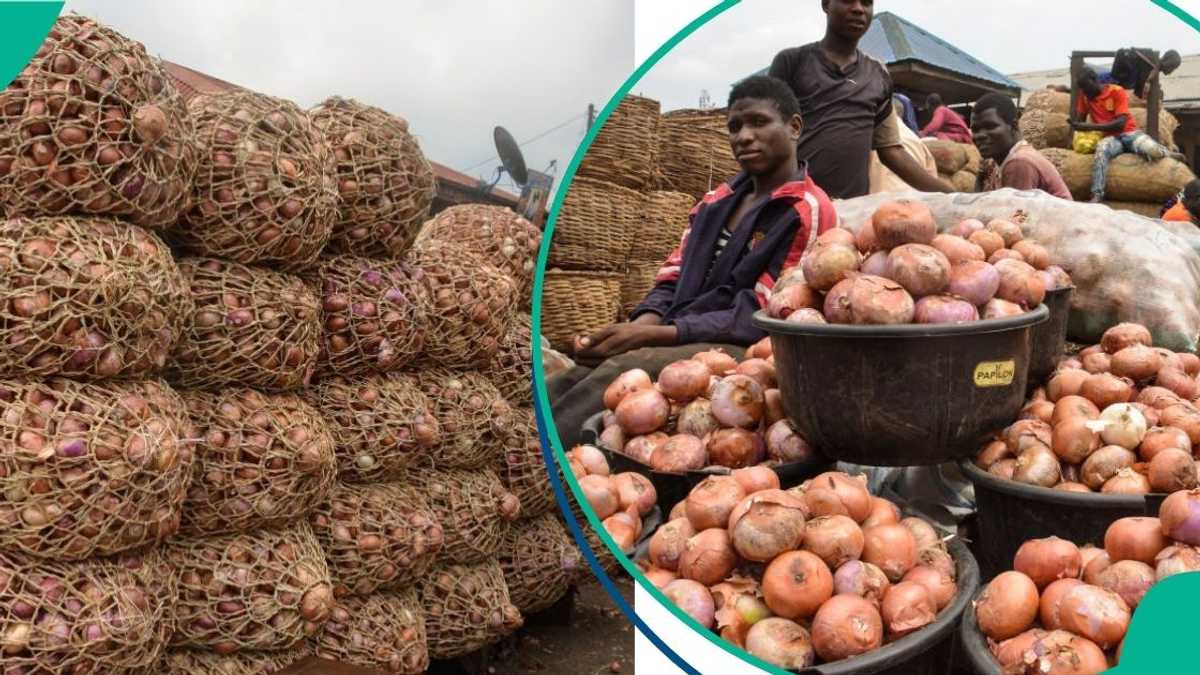
Something as ordinary as an onion has become a measure of how badly supply chains can break down. In Lagos markets, a paint bucket of onions that cost ₦3,000 in May now fetches ₦10,000 — a 233 per cent increase in four months. That is not a rounding error or a seasonal blip. It is a signal that something structural has gone wrong between the farm and the kitchen.
The National Onion Producers, Processors and Marketers Association of Nigeria, known as NOPPMAN, points squarely at flooding across the country’s northern producing belt. States including Sokoto, Kebbi, Zamfara, Kano, Kaduna, Katsina and Adamawa — which together account for the bulk of Nigeria’s onion output — have seen farms damaged and harvests cut short. When the fields fail, the markets feel it almost immediately.
Rising seed costs have compounded the problem at the production end. Farmers who survived the floods still face higher input costs, which means smaller margins and less incentive to plant aggressively. The squeeze begins long before a single onion reaches a Lagos market stall.
By the time produce does make it south, traders absorb yet another blow. Ibrahim Idris, a wholesaler at Oyingbo Market, puts transportation alone at roughly ₦30,000 per bag, before accounting for handling and incidental charges along the route from northern Nigeria. A wholesale bag that sold for between ₦50,000 and ₦70,000 in May now commands between ₦150,000 and ₦250,000 depending on size and variety. Those numbers are not abstractions — they land directly on the prices consumers pay.
Smaller quantities tell the same story. A small bag that went for between ₦17,000 and ₦20,000 in March now costs between ₦60,000 and ₦70,000. Restaurants, food vendors and ordinary households buying retail quantities are all caught in the same bind. The cost of a pot of stew has quietly risen, even when the cook has not changed a single ingredient.
Fuel costs are doing their share of the damage too. Nigeria’s persistently high pump prices make long-haul haulage from the north an expensive proposition, and those costs are passed down the chain without apology. Traders are not profiteering — they are surviving. The margin between what they pay and what they charge is, for many, already uncomfortably thin.
Storage adds another layer of difficulty. Onions deteriorate quickly if not properly managed. Traders at Oyingbo remove them from purchase bags and spread them in ventilated spaces or sunlight to slow spoilage. One trader there admitted to selling older stock precisely because freshly harvested onions were proving more fragile and prone to rot. Every onion that spoils before it sells is money gone — and that loss, too, finds its way into the price the next buyer pays.
The dry season typically brings relief. Supply tends to be more plentiful when northern growing conditions improve, and prices historically ease once the harvest cycle turns. But that is cold comfort for households managing food budgets right now, in the middle of a wet season that has been particularly punishing. The broader economic picture — headline inflation easing marginally to 15.39 per cent in August according to the National Bureau of Statistics — offers little reassurance when the onion bin at the local market tells a sharply different story.
Nigeria grows enough food to feed itself. The recurring failure is not agricultural potential — it is the infrastructure, the logistics and the vulnerability to weather shocks that turn a bad rainy season into a market crisis. Until those gaps are seriously addressed, the onion will keep serving as an uncomfortable reminder of how fragile the link between field and table truly is.