
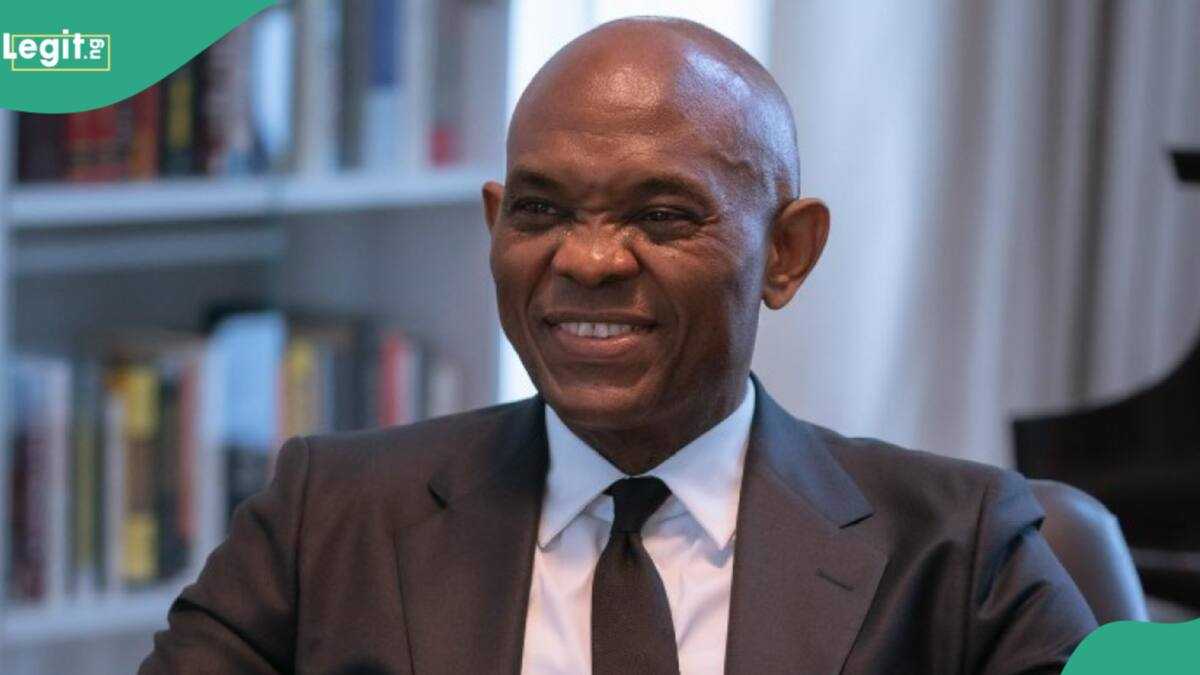
There is a particular kind of confidence that speaks louder than any press release, and Tony Elumelu demonstrated it plainly on the last day of September 2026. Through Heirs Energies Limited, the company he controls, Elumelu acquired six million additional shares in Seplat Energy Plc on the London market, paying £8.87 per share for a total outlay of approximately £53.2 million. It was a deliberate, sizeable move — and it was made in full view of regulators on two continents.
The purchase did not arrive without context. Less than a year earlier, in December 2025, Heirs Energies and its sister company Heirs Holdings had bought 120.4 million Seplat shares from French energy firm Maurel & Prom. That transaction, worth roughly $500 million, announced Elumelu’s serious ambitions in Nigeria’s upstream oil and gas sector. The September acquisition simply deepens the commitment.
Following the latest transaction, Heirs Energies’ direct holding in Seplat stands at 27,943,867 shares. When combined with the holdings of Heirs Holdings — both entities firmly under Elumelu’s control — the total reaches approximately 126.4 million shares. Against Seplat’s 599,944,561 issued shares, that translates to a 21.07% voting interest. It does not constitute majority ownership, but it is a stake large enough to carry real weight in any shareholder decision that matters.
The timing is anything but accidental. Seplat announced in June 2026 that its current chairman, Udoma Udo Udoma, would retire on 31 December 2026. Elumelu was elected as his successor, with the appointment taking effect on 1 January 2027. He had already joined the board as a non-executive director in January 2026, immediately after the Maurel & Prom deal closed. The September share purchase therefore positions him — and his companies — with an even stronger foothold before he formally assumes the chairmanship.
That sequence of events — major acquisition, board seat, further share purchase, then chairmanship — reflects a methodical approach to building influence in a strategically critical company. Seplat Energy is one of Nigeria’s most prominent indigenous oil and gas producers, listed on both the Nigerian Exchange Limited and the London Stock Exchange. For Elumelu, whose Heirs Holdings empire spans banking, hospitality, power and real estate, adding a commanding position in upstream energy is a logical and consequential expansion.
The financial rewards have already been striking. Elumelu’s combined stake, initially acquired for around $500 million, had grown to a paper value exceeding $1 billion by the time of the September transaction — a gain that propelled him into the ranks of Africa’s dollar billionaires. The numbers are impressive, but the strategic picture is arguably more so. A man who chairs the board and controls more than a fifth of the votes is not merely a passive investor; he is a principal shaper of the company’s direction.
Seplat disclosed the September transaction in compliance with Rule 17.15(c) of the NGX Rulebook 2015, which governs disclosure of dealings in an issuer’s shares, and Article 19(3) of the UK Market Abuse Regulation. The filing sets out the transaction date, the London venue, the price per share and the resulting holdings — precisely the kind of transparency that dual-listed companies are obliged to maintain. There is nothing irregular about the purchase; the disclosure mechanism worked as intended.
What the filing also does, quietly but unmistakably, is signal to the broader market where Elumelu’s priorities lie. Nigeria’s energy sector remains one of the country’s most consequential economic arenas, and indigenous ownership of significant upstream assets has long been a policy objective that successive administrations have pursued with varying success. Elumelu’s accumulation of Seplat shares is, in that sense, a private-sector expression of an idea that Nigerian capital can and should anchor Nigerian energy.
Whether his chairmanship, when it begins in January 2027, will translate that ownership into operational transformation remains to be seen. Seplat faces the familiar pressures of any Nigerian oil producer — infrastructure constraints, regulatory complexity, global energy transition pressures — and a new chairman, however well-capitalised, inherits those realities alongside the title. But Elumelu has rarely been a figurehead. His record at UBA and across the Heirs Holdings portfolio suggests he prefers to be the driving force rather than the ceremonial face.
For now, the September transaction stands as a statement of intent — measured in pounds sterling, registered with regulators in Lagos and London, and pointing unmistakably towards a larger role in one of Nigeria’s most significant energy companies.