
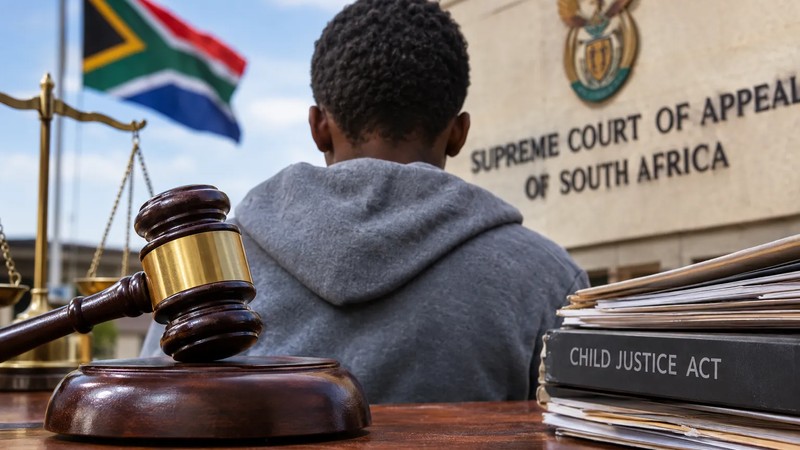
A court has confirmed what should have been obvious from the start: the South African state failed a mentally disabled 17-year-old at every turn, locking him in an adult prison for nearly three months and leaving him exposed to assault and rape. The Supreme Court of Appeal has now ordered the state to pay for it.
The case of S Nene is not a bureaucratic anomaly. It is a window into the chronic dysfunction of a criminal justice system that routinely processes human beings as paperwork. The SCA’s ruling — overturning a High Court judgment that had originally dismissed the damages claim — establishes a clear thesis: multiple arms of the state, from the police to the prosecution service to the Department of Correctional Services, each had the opportunity to intervene, and each chose not to.
Nene was arrested on 12 February 2013 in Montana, Pretoria, after a security officer apprehended two men suspected of attempting to steal a woman’s handbag. He lived with his aunt and guardian in Atteridgeville, roughly 50 kilometres away, and had left for Zodwa School for Mentally Handicapped Learners four days earlier and never come home. His aunt had already reported him missing. None of that information reached the officers who processed him.
The warning signs were not subtle. Police records gave contradictory details: one listed his date of birth as June 1985, placing his age at 27; another recorded him as 18. He could not provide a proper address. He could not sign documents and used a thumbprint instead. He was visibly immature and struggled to communicate coherently. A district surgeon’s report dated 18 February found that Nene was not orientated, spoke irrelevantly, had poor intelligence and could not understand the charges against him or the consequences of a conviction. The magistrate raised concerns about his mental state. None of it moved the system.
He remained in custody — held in the adult sections of Newlock Prison in Pretoria and Weskoppies Psychiatric Hospital — until 3 May 2013, when his aunt produced his birth certificate and proved he was a minor. During those months, according to the curator ad litem appointed to represent him, Nene was physically and sexually assaulted and raped by other inmates. The Child Justice Act contains specific safeguards designed to prevent precisely this kind of outcome. Officials ignored them entirely.
Accountability Confirmed, Damage Already Done
The SCA has now replaced the High Court’s dismissal with a substantive order. The Minister of Police is liable for all proven damages arising from Nene’s unlawful arrest and initial detention. The Ministers of Police and Justice, along with the National Director of Public Prosecutions, are jointly and severally liable for the damages flowing from his continued unlawful detention. The state must also pay legal costs on an attorney-and-client scale — a punitive costs order that signals the court’s view of the conduct involved.
“The whole criminal justice system failed him,” the SCA stated plainly, placing ultimate responsibility on the executive heads of the departments concerned. That sentence deserves to sit uncomfortably with every official who processed Nene’s file and moved on.
Compensation matters, but it does not undo three months in an adult prison for a child who should never have been there. What this ruling does is remove any remaining pretence that the failures were isolated or excusable. They were systemic, they were foreseeable, and they were preventable. A justice system that cannot identify a mentally disabled teenager — or chooses not to — is not administering justice. It is administering paperwork. The Nene case is a reminder that the distance between those two things can destroy a life.