
A Federal University Becomes a Political Flashpoint
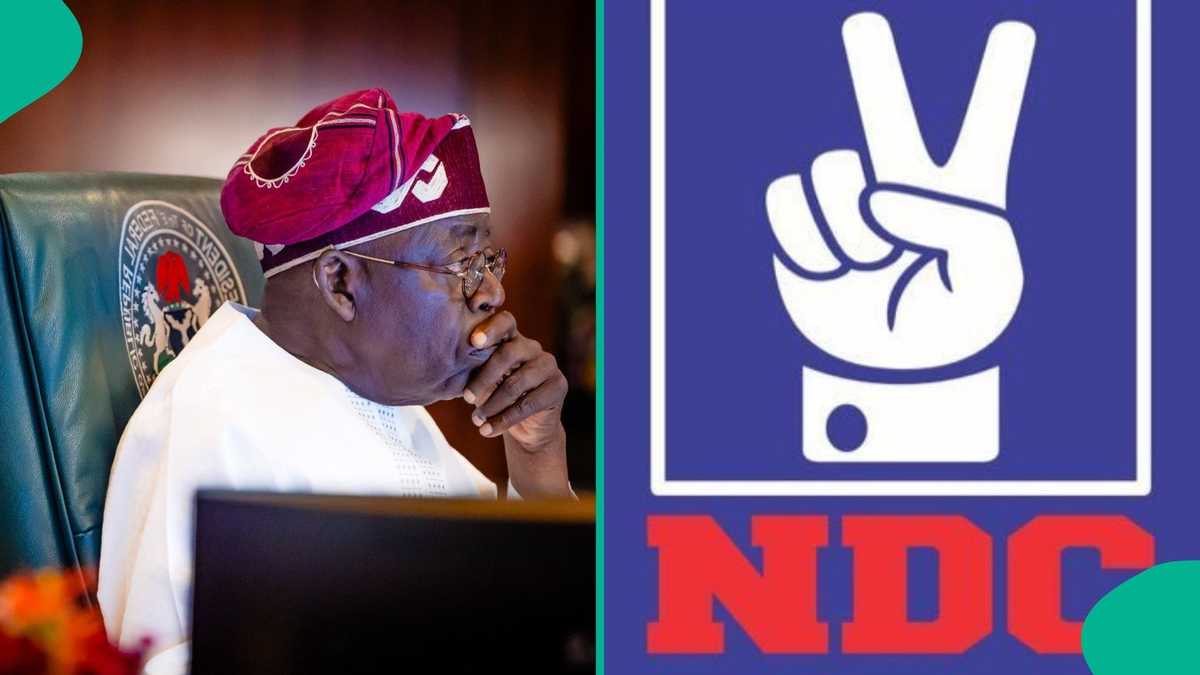
Ahmadu Bello University has more than doubled its undergraduate registration charges for the 2026/2027 academic session, and the political fallout has been immediate. The Nigeria Democratic Congress has turned the announcement into a direct attack on President Bola Tinubu, arguing that the fee increase is not an isolated institutional decision but a symptom of a government that has consistently made life harder for ordinary Nigerians. That thesis deserves scrutiny — both as a statement of fact and as an act of political positioning.
ABU’s Governing Council approved the revised charges at its 218th Special Meeting on 29 September, following a Senate resolution and consultations with stakeholders. Fees for the 2026/2027 session will now range from N143,000 to N298,000, depending on the programme and level of study. The previous session’s charges sat between roughly N62,000 and N84,000. That is not an adjustment — it is a structural shift in what a federal university education costs a Nigerian family.
The NDC’s Argument and What It Gets Right
The NDC published its position on 8 October via its verified X account, under the headline “ABU Tuition Increase: President Tinubu Sinking More Families Into Poverty.” The language is combative, but the underlying concern is legitimate. ABU is a federal government research university in Zaria, Kaduna State — the kind of institution that working-class families across the north and beyond have historically depended upon precisely because it was affordable. A near-tripling of fees changes that calculus entirely.
The party’s statement put it plainly: the take-home pay of many working-class Nigerians “cannot even take them home, let alone cover the new fee increase.” That line is blunt, but it reflects a real tension. Wage growth in Nigeria has not kept pace with inflation since the removal of the petrol subsidy in 2023, and the naira’s depreciation has compounded the squeeze on household incomes. Against that backdrop, a fee hike of this magnitude at a federal institution is not a neutral administrative act.
Where the NDC’s argument is weaker is in its framing of causation. University fee increases across Nigeria have been building for years, driven by chronic underfunding, deferred infrastructure costs and the accumulated effects of ASUU disputes. Pinning the ABU decision solely on Tinubu’s policies is politically convenient but analytically incomplete. The structural underfunding of Nigerian universities long predates this administration.
The 2027 Dimension
The NDC made no attempt to separate its policy criticism from its electoral ambitions, and that transparency is at least honest. The party used the statement to urge Nigerians to obtain their Permanent Voter Cards and reject the current administration at the 2027 polls. It also confirmed that Peter Obi — who resigned from the African Democratic Congress on 2 May 2026 and was ratified as the NDC’s presidential candidate on 29 May 2026 — would make education a central priority of any government he leads.
The party pledged that an Obi-led NDC government would “fund our universities and create an enabling business environment for young people to thrive.” Those are familiar promises in Nigerian electoral politics, and voters will rightly demand specifics before the campaign matures. Still, the NDC has identified a genuine grievance and attached it to a credible political vehicle — which is precisely how opposition politics is supposed to function.
The closing line of the NDC’s statement — “Just hold on for us, our dear ABU students” — will either age well or become an embarrassing footnote, depending on what happens between now and polling day. For the students currently facing registration bills that their parents cannot meet, the wait may feel considerably longer than the NDC intends.
What This Moment Actually Reveals
The ABU fee hike is a concrete illustration of a broader failure: Nigeria has not built a sustainable funding model for public higher education, and successive administrations have passed that failure directly onto students and their families. The Tinubu government inherits that failure, but it also governs in the present — and the present is one where inflation is severe, incomes are strained and a federal university has just made itself significantly less accessible to the people it was built to serve.
The NDC is right to make noise. Whether it can convert that noise into a coherent education policy — and ultimately into votes — is the question that 2027 will answer.