The announcement sounded generous. It was — just not for Nigeria.
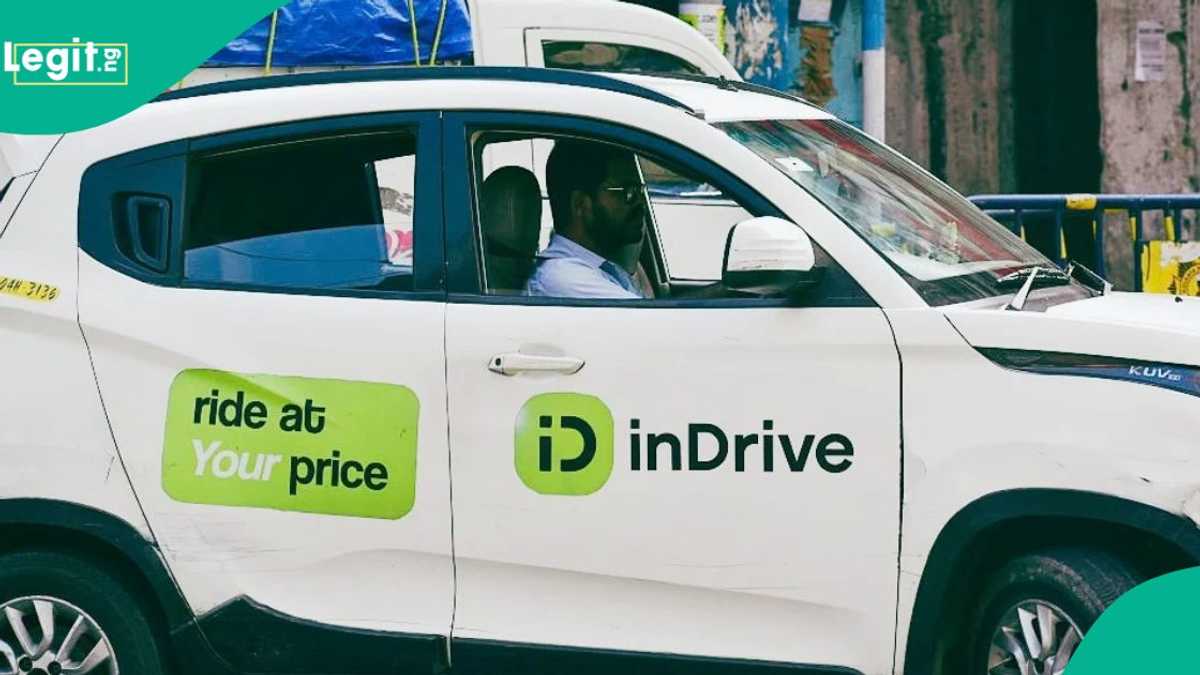
The story begins in South Africa, where inDrive, the ride-hailing platform that competes with Uber and Bolt across several African markets, decided to revive a bold incentive for drivers in two of its biggest cities. From the first of October to the last day of December 2026, drivers operating in Johannesburg and Pretoria would hand over just one percent of every fare to the platform, keeping ninety-nine percent for themselves before settling their own running costs. The move was not spontaneous. Petrol prices in South Africa had been climbing, and the pressure on drivers’ margins had become difficult to ignore.
Ashif Black, inDrive’s country representative in South Africa, said the company was responding directly to that pressure. By shrinking the platform’s cut, the company reasoned, drivers would walk away from each completed trip with more money in hand — money that could then go towards fuel, vehicle maintenance, insurance and the other expenses that quietly consume a driver’s daily earnings. The logic was straightforward, and the timing deliberate.
What the 1% commission does not mean, however, is that drivers pocket ninety-nine percent as pure profit. That figure represents what remains after the platform takes its share, not after the car has been refuelled and the tyres checked. To illustrate the practical difference, consider a hypothetical fare of ten thousand naira: at a one-percent commission, a driver retains nine thousand nine hundred naira before expenses; at a twelve-percent commission, the same trip yields eight thousand eight hundred naira. That gap of one thousand one hundred naira, repeated across dozens of trips each week, is not trivial. It is the difference between a driver covering costs comfortably and one who is perpetually short.
The offer, though, is geographically narrow. Cape Town, Durban, Bloemfontein and Gqeberha — all cities where inDrive operates — are excluded from the arrangement. The programme covers Johannesburg and Pretoria only, and there is no indication that it will expand within South Africa, let alone cross borders.
Which brings the story to Nigeria. When inDrive made its South African announcement, Nigerian drivers and observers understandably asked what it meant for them. The answer, as it stands, is: not much directly. No Nigerian city is included in the 1% commission initiative. Lagos and Abuja, the two markets where inDrive has its most significant Nigerian presence, remain outside its scope.
What Nigerian drivers do have is a separate campaign, announced around the same period and running from October 5 to December 16, 2026. Worth more than ₦132 million in prizes, the programme offers 916 rewards distributed across six live-broadcast draws. Among the prizes are two cars, four full-academic-year school fee awards, forty smartphones, forty televisions and 830 shopping vouchers. Drivers qualify by reaching the platform’s platinum tier, with completed rides serving as entries, and the two cars reserved for those who accumulate the highest ride counts during the campaign period.
The distinction between the two initiatives matters more than it might initially appear. A commission reduction is a structural benefit — it applies to every eligible trip, automatically, without a driver needing to win anything or beat anyone. A reward campaign, however well-funded, is selective by design. Most participants will complete the campaign period without receiving a prize. That is not a criticism of the Nigerian programme; it is simply what a prize draw is.
The gap between what South African drivers are receiving and what their Nigerian counterparts are being offered has not gone unnoticed. In September, the Lagos chapter of the Amalgamated Union of App-Based Transporters of Nigeria publicly challenged inDrive to show that its commitment to the Nigerian market extended beyond expansion and into genuine driver welfare. The union’s point was blunt: growth figures and prize campaigns are not the same thing as sustainable earnings protection.
Separately, the broader Nigerian ride-hailing landscape shifted sharply in early September 2026, when Uber announced its withdrawal from Nigeria and Uganda. The company offered eligible drivers a one-off goodwill payment of ₦40,000 — a figure that attracted immediate criticism given the activity requirements attached and the deductions that left some drivers receiving less or nothing at all. That episode underscored how exposed drivers in this market can be when platform decisions change without warning.
For Nigerian drivers, the South African initiative is instructive precisely because it demonstrates what direct, structural relief looks like. Whether inDrive will extend comparable terms to Lagos or Abuja remains an open question — one that will require a separate announcement, covering local drivers, eligible cities and applicable conditions. Until that announcement comes, the 1% commission belongs to Johannesburg and Pretoria alone.