
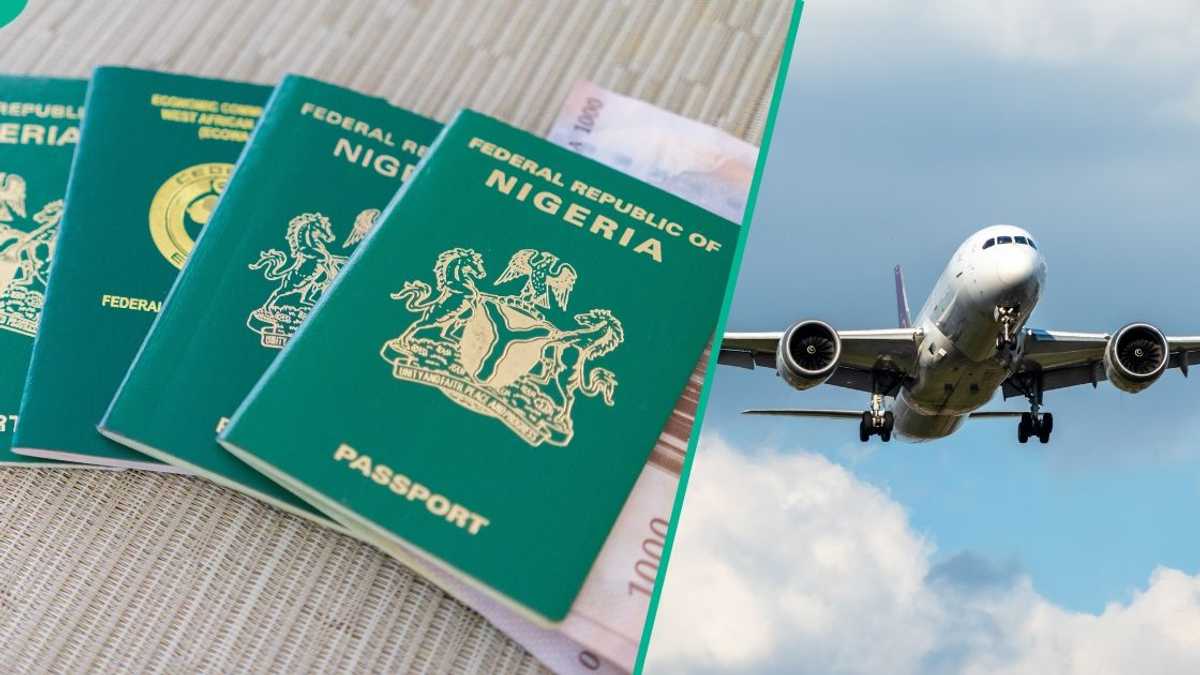
Picture a Nigerian traveller at Murtala Muhammed International Airport, passport in hand, scanning the departure board for a flight to Mauritius or Rwanda — two of the 45 destinations now accessible without the familiar scramble for a prior visa. It is a small but tangible shift, and it reflects a broader, if incremental, improvement in how the world receives the Nigerian travel document.
According to the latest Henley Passport Index, Nigeria’s passport has risen two places to 92nd in the 2026 global ranking, up from 94th in 2025. The number of destinations Nigerian passport holders can access without obtaining a visa before departure has also nudged upward, from 44 to 45 countries. The index, which draws its data from the International Air Transport Association (IATA), ranks passports solely on the basis of how many destinations their holders can enter freely — making it one of the most widely cited measures of passport strength worldwide.
A Long and Uneven Road
Nigeria’s passport history on this index is not a story of steady progress. The country ranked a relatively respectable 62nd back in 2006, before a prolonged slide carried it to 76th in 2010 and 87th in 2012. A brief recovery to 78th in 2013 proved short-lived; by 2015 Nigeria had fallen to 95th. The years that followed brought more of the same turbulence — 94th in 2018, 95th in 2019, and a sharp drop to 103rd in 2021, which marked the nadir of recent decades. Since then the trajectory has been cautiously upward: 98th in 2022, 97th in 2023, 95th in 2024, 94th in 2025, and now 92nd heading into 2026.
Two places may sound modest, but the direction of travel matters. Consistent, if slow, improvement is preferable to the volatility that defined the previous decade, and the gain of one additional visa-free destination in a single year at least signals that doors are not closing.
Where Nigerians Can Travel Without a Prior Visa
The 45 accessible destinations span four broad regions of the world. On the African continent, Nigerian passport holders can travel freely to Benin, Burkina Faso, Burundi, Cameroon, Cape Verde Islands, Chad, Comoro Islands, Côte d’Ivoire, Djibouti, Ghana, Guinea, Guinea-Bissau, Kenya, Liberia, Madagascar, Mali, Mauritania, Mauritius, Mozambique, Niger, Rwanda, Senegal, Sierra Leone, Somalia, The Gambia and Togo. In Asia, Cambodia, Iran, Lebanon, Maldives, Micronesia, Timor-Leste and Palau Islands are open to Nigerian travellers without advance paperwork. The Caribbean and Atlantic destinations include Barbados, Dominican Republic, Haiti, Montserrat and St Kitts and Nevis. Rounding out the list are several Pacific island nations — Cook Islands, Fiji, Kiribati, Niue, Samoa, Tuvalu and Vanuatu.
It is worth noting that “visa-free” is not always as straightforward as it sounds. Entry conditions vary considerably from one country to another. Some destinations on this list offer a visa on arrival rather than genuinely unrestricted entry, while others may require an electronic travel authorisation or impose conditions on passport validity, the length of permitted stay and the supporting documents a traveller must carry. Nigerians planning any international trip should verify the precise requirements with the relevant immigration authority before booking flights — the index is a guide, not a guarantee.
The Bigger Picture
It is also important to be clear about what the Henley Passport Index does and does not measure. It tracks access for international travel purposes only. It says nothing about eligibility for work visas, student visas or permanent residency in any of the countries listed. A Nigerian can enter Rwanda without a prior visa for a short visit, but that does not open the door to employment or long-term settlement. The distinction matters, particularly as more Nigerians look abroad for opportunities in education and work.
The broader context is equally worth keeping in mind. At 92nd in the world, Nigeria’s passport remains firmly in the lower half of the global rankings. The top-ranked passports — held by citizens of Singapore, Japan and several European nations — grant access to upwards of 190 destinations. The gap is vast, and closing it requires more than incremental gains on a league table. It depends on Nigeria’s diplomatic relationships, its bilateral agreements with other states, and, crucially, the confidence that foreign governments have in Nigerian institutions and documentation. Passport strength, in the end, is a reflection of a country’s standing in the world — and that standing is built over years through consistent governance, economic credibility and international engagement.
For now, the 2026 ranking offers a modest reason for quiet optimism. The green booklet is travelling a little further than it did last year, and for the Nigerian at the departure gate, that is what counts.