
A single bow, performed in public at an international gathering in Ghana, has ignited a conversation that stretches far beyond royal protocol.
Footage filmed on 29 October 2026 at the Mövenpick Ambassador Hotel in Accra shows Olori Atuwatse III, queen consort of the Warri Kingdom, bowing respectfully to her husband, His Majesty Ogiame Atuwatse III, the Olu of Warri, as they arrived at the Elevate Africa Convening 2026. The clip spread rapidly across social media, drawing reactions that ranged from genuine admiration to light-hearted ribbing, and in doing so, it pulled the customs of one of Nigeria’s oldest monarchies into a very modern spotlight.
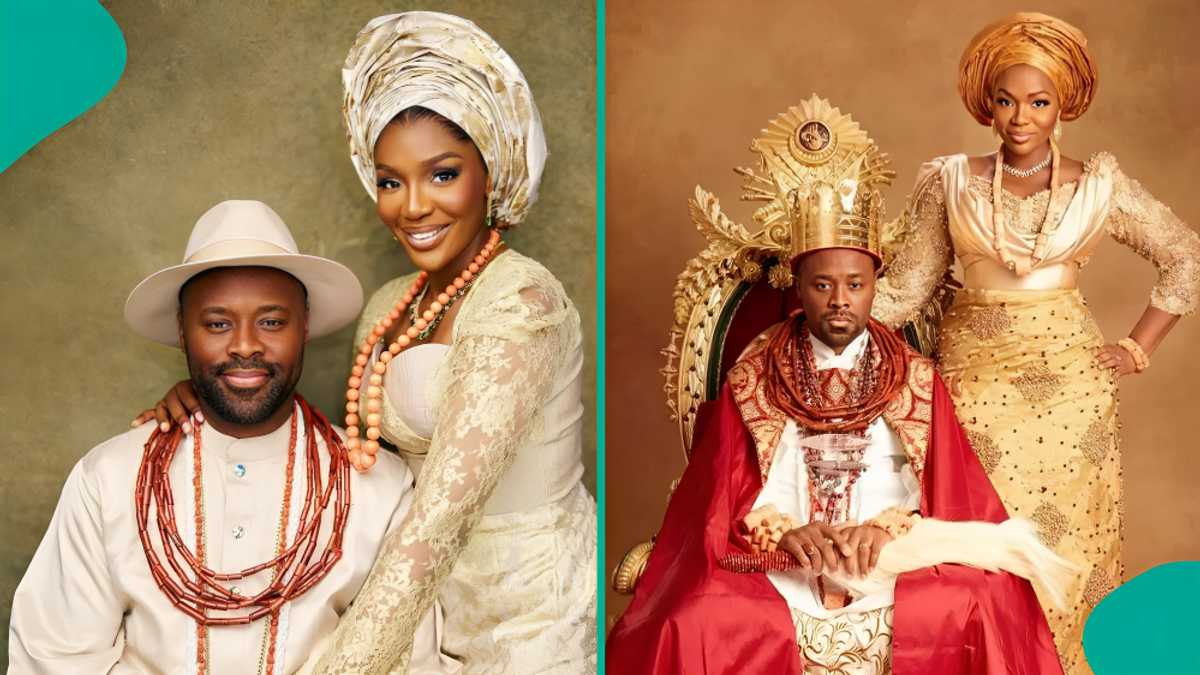
In the footage, Ogiame Atuwatse III is seated in full royal regalia upon a red-draped throne, a ceremonial sword held aloft by an attendant at his side, every inch the picture of traditional sovereignty. His queen consort approaches and bows before him, unhurried and composed, performing the gesture as naturally as breathing. What struck many observers was not merely the act itself but the setting — a high-profile continental leadership forum, attended by policymakers, youth advocates and influential figures from across Africa, where the formality of Itsekiri royal custom was upheld without apology or concession to the informality of the occasion.
For the Itsekiri people of the Warri Kingdom in Delta State, this is not theatre. Acts of deference to a reigning monarch form a foundational pillar of traditional royal etiquette, and that obligation does not dissolve simply because the person bowing happens to share the monarch’s household. The queen consort’s gesture was, by the standards of Itsekiri custom, entirely correct — and the fact that it needed explaining to a wider audience says something instructive about how little most Nigerians engage with the internal logic of their own traditional institutions.
The Warri Kingdom is one of the oldest monarchies in the Niger Delta region, with a history that predates the colonial reorganisation of what is now southern Nigeria. Ogiame Atuwatse III ascended the throne in August 2021, with Olori Atuwatse III assuming her role as queen consort at the same time. Their presence at the Elevate Africa Convening — a two-day event themed around youth opportunity and leadership development — lent the proceedings a ceremonial weight that the organisers could not have manufactured on their own. The Olu’s attendance was itself a statement: that traditional authority and continental ambition are not in conflict.
Online, the clip generated the full spectrum of Nigerian internet commentary, which is to say it was simultaneously reverent, irreverent and everything in between. One user confessed that her own temperament would never permit such a gesture towards her husband. Another noted, with quiet appreciation, that the Olu kept his own head bowed until the queen consort had taken her seat — a detail that reframed the moment as mutual rather than one-sided. Others, predictably, relocated the entire dynamic to the bedroom. One comment drew a pointed cultural contrast, with a user identifying as Igbo asserting that her people bow to no one but God — a remark that, whether intended as jest or genuine statement, illustrated how differently Nigeria’s ethnic groups conceptualise deference, hierarchy and the sacred.
What the viral clip ultimately reveals is that Nigeria’s traditional institutions still carry the power to arrest attention and provoke genuine debate when they are placed in an unfamiliar context. The Olu of Warri did not need a press release or a social media strategy. His queen consort’s bow, performed naturally and without fanfare at a gathering of African leaders, did more to project the dignity and coherence of Itsekiri royal culture than any formal announcement could have managed. That the moment went viral is almost beside the point. What matters is what it shows: a living tradition, conducted with grace, in full public view.