
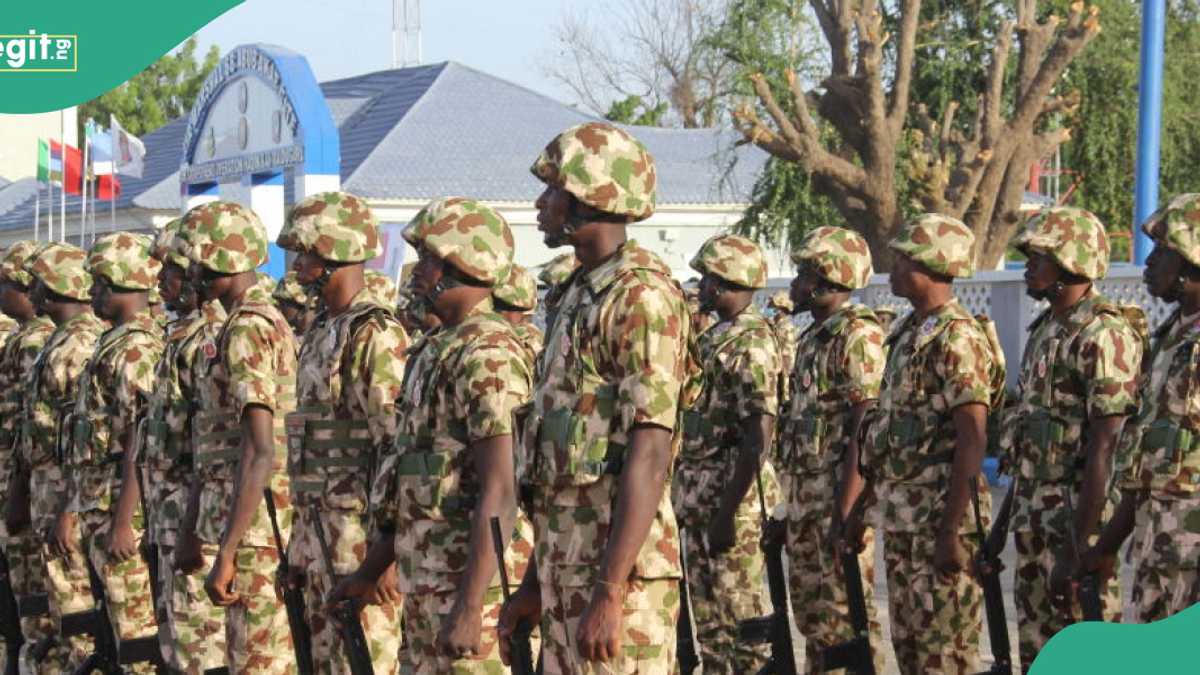
A suspected kidnapper in Nasarawa State has been arrested while collecting a ransom, caught in the act by a coordinated undercover operation involving Nigerian Army troops and Department of State Services operatives. The arrest, which took place on 29 October at Akwaba in Eggon Local Government Area, offers a rare and clear-cut example of Nigerian security agencies working together effectively.
The suspect, Mukaila Iliyasu, had allegedly threatened to abduct a local woman unless she paid him ₦200,000. DSS operatives received intelligence about the threat and wasted no time passing it to the military, which triggered a swift joint deployment under Sector 2 of Joint Task Force Operation Whirl Stroke.
Rather than simply moving to detain Iliyasu, the security team chose a more surgical approach. A soldier went undercover and posed as the individual delivering the ransom on the woman’s behalf, drawing the suspect into the open. When Iliyasu reached out to collect the money, operatives closed in and arrested him on the spot, recovering the full ₦200,000 in the process.
Lieutenant Ahmad Zubairu Zubairu, the Acting Media Information Officer of Operation Whirl Stroke, confirmed the arrest in an official statement, describing it as an intelligence-led intervention that prevented what could otherwise have become a full kidnapping.
Following his arrest, Iliyasu was handed over to the DSS for further investigation and potential prosecution. The clean handover between military and civilian intelligence agencies signals the kind of inter-agency discipline that security operations in Nigeria’s troubled north-central region badly need.
Major General Moses Kolo Gara, Force Commander of Operation Whirl Stroke and General Officer Commanding 5 Division of the Nigerian Army, praised the professionalism shown by both the troops and DSS personnel. He called on security forces to sustain that level of coordination and to keep deepening intelligence-sharing arrangements across their areas of responsibility.
The broader picture remains sobering. Former NIA Director-General Ambassador Ahmed Rufai has previously linked Nigeria’s kidnapping crisis to a web of terrorist groups, bandit militias, informants and financial facilitators, suggesting the problem runs far deeper than individual opportunists like Iliyasu. Separately, eight kidnappers were recently arrested and handed to the DSS following a rescue operation that freed abducted schoolchildren in Oyo State, with the government insisting no concessions were made to secure their release.
What the Nasarawa sting demonstrates, however, is that when intelligence is acted upon quickly and agencies trust each other enough to share information and coordinate in the field, results follow. The full ₦200,000 was recovered, the suspect is in custody, and a potential victim was spared. That is not a small thing in a region where kidnapping for ransom has become a persistent and corrosive threat to ordinary life.