
A Commission Under Pressure Makes Its Call
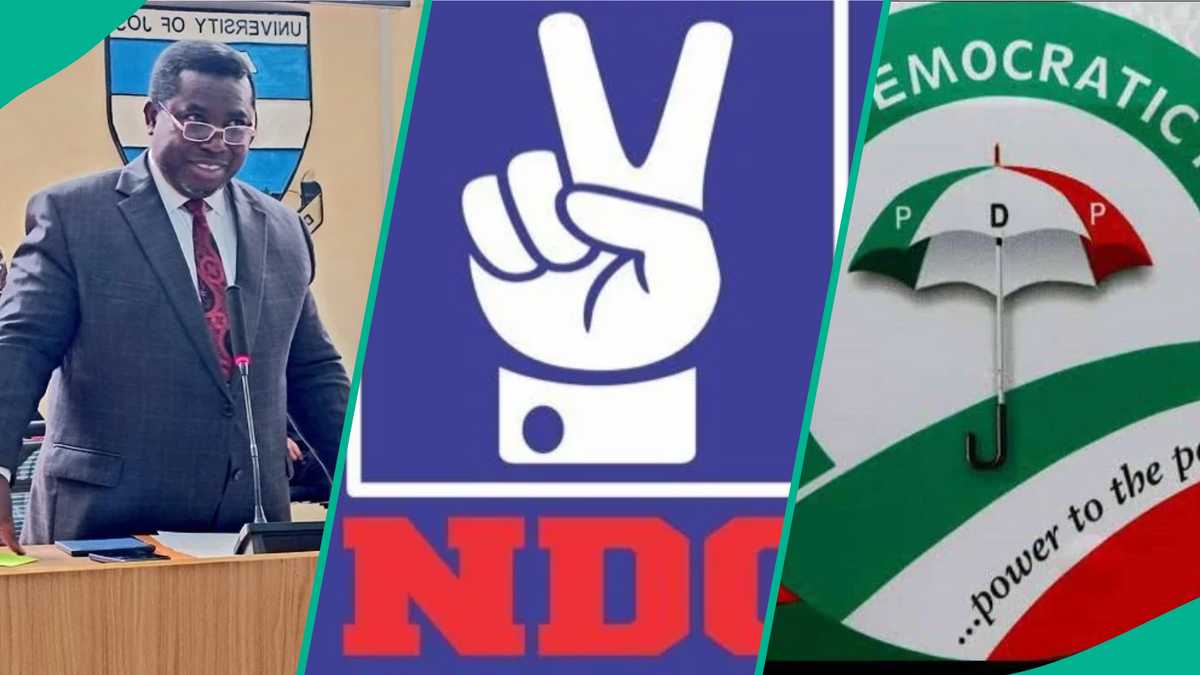
The Independent National Electoral Commission has moved to resolve one of the more contentious pre-election disputes of the 2027 cycle, clearing former Communications Minister Isa Ali Pantami and Kano State’s Nigeria Democratic Congress governorship candidate Abdulsalam Gwarzo to contest — while firmly rejecting the petition of Peoples Democratic Party candidate Ladi Adebutu in Ogun State. The decisions emerged from a review meeting held on Thursday, during which INEC assessed 69 petitions submitted by political parties on behalf of candidates whose names had been absent from published candidate lists. Roughly 36 of those petitions were approved. The rest were turned down without ceremony.
The commission’s legal department was still finalising figures and preparing an official statement at the time of reporting, but a source within INEC confirmed the broad outcomes to Daily Trust. What is already clear is that INEC has drawn a firm line between candidates it is willing to accommodate and those it is not — and the reasoning, at least in part, traces back to a Supreme Court ruling that gave the commission significant legal cover.
The Legal Framework Behind the Exclusions
INEC did not exclude candidates arbitrarily. The commission had attributed the original omissions to parties failing to comply with Section 77(5) to (7) of the Electoral Act, which obliges parties to submit membership registers as part of the candidate nomination process. That requirement, already contested by several parties, received a decisive judicial endorsement on 24 September 2026, when the Supreme Court upheld the constitutionality of those provisions. With that ruling in hand, INEC’s position hardened considerably, and parties that had not met the membership register requirement found themselves without recourse — unless they could demonstrate otherwise through the petition process or through the courts.
The distinction matters. INEC is not simply a bureaucratic gatekeeper; it is an institution whose decisions shape which Nigerians actually get to compete for power. When it cites a Supreme Court ruling to justify exclusions, it is operating within the law. Whether the law itself is fair to candidates caught in administrative disputes between their parties and the commission is a separate and legitimate question — one that the courts are now being asked to answer.
Pantami and Gwarzo: Cleared, But Not Yet Safe
Both Pantami and Gwarzo received what might be called a qualified green light. INEC confirmed it had no objection to either man contesting the 2027 elections, but emphasised that pending litigation could still determine their final eligibility. Gwarzo had already taken legal action, filing an originating summons dated 20 October 2026, in which he sought a court declaration that his exclusion — and that of his running mate, Rabiu Mustapha — from Kano State’s governorship candidate list was unlawful. He further asked the court to compel INEC to formally recognise both men as the NDC’s governorship ticket for the state.
Pantami’s situation is similarly contingent. A court hearing in his case was expected on Friday, meaning his clearance by INEC carries an asterisk until the judiciary has its say. For both men, the commission’s approval is a necessary condition, but not a sufficient one. The legal proceedings will need to conclude in their favour before either candidacy can be considered settled. That uncertainty is not trivial in a political environment where timing can be as decisive as the law itself.
Adebutu’s Petition Falls Flat
Ladi Adebutu, the PDP’s governorship candidate in Ogun State, walked away empty-handed. He had challenged his exclusion from the final candidate list on the grounds that he remained a registered PDP member and had satisfied all of the party’s membership requirements. INEC was unconvinced. The commission’s source delivered the verdict without elaboration: “He did not succeed.” That bluntness is itself telling — there was no suggestion of a close call or a borderline decision. Adebutu’s petition was rejected, and the commission appears to have considered the matter closed.
The outcome is a significant blow for the PDP in Ogun State, where Adebutu had been positioned as the party’s standard-bearer. Whether the party pursues further legal options or accepts the exclusion remains to be seen, but the window for administrative remedies has effectively closed. Any path back into the race now runs exclusively through the courts.
NDC’s Growing Footprint in Kano
Beyond the candidate clearance decisions, the NDC has been making noise in Kano through a separate but related development. On 11 October 2026, a former APC leader from Kumbotso Local Government Area publicly defected to the NDC, joining the party at a gathering hosted by Senator Rabiu Musa Kwankwaso, the NDC’s vice presidential candidate, at his Kano residence. A media aide to Kwankwaso shared footage of the event on X, framing the defection as evidence of growing momentum for the party ahead of 2027.
Defections at the local government level are not always seismic, but in a state as politically competitive as Kano, they carry symbolic weight. The NDC is clearly working to consolidate its base in the north, and Kwankwaso’s presence at such events signals that the party’s leadership regards Kano as central to its 2027 strategy. Whether that momentum translates into votes will depend on factors well beyond individual defections — not least the outcome of Gwarzo’s ongoing court case, which could determine whether the NDC even has a candidate on the ballot in the state.
What Comes Next
INEC has committed to releasing a formal statement covering all the decisions reached at Thursday’s meeting once its legal department completes its review. That statement will matter, both for the candidates directly affected and for the broader political landscape heading into 2027. The commission’s handling of these 69 petitions will be scrutinised as a test of its consistency and impartiality — and the fact that roughly half were rejected suggests INEC is not simply rubber-stamping party requests. Whether that firmness is seen as principled or obstructive will depend largely on which side of the decision a party finds itself on.
For Nigerian voters, the more pressing concern is whether the process ultimately produces a credible and competitive candidate list. Courts, commissions and petitions are the machinery of electoral administration, but the end product must be an election that Nigerians can trust. That standard is not yet guaranteed, and the coming weeks will reveal whether the system is working as it should.