
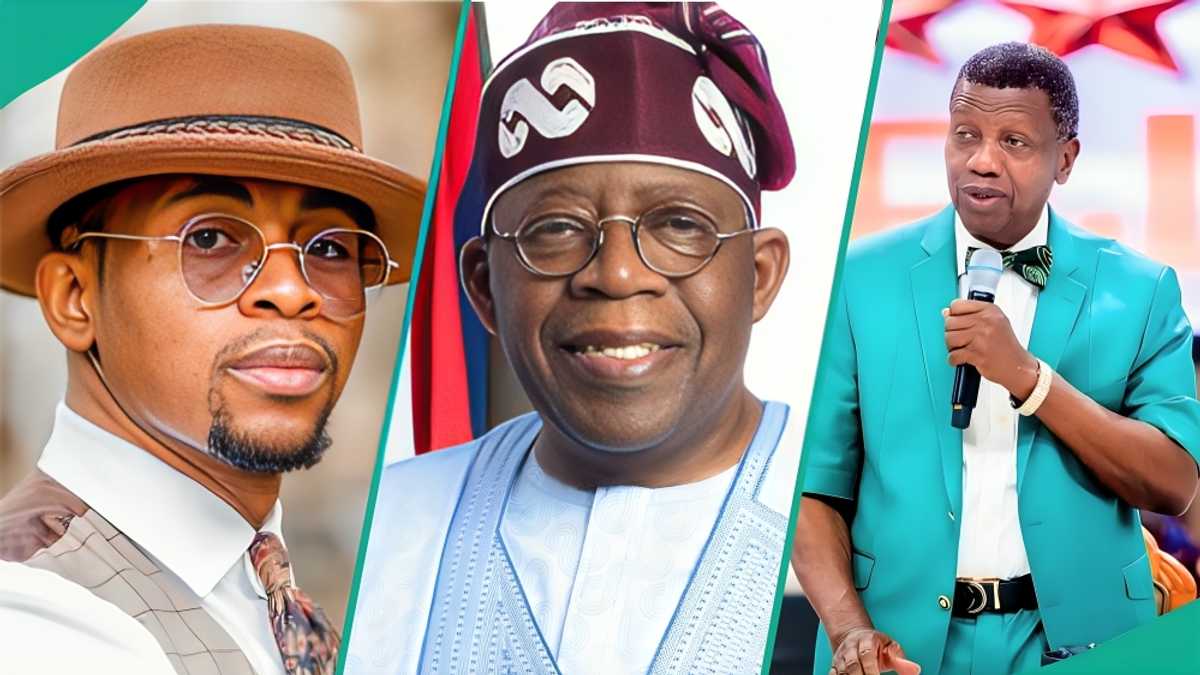
When Pastor Enoch Adeboye, General Overseer of the Redeemed Christian Church of God, publicly defended President Bola Tinubu over Nigeria’s deteriorating security situation, he may not have anticipated the pushback that followed. Life coach and social media commentator Solomon Buchi responded with a pointed Instagram video on 30 June, rejecting the cleric’s reasoning and insisting that the buck stops squarely with the president. The exchange has since ignited a wider debate about leadership, accountability, and what Nigerians are actually entitled to demand from the man at the top.
Adeboye’s original argument was, on the surface, a reasonable one: the president fulfils his constitutional duty by directing security agencies, and no one expects the commander-in-chief to personally strap on a uniform and take to the front lines. It is a familiar defence, and it carries a grain of logic. But Buchi’s counter-argument cuts deeper. Leadership, he argued, is not simply the act of issuing orders — it is the obligation to ensure those orders produce results, and to answer for it when they do not. “When things go wrong, they have to hold him accountable,” Buchi said plainly in the video. “If we don’t blame Tinubu, who are we meant to blame?”
Why does this argument matter so much right now?
The timing is not incidental. Buchi pointed specifically to the continued captivity of schoolchildren and teachers in Oyo State, a crisis that has received disturbingly little public address from the presidency. His frustration was not merely about blame — it was about presence. A head of state who goes about routine business while citizens remain in captivity sends a signal, whether he intends to or not. “There is a sense of communication and consolation when you hear the president speak about these things in due time, as it’s happening,” Buchi said. “But no, he just goes about his normal business.” That absence of visible, vocal leadership is itself a form of failure, and it is one that no amount of delegated authority to security agencies can excuse.
Buchi was also careful to note that his criticism of Adeboye’s remarks did not extend to a wholesale attack on the pastor or his church. He acknowledged having previously defended both against criticism, and he urged his own followers not to harass those who sided with the cleric. That measured tone matters, because it separates principled disagreement from opportunistic point-scoring. What he could not do, he said, was defend these particular comments — and on that point, a significant portion of the public appears to agree with him. Reactions poured in from Nigerians across the spectrum, including self-identified RCCG members who expressed respect for Adeboye whilst firmly rejecting his position on this issue. The sentiment was consistent: giving orders is where leadership begins, not where it ends.
The broader question this episode forces into the open is one Nigeria has struggled with for decades. Accountability in governance tends to dissolve the moment it becomes politically inconvenient. Security failures get attributed to structural problems, historical neglect or the sheer complexity of the terrain — all of which may be partially true, but none of which relieves the sitting president of responsibility for outcomes on his watch. Soldiers answer to the Defence Minister. The Defence Minister answers to the president. That chain of command is precisely why the office carries the weight it does, and precisely why Buchi’s question — if not Tinubu, then who? — is not rhetorical. It demands a straight answer.