
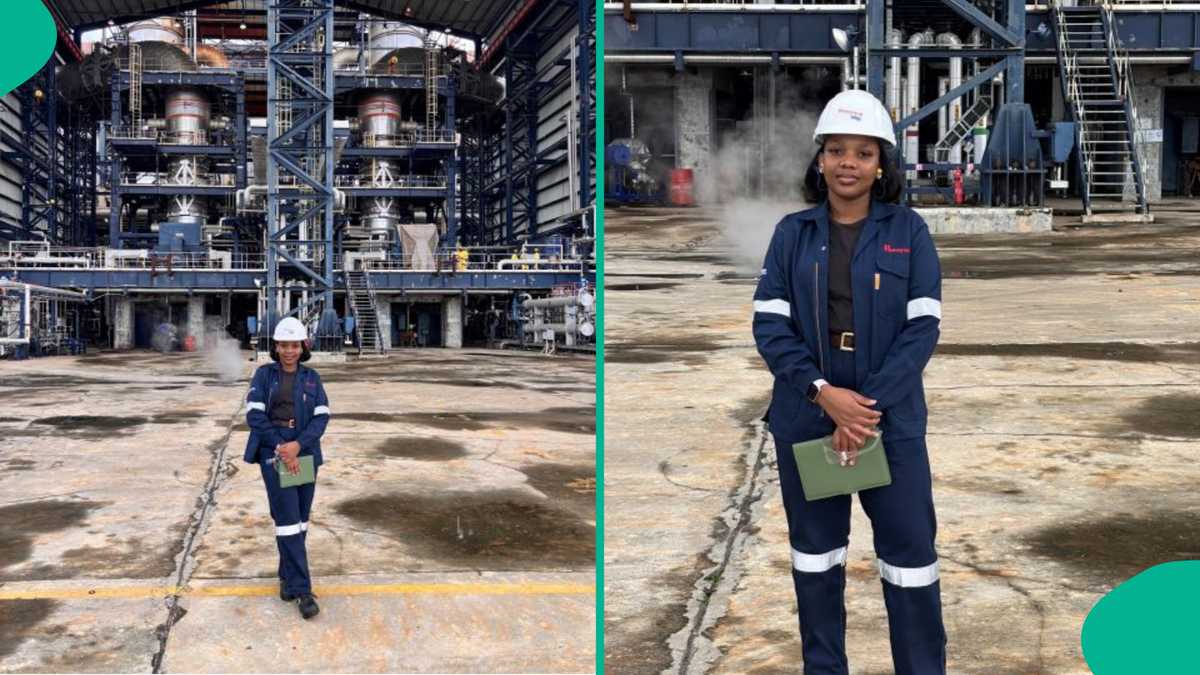
A Visit That Speaks Volumes
When a chemical engineer travels from Johannesburg to Lagos and leaves more inspired than when she arrived, that tells you something worth paying attention to. Nelisiwe Mokoena, a Field Operating Services engineer at Honeywell UOP in South Africa, visited the Dangote Refinery in Lagos earlier this month — and her account of the experience cuts to the heart of what this facility represents for Africa’s industrial ambitions.
Mokoena, who holds a bachelor’s degree in chemical engineering from the University of Johannesburg, shared her reflections in a LinkedIn post on 2 July. She was at the refinery in a professional capacity, supporting Honeywell UOP as part of her field development programme. What she encountered, by her own account, exceeded anything a classroom or remote support role had prepared her for.
“There’s a big difference between studying a process, supporting it remotely, and seeing it operating in person,” she wrote. “Every site visit brings a deeper understanding that simply can’t be gained from a screen.”
Scale That Demands to Be Seen
The Dangote Refinery is the world’s largest single-train refinery — a fact that gets repeated often enough to risk becoming background noise. Mokoena’s testimony is a useful corrective to that numbness. Standing before equipment she had spent months studying in the abstract, she described the moment as a reminder of why she chose her profession in the first place. That is not the language of polite corporate gratitude; it is the response of someone genuinely confronted with engineering on a scale that commands respect.
Her visit is also a small but pointed illustration of the refinery’s continental reach. Here is a South African engineer, employed by an American industrial technology firm, travelling to Nigeria to develop her expertise at an African-owned facility. The knowledge transfer runs in multiple directions simultaneously — and Nigeria sits at the centre of it.
Reactions to her post from refinery personnel were equally telling. One respondent, identifying himself as working in the CDU heater area, welcomed her to his unit and expressed interest in learning from the exchange. That kind of ground-level professional engagement, quiet and unannounced, is precisely how industrial capacity is built over time.
The Bigger Picture Nigeria Should Not Miss
Mokoena’s visit follows a pattern of high-profile engagements with the Dangote Refinery that extends well beyond tourism or ceremony. Nigerian billionaire Femi Otedola toured the facility alongside directors of First Holdco and described the experience as “wholesome,” praising Aliko Dangote’s vision and determination. The House of Representatives leadership has also paid an official visit. Each of these moments, taken individually, might seem like routine institutional interest. Taken together, they signal something more substantial: a growing recognition that this refinery is not merely a business asset but a reference point for what Nigerian-led industrialisation can look like.
The significance is not sentimental. Nigeria has spent decades exporting crude oil and importing refined petroleum products at enormous cost to the public purse and to ordinary consumers. A fully operational domestic refinery of this scale has the potential to alter that equation in concrete, measurable ways — on fuel prices, on foreign exchange pressure, on the country’s negotiating position within the energy sector. Whether that potential is fully realised depends on policy, regulation and sustained operational performance, none of which are guaranteed. But the foundation is there, and it is drawing serious professional attention from across the continent.
Nelisiwe Mokoena came to Lagos to develop her field experience. She left, by her own account, more committed to her career and more impressed by what African engineering can produce. Nigeria should take note of what that says — and hold its institutions to the standard the refinery has set.