
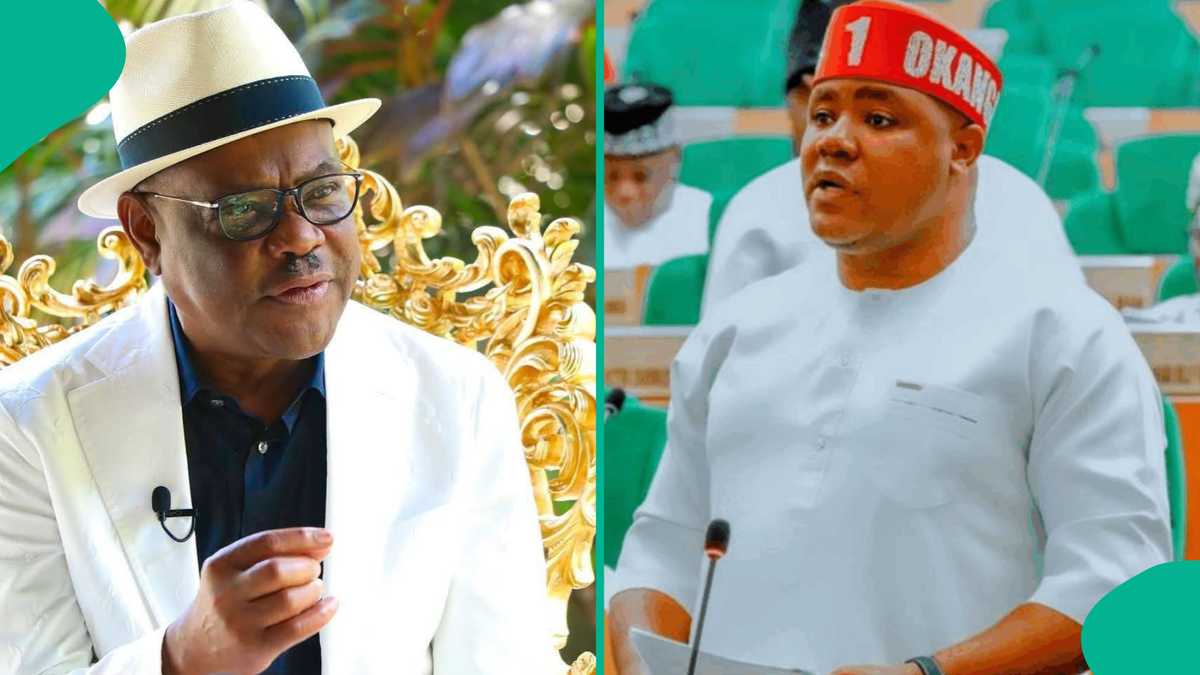
The debate over who bears responsibility for Abuja’s recurring floods has sharpened following remarks by Philip Agbese, deputy spokesman of the House of Representatives, who pushed back firmly against critics targeting FCT Minister Nyesom Wike. Speaking to journalists on Tuesday, 18 August, Agbese argued that residents who dump refuse into drainage channels cannot then hold the minister solely accountable when floodwaters rise across the capital. The key points of his defence are worth examining carefully.
The flash floods of Saturday, 15 August left motorists stranded and submerged vehicles across several parts of Abuja, with Adetokunbo Ademola Crescent in Wuse 2, the area around Delight Event Centre in Gudu, and Efab Estate in Lokogoma among the worst-affected zones. The bridge between Gaduwa and Durumi was overwhelmed entirely, cutting off movement between the two communities for several hours.
Agbese’s broader argument — that Abuja’s rapid growth demands a shared response rather than a purely political one — is not without merit, even if it will strike some residents as convenient deflection. Infrastructure investment is measurable and the road figures he cited are not trivial. But completed roads do not automatically solve drainage failures, and the FCT Administration cannot escape scrutiny over whether its flood-management planning has kept pace with the capital’s expansion. Both things can be true at once: residents who block drains are part of the problem, and government must still answer for the adequacy of the systems it builds and maintains.
Accountability, in other words, is not a fixed quantity to be divided between citizens and officials until one side is absolved. Abuja belongs to everyone, as Agbese himself said — and that cuts both ways.