
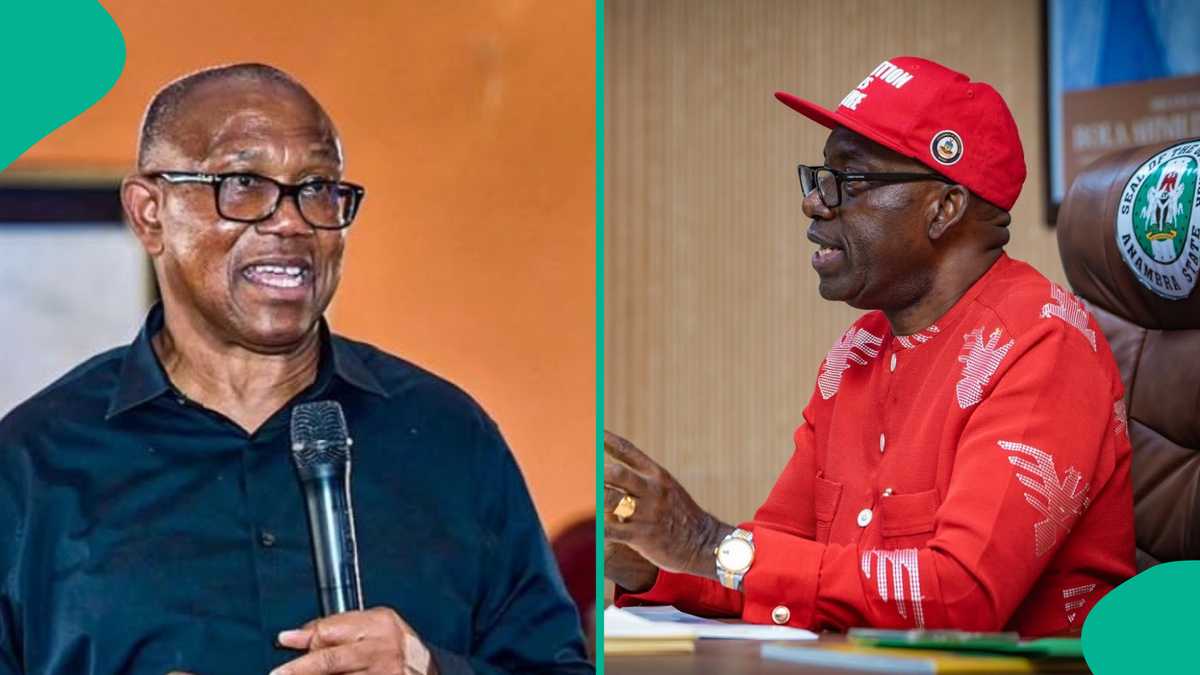
The dispute over Anambra State’s finances has been running for years, but it sharpened considerably in September 2025 when the state’s Commissioner for Finance, Izuchukwu Okafor, declared that Governor Charles Soludo’s administration was still servicing debts linked to Peter Obi and previous governors. Obi pushed back sharply, insisting he had left office in 2014 with more than N75 billion saved for the state. The Anambra government responded by releasing records showing his administration took out eight external loans between 2007 and 2013, totalling $123.7 million, with an outstanding balance of $92.35 million. That exchange set the stage for a more pointed confrontation — one that would eventually draw in a key witness from the original handover itself.
That witness is Oseloka Obaze, who served as Secretary to the Anambra State Government under Obi from 2006 to 2014. On Thursday, 17 September, Obaze posted on X to say he was personally present on 17 March 2014 when Obi handed over a formal letter to incoming governor Willie Obiano, detailing the financial position of the state. He did not merely claim to have been in the building. He stated that he watched Obiano receive his own copy of the letter and sign an acknowledgement for it, complete with certified bank statements and related annexures.
The handover letter itself, which Obaze uploaded to X and which had been publicly available since Obi’s departure from office, was titled 2014 Anambra State Handover Report and dated 17 March 2014. According to the document, N27 billion was committed to local investments, N25.6 billion covered foreign currency holdings valued at roughly $156 million, N28.27 billion represented balances held across state ministries, departments and agencies, and N10 billion was a federal government refund owed to the state. Those figures combined to produce a gross total of N91.67 billion in assets. Obi noted in the letter that N5 billion had been earmarked to cover outstanding liabilities — including March 2014 salaries, pension payments, gratuities and approved project certificates — bringing the net figure to N86.67 billion.
It is worth being clear about what Obiano’s signed acknowledgement does and does not establish. It confirms that he received the letter and its attached documents. It does not constitute a joint verification of the treasury’s actual position, and neither administration formally reconciled the figures at the time. The acknowledgement is nonetheless significant, because it makes it difficult for anyone to claim the handover letter was unknown to the incoming government or was produced retrospectively.
Obaze went further, pointing to a public moment that cast doubt on the credibility of earlier denials. During a governorship debate broadcast on Channels Television on 12 November 2017, Obiano had initially claimed that Obi left nothing behind. Challenged on the claim during a separate Channels TV programme around the same period, Obiano retreated from that position. He told the programme’s anchor, Seun Okinbaloye, that his predecessor had in fact left N9 billion in cash and N25.6 billion in what he described as script issues — sovereign wealth funds and bank shares. He then acknowledged that while those figures added up to N35.5 billion, Obi had also issued cheques worth over N15 billion before leaving office, which complicated the picture. The admission was partial and qualified, but it directly contradicted the flat denial Obiano had offered only moments earlier in the debate.
Obaze also cited a remark attributed to Darius Ishaku, the then-governor of Taraba State, who reportedly told members of the Nigerian Press Corps that Obiano had privately acknowledged Obi left substantial sums behind — sums that, according to Obiano’s own account, helped fund the construction of the Anambra Airport at Umueri. That account, if accurate, suggests Obiano’s private assessment of the handover was considerably more generous than his public one.
The Anambra state government has not softened its position. On Friday, 18 September, it released further details via its official X account, putting the total figure for external borrowings during Obi’s tenure at $127.4 million across eight separate transactions and directing pointed questions at him about who should bear responsibility for repaying the outstanding balance. Obi has not yet responded to those specific figures. What is now on the public record, however, is a signed acknowledgement from the man who succeeded him, a contemporaneous handover document listing the state’s financial assets, and testimony from a senior official who was present at the exchange. Whether those debts and those assets can be reconciled into a coherent account of Anambra’s finances under Obi remains the central question — and it is one the state government, not Obi alone, will need to answer in full.