
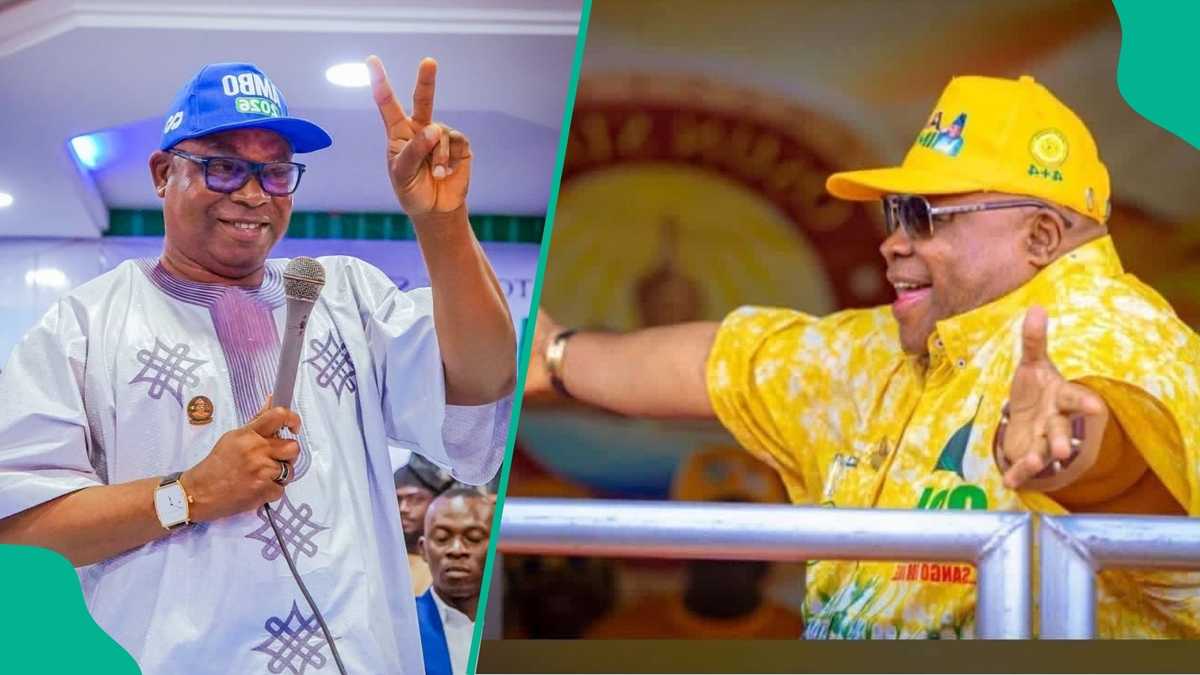
The All Progressives Congress lost the Osun State governorship election on Sunday, 17 August 2026, and within hours the party’s own National Youth Leader was telling it why. Dr. Dayo Israel took to his X account to post what he called “bitter truths” — a phrase that landed harder than most post-election statements tend to.
The result itself was unambiguous. Governor Ademola Adeleke of the Accord Party was declared re-elected by INEC’s returning officer with 511,067 votes, against APC candidate Bola Oyebamiji’s 444,815. A margin of over 66,000 votes in a state the APC had previously held.
Israel was not inclined to minimise it. He described the gap as “substantial enough to demand honest reflection, not excuses, blame-shifting or the familiar ritual of assembling another committee whose report may never change how we campaign.” That is a withering line from a senior party figure, and it was clearly deliberate.
He congratulated Adeleke and the people of Osun, and acknowledged APC agents and volunteers who worked the campaign “under difficult circumstances.” But he made plain that goodwill gestures could not substitute for a genuine examination of what had gone wrong.
In his assessment, three figures defined the election. President Bola Ahmed Tinubu cast a long shadow over proceedings, his federal profile shaping the political atmosphere in Osun whether the party wanted it to or not. Adeleke himself proved a formidable incumbent, visible and difficult to dislodge. And then there was the third figure — David Adeleke, better known as Davido, whose celebrity association with his uncle’s campaign brought an energy and reach that conventional party machinery simply could not match.
Israel’s post drew swift and pointed responses from APC supporters and observers. Senator Sakirudeen Jamiu Adeshina argued that grassroots mobilisation had been “very, very poor,” and that party members were failing to communicate the practical benefits of the President’s policies to ordinary people in their own localities. It was a blunt diagnosis from a senator, and it echoed what many within the party have said privately for months.
Other APC voices were sharper still. One commenter, @Kehi3Kehinde, wrote that the party summons its youth during elections then discards them afterwards — a cycle of exploitation that corrodes loyalty over time. Another, @AkandeFm2025, called for the Osun party structure to be “completely overhauled” and suggested that former governor Oyetola should “take a back seat and allow a new face” to lead the charge.
Not everyone who responded was inside the APC tent. @Skillzz_23 told Israel directly that even a fully activated youth wing would not have changed the outcome, because Osun voters had chosen continuity based on visible development under Adeleke. @bussy2008 went further, warning against any attempt to deploy federal influence to reverse the result, and asking pointedly whether the party wanted to “set this country on fire.” These were not fringe voices — they reflected a broader public mood that the APC would be unwise to dismiss.
By the time the dust settled on the Osun result, the conversation had already shifted to 2027. Nigerians across social media were drawing direct lines between this outcome and the general elections, treating Osun as a barometer rather than an isolated contest. Israel had made the same connection himself, warning that the party must confront its internal problems now or risk repeating the same outcome on a far larger stage.
The APC has time. It does not have much room for the kind of self-deception its own youth leader has publicly warned against.