
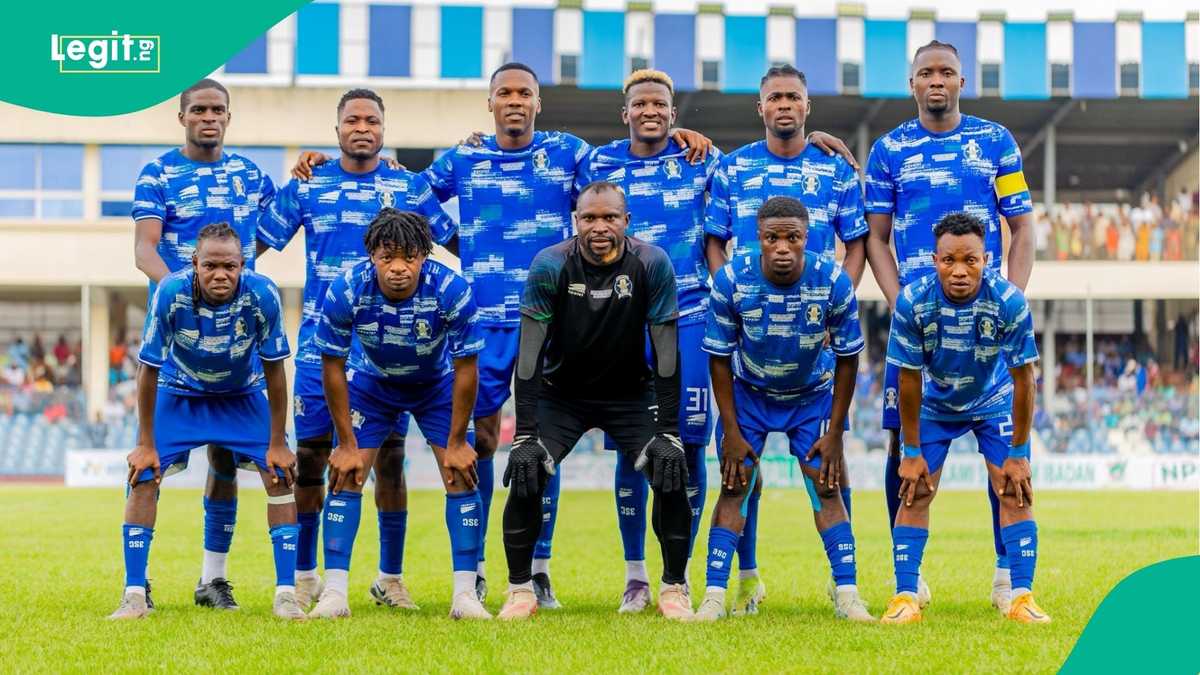
Shooting Stars Sports Club have gone public with a damning declaration: winger Ayodele Ismail has abandoned the club without authorisation, and an Egyptian-based agent is being held responsible for facilitating his disappearance.
The Ibadan-based Nigerian Premier Football League side issued a formal statement on Saturday, 18 July 2026, confirming that Ismail had failed to report for official club duties despite remaining under a valid contract. The club named Abdelhamid Adel, affiliated with AMB Sports Management in Egypt, as the agent whose conduct it considers unprofessional and whose involvement it regards as central to the player’s unauthorised exit.
Shooting Stars were unambiguous in their language. “This constitutes a serious breach of the player’s contractual obligations,” the statement read, leaving little room for the matter to be quietly swept under the carpet. The club did not specify precisely when Ismail departed or where he is believed to be, but made absolutely clear that no legitimate clearance was granted for his absence.
A Pattern Nigerian Football Can No Longer Ignore
What makes this case particularly significant is the involvement of a foreign intermediary operating well outside the established transfer framework. Nigerian clubs have grown increasingly vocal about unlicensed agents approaching contracted players and engineering moves without going through proper channels — a practice that directly contravenes FIFA’s regulations on working with intermediaries. Shooting Stars’ decision to name the agent publicly, rather than handle this quietly behind closed doors, signals that the club is treating the episode as a matter of principle, not merely a personnel dispute.
By citing applicable football regulations in its statement, the club appears to be laying the groundwork for a formal complaint — potentially before FIFA or CAF — that could prevent Ismail from registering with any new club until the contractual dispute is fully resolved. That is a meaningful lever, and Shooting Stars appear fully aware of it.
The broader implication is uncomfortable but worth stating plainly: if foreign agents can approach NPFL players, persuade them to walk out on valid contracts, and face no serious consequence, the league’s contractual framework becomes essentially worthless. Shooting Stars’ willingness to pursue regulatory action rather than absorb the loss quietly is, in that context, a stance the Nigerian football authorities should take note of and actively support.