
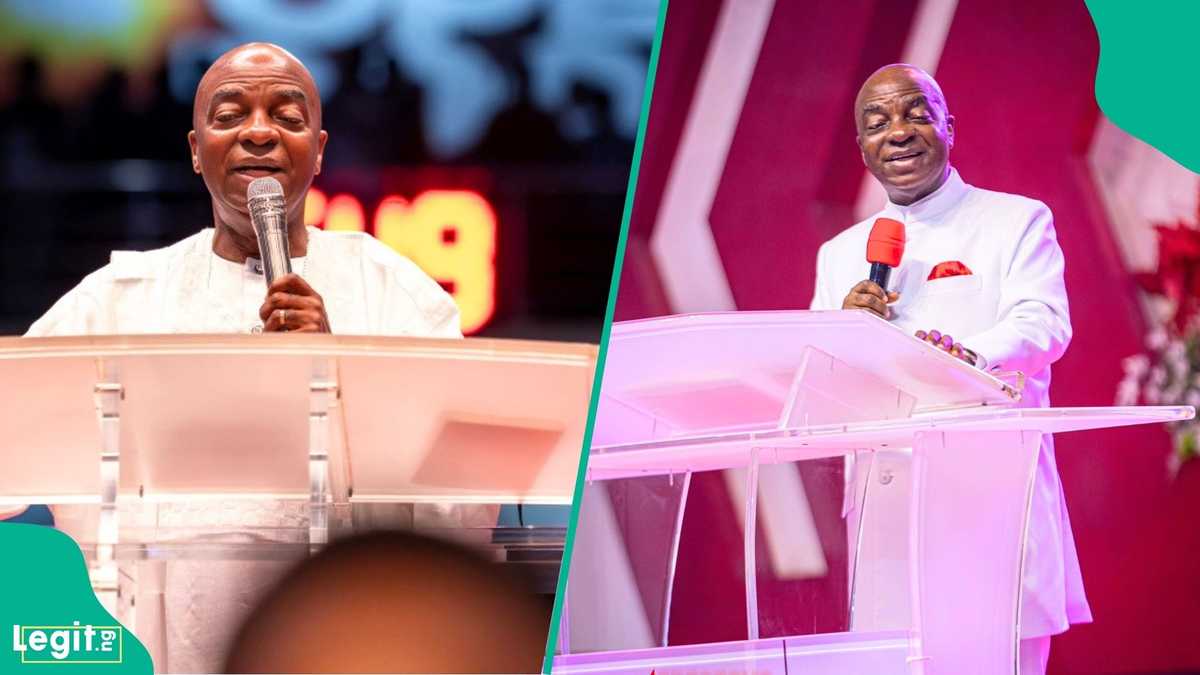
Bishop David Oyedepo stepped away from scripture on Sunday, 12 July 2026, and delivered something his congregation at Canaan Land in Ota, Ogun State, did not come expecting: a direct civic instruction. Get your Permanent Voter Card. Do it now. Do not wait for election season to remember you are a citizen.
The Living Faith Church founder was addressing worshippers gathered under the theme “Breaking the Curses of Life” when he pivoted to what he clearly regards as an equally urgent matter — the 2027 general elections and the responsibility every church member carries heading into them. The message was blunt and unambiguous, which is precisely why it landed.
“We have a civic responsibility,” Oyedepo told the congregation. “As responsible citizens of various nations, this church is today one for the four nations. So, endeavour to secure your voters card. You are men and women of the Spirit. You should know on your own personal conviction where to cast your vote.” He made clear that spiritual identity is no excuse for political passivity — that prayer and the ballot box are not alternatives to each other, but partners.
What made the appeal particularly striking was the scale Oyedepo invoked. He was not speaking about individual conscience alone. He was speaking about collective power, and he was unapologetic about it.
“I will never carry a box in my life. So I’m not asking you to give your voter’s right so you can vote for me. I’m already voted for. But we have a right to determine who rules us. And this church, with the millions that we have, we have a say in it. So be part of it,” he said. It was a frank acknowledgement that a congregation of that size is not merely a spiritual institution — it is a political constituency, whether it chooses to behave like one or not.
Oyedepo closed the appeal by urging members not to treat PVC registration as something to scramble for in the weeks before voting. Early action, he insisted, is itself part of civic duty.
The clip spread rapidly across social media and drew a wave of responses that skewed strongly positive. Many Nigerians welcomed the directness. @Nwikbaba_001 put it plainly: “Voting is more than a right — it’s a responsibility. Complaining after elections means little if you didn’t participate. Prayer is powerful, but your PVC is how you cast your vote, not your prayer points.” @the_tims001 was equally pointed: “I love pastors who always emphasize on this voters card. Not those avoiding being punished by the government.” Others, like @Sir_Opemi, used the moment to direct criticism at the Independent National Electoral Commission, arguing that INEC should deploy registration machines directly to churches and mosques rather than leaving registration to chance.
The reaction matters. Nigeria has a persistent problem with voter apathy, and religious institutions — given their reach into communities that formal civic structures often fail to penetrate — represent one of the few channels capable of shifting that culture. When a cleric with Oyedepo’s following frames PVC registration as a spiritual and moral obligation rather than a bureaucratic chore, the message carries weight that a government campaign poster simply cannot replicate.
There will be those who bristle at the idea of pulpits becoming civic platforms, and that discomfort is not entirely without merit. But Oyedepo was careful to draw a clear line: he is not directing votes, he is demanding participation. The distinction is important, and he made it explicitly. A church that mobilises millions of citizens to register and vote — on their own convictions — is doing something democratic systems depend on, not something they should fear.
With 2027 still over a year away, the early timing of this message is itself significant. It suggests that at least some of Nigeria’s most influential voices understand that civic engagement cannot be conjured in the final weeks of a campaign. It has to be built, steadily, well in advance. Whether INEC and the political class are paying the same kind of attention is, as ever, another question entirely.