
A Billionaire’s Wager on Nigerian Refining
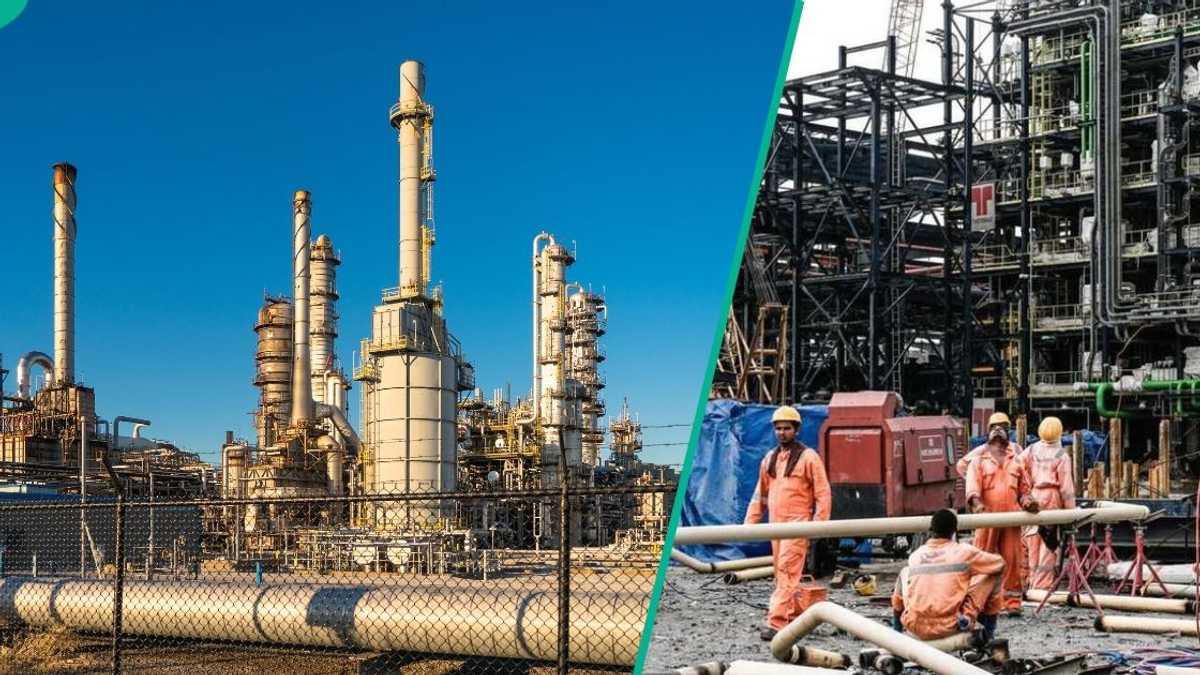
Nigeria’s refining sector has long been a national embarrassment — decades of underperforming state refineries, crippling fuel import bills and a dependency on foreign petroleum that drains foreign exchange reserves. Now, private capital is stepping in where government has repeatedly stumbled. BUA Refinery and Petrochemicals Limited, backed by industrialist Abdul Samad Rabiu, chairman of the BUA Group conglomerate, represents one of the most ambitious private refining bets in the country’s history. The project promises 200,000 barrels of crude processed daily and a genuine contribution to domestic fuel supply. Whether it delivers is another matter entirely.
Here is a clear-eyed account of what the project actually involves, where it stands today, and why it matters for Nigeria’s energy future.
The Man Behind the Money
Abdul Samad Rabiu built his fortune the hard way — cement, food processing, sugar, real estate. BUA Group is not a speculative vehicle; it is a functioning industrial conglomerate with a track record of completing large-scale projects. That pedigree matters when evaluating whether this refinery is credible ambition or elaborate theatre.
Rabiu is consistently ranked among Nigeria’s wealthiest individuals, though his precise position shifts depending on the publication and the date of valuation. What is not in dispute is his capacity to mobilise the kind of capital a project of this scale demands. The refinery marks BUA’s first serious push into oil and gas — a sector that has historically been the preserve of international majors and the state-owned NNPC.
Planned Capacity and What It Would Produce
The proposed facility is designed to process up to 200,000 barrels of crude oil per day. That figure alone places it in the same conversation as the Dangote Refinery, which has dominated headlines as Africa’s largest single-train refinery. BUA’s project, if completed to specification, would represent a second major private-sector anchor in Nigeria’s downstream landscape.
According to French technology provider Axens, which was selected to supply the process technologies, the integrated complex is designed to produce petrol, diesel and jet fuel meeting Euro V specifications — a standard that reflects modern environmental and quality benchmarks. Beyond fuels, the plant is intended to produce propylene, the feedstock for polypropylene used in plastics and packaging. That petrochemical dimension gives the project an industrial reach well beyond simple fuel production, potentially supplying domestic manufacturers who currently import these materials at considerable cost.
Location: Akwa Ibom State
The refinery is planned for Ibeno, in Akwa Ibom State in southern Nigeria. The choice of location is strategically sensible — Akwa Ibom sits in the heart of Nigeria’s oil-producing Niger Delta region, with proximity to crude supply and coastal access that eases logistics considerably.
A facility of this scale in Akwa Ibom would generate substantial employment during construction and operation, and would anchor an ecosystem of supporting businesses across transportation, logistics and petroleum distribution. The broader regional market — including neighbouring West African states — is also cited as a target for the refinery’s output, which would position BUA as a regional energy supplier, not merely a domestic one.
The Axens Partnership and Technology Framework
In 2020, BUA Group formalised an agreement with Axens, the France-based process technology company, to supply the technical backbone of the refinery and petrochemical complex. The deal covered technology licences, engineering design, equipment supply, catalysts, training and ongoing technical services — in short, the full technology stack required to build and operate a modern integrated refinery.
Axens has a credible global portfolio. Its involvement lends the project technical legitimacy and signals that BUA is not cutting corners on the engineering fundamentals. That said, a technology agreement signed in 2020 and a fully operational refinery are separated by an enormous amount of construction, financing and execution work. The gap between those two points is precisely where Nigerian mega-projects have historically come unstuck.
Delays and the Uncomfortable Truth About Timelines
The original target was for the refinery to be operational by 2024. That deadline has passed. The facility is not yet running.
In January 2025, BUA management moved to correct reports circulating in the Nigerian media claiming the refinery was 90% complete. The company stated plainly that construction was still ongoing and that those figures did not accurately reflect the project’s actual status. BUA maintained, however, that the project remained on track to meet its revised delivery timelines — without specifying a new operational date publicly.
This is not unusual for a project of this complexity and scale. Dangote’s own refinery endured years of delays before beginning operations. But Nigerians have been promised functional refineries — state-owned ones, rehabilitated ones, new private ones — for so long that scepticism is not cynicism; it is rational. BUA will need to demonstrate progress in concrete, verifiable terms to sustain confidence in the project.
Why This Project Matters for Nigeria
Nigeria exports crude oil and imports refined petroleum products. That arrangement has persisted for decades and costs the country billions of dollars annually in foreign exchange, while subsidising refining jobs and value addition in other countries. Every credible private refinery that reaches full operation chips away at that structural absurdity.
The BUA refinery, if completed, would add meaningful domestic refining capacity alongside Dangote’s facility and the long-awaited rehabilitation of the Port Harcourt refinery. Together, these projects could — in theory — move Nigeria towards genuine fuel self-sufficiency within this decade. The operative phrase, of course, is if completed. Nigeria does not need more announcements. It needs operational refineries. BUA knows that. The country is watching.
The Broader Picture: Private Capital Filling a Public Vacuum
Separately, former President Olusegun Obasanjo recently commended Azikel Group President Azibapu Eruani for investing one billion dollars in a private refinery in Bayelsa State. Obasanjo spoke during a ceremony marking the installation of the refinery’s Crude Distillation Unit at the Azikel Refinery site in Obunagha community, Yenagoa Local Government Area, urging the project’s backers to complete the facility within twelve months.
The pattern is clear. Private Nigerian capital — from BUA in Akwa Ibom to Azikel in Bayelsa to Dangote in Lagos — is attempting to solve a problem that successive governments could not. Whether the execution matches the ambition will define Nigeria’s downstream energy story for the next generation.