
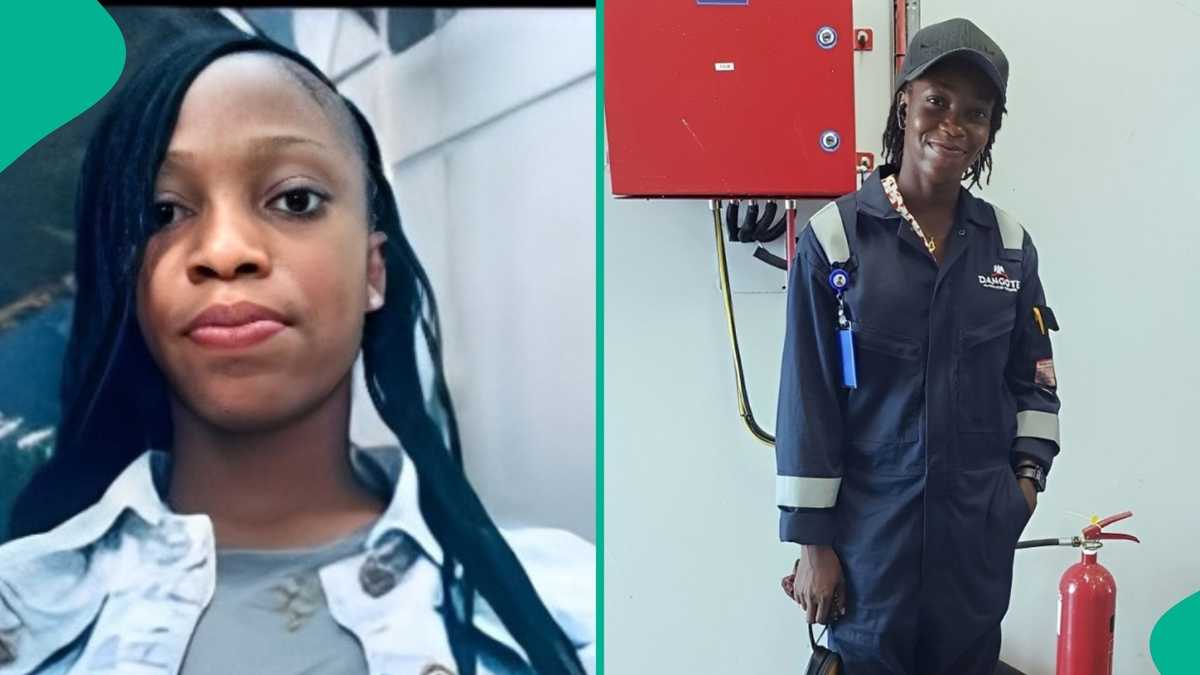
There is a version of Nigeria’s story that rarely makes the front page — not the corruption scandals or the fuel queues, but the quiet, determined young people who study hard, earn their qualifications and then go on to contribute to the very infrastructure their country desperately needs. Cecilia Ejike is one of those people, and her story deserves to be told plainly and without embellishment.
Ejike, a graduate of Lagos State Polytechnic, announced on LinkedIn on 3 October 2026 that she had been appointed as an Electrical Technician at Dangote Petroleum Refinery and Petrochemical FZE, located in the Lekki Free Zone in Lagos. She holds a Higher National Diploma in Electrical Engineering — a qualification that, in a country still prone to dismissing polytechnic graduates as second-tier, has opened the door to one of the most consequential industrial workplaces on the African continent.
Her words on LinkedIn were measured and sincere rather than boastful. “This opportunity means a lot to me,” she wrote, “and I look forward to learning, growing, and continuously improving while contributing positively to my team and the organisation as a whole.” That is not the language of someone chasing clout. It is the language of someone who understands what it took to get here and what it will take to stay.
The Dangote Refinery is not merely a large employer — it is a symbol of what Nigerian industrial ambition can look like when it is backed by capital, will and competent hands. Africa’s largest oil refinery, it has generated thousands of direct and indirect jobs since beginning operations, and its workforce increasingly includes young Nigerian graduates who studied, applied and persisted. Ejike is among them, and that matters beyond the personal milestone.
Her announcement drew a wave of congratulations from her professional network, with colleagues and followers offering warm words and genuine encouragement. The response reflected something real: in a labour market where silence is often the only reply to a job application, a success story lands with particular weight. Ejike’s achievement resonates because so many Nigerians know exactly how hard the road to it can be.
This is not an isolated case. In September 2026, an engineering graduate named Umar publicly described sending out close to a hundred job applications following his NYSC service in early 2025, receiving mostly silence in return and reaching a point where he seriously considered abandoning the search entirely. He too eventually secured a position at the Dangote Refinery. These are not feel-good footnotes — they are data points about what Nigerian graduates are capable of when given a genuine shot, and about what institutions like the Dangote Refinery represent in practical terms for the country’s workforce.
Nigeria’s economic conversation is frequently dominated by macro-level arguments about oil revenues, exchange rates and government policy. Those arguments matter. But so does this: a young woman from a Lagos polytechnic, trained in electrical engineering, now working at the heart of Nigeria’s most ambitious refinery project. The country needs both the policy debate and the Cecilia Ejikes who show up every day and do the technical work. One without the other is just noise.