
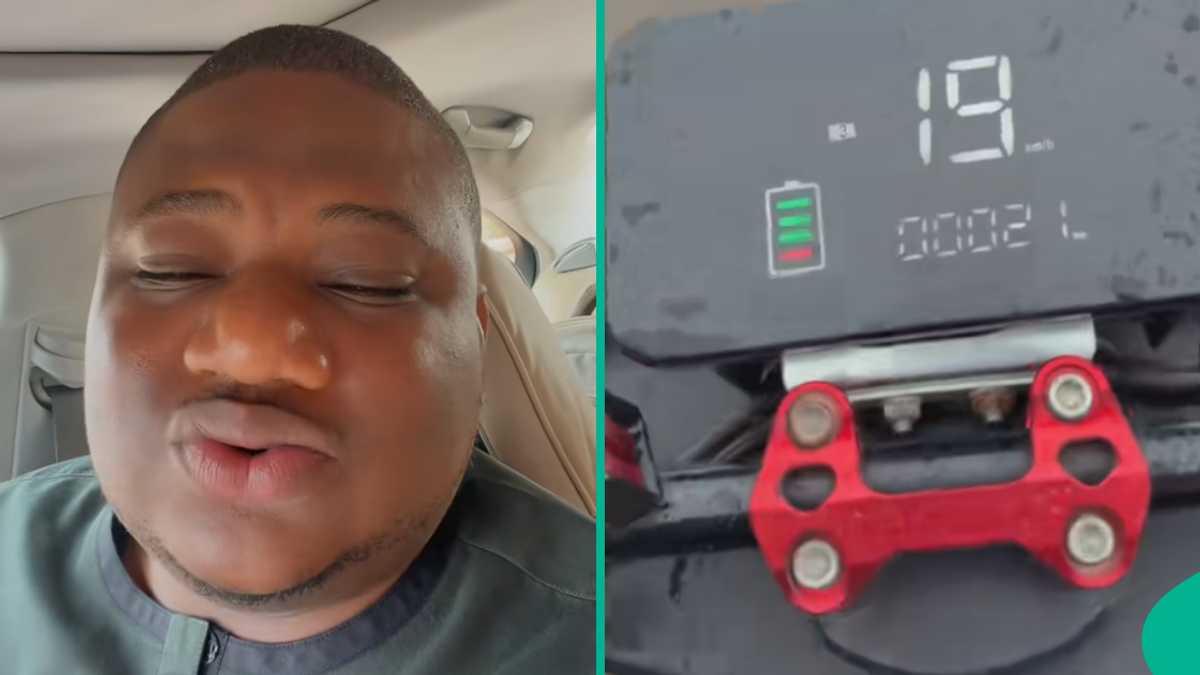
With petrol prices still biting hard across Nigeria, one man has found a way to sidestep the pain at the pump entirely — and he is not keeping it to himself. A TikTok user who goes by Ray posted a video showing off his electric bike and laying out, in plain figures, exactly how much money it has saved him. The response was swift, and the numbers he cited were difficult to ignore.
Ray filmed himself on a rainy morning, riding the bike across what he described as a considerable distance. He pointed out that making the same trip by car would have cost him significantly more in fuel — and that was just one journey. On other days, he said, he covers even greater distances on the bike, making the cumulative savings far more substantial. When he totted up what he would have spent on petrol over a full year of morning commutes, he concluded the figure ran into seven figures in naira. Millions saved, simply by switching how he gets to work.
The bike he uses runs on a battery with a higher capacity than most models currently available on the Nigerian market, where lower-rated options tend to dominate. Ray was clear that not all electric bikes are equal, and he urged anyone thinking of buying one to do their homework before parting with their money. He warned specifically against certain battery variants, advising viewers to be deliberate about which type they choose. His broader message was straightforward: the technology works, but only if you buy the right version of it.
The comments section quickly filled with Nigerians sharing their own experiences. One user, @valentine ikechukwu, said his lithium-powered model could exceed 100 kilometres per hour and even supply power to his home. Another, @SOLAR MAN, reported covering more than 500 kilometres in just two weeks after joining what he called “the crew.” A third commenter, @freeborn, credited Ray’s video directly with persuading him to leave his car behind, noting that his own bike covers 120 kilometres on a single charge.
What makes this story worth paying attention to is not the novelty of electric bikes — they exist in markets across the world — but what it says about how ordinary Nigerians are adapting to an economy where fuel costs have become a genuine burden on daily life. Ray is not a policy analyst or a government spokesperson. He is a commuter who did his own cost-benefit calculation, acted on it, and is now evangelical about the result. In a country where energy self-reliance has become less of an aspiration and more of a survival strategy, that kind of practical ingenuity deserves to be taken seriously. The infrastructure may not yet be there at scale, but the demand clearly is.