
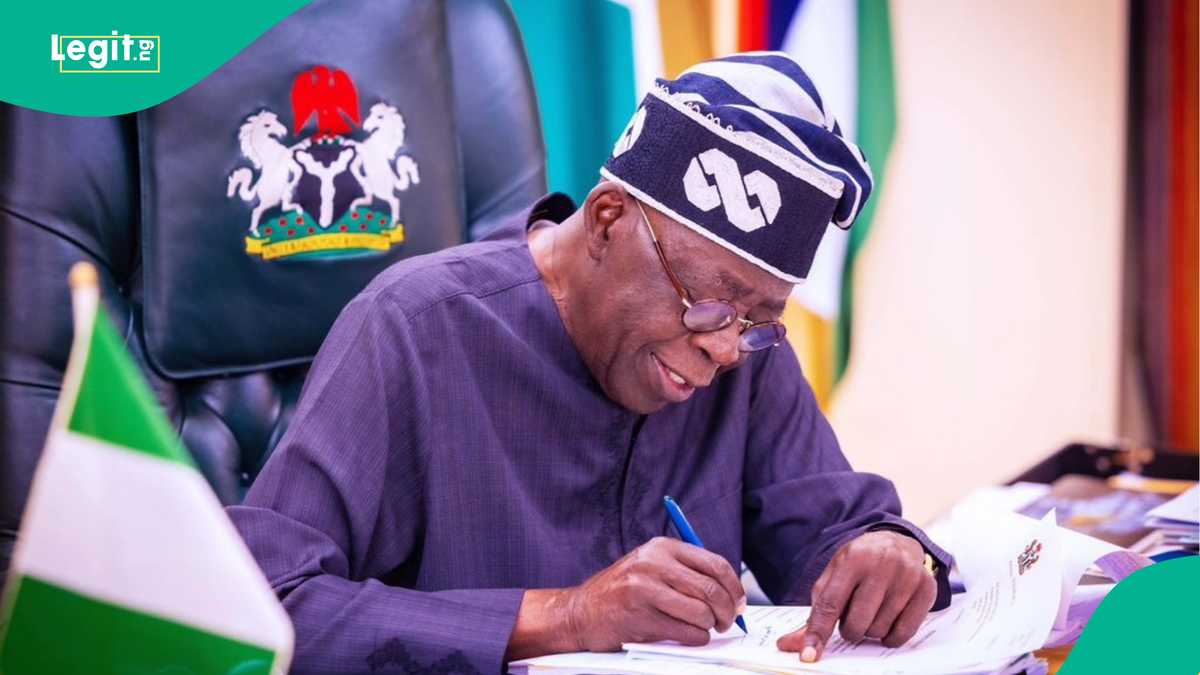
Nigeria’s federal government has, once again, reached for the conversion bill as its instrument of educational reform. President Bola Tinubu signed legislation on Friday, 16 October 2026, transforming the Federal Polytechnic, Kaduna, into the Federal University of Technology and Vocational Studies, Kaduna. The bill was sponsored by House Speaker Tajudeen Abbas, and its passage drew warm praise from lawmakers who framed the move as a landmark moment for technical education in the country.
Daniel Amos, the federal lawmaker representing the Jema’a/Sanga constituency in Kaduna State and chairman of the House of Representatives services committee, was among the most vocal in welcoming the development. He credited Speaker Abbas with demonstrating what he called “purposeful commitment to education and national development,” and described President Tinubu’s assent as a clear signal of the administration’s appetite for human capital reform under its Renewed Hope agenda. The language was effusive, as it tends to be on such occasions — but the substance of the upgrade deserves closer scrutiny than the celebratory statements suggest.
The stated ambitions for the new institution are broad. Amos argued that the upgraded university would reposition technical and vocational education across Nigeria, create stronger pathways for skills development and accelerate national economic growth. He also pointed to expected improvements in research capacity and graduate employability, particularly for students from Kaduna State. These are worthy goals, and few would dispute that Nigeria’s skills gap is real, persistent and economically damaging. The question is whether renaming and reclassifying an institution is sufficient to close it.
Nigeria has a long and instructive history of polytechnic-to-university conversions producing new nameplates without producing new outcomes. Infrastructure, staffing, funding and accreditation do not automatically follow a presidential signature. The House of Representatives has pledged to support the institution’s “smooth take-off,” and Amos signalled that legislative backing would continue beyond the bill-signing ceremony — but goodwill and oversight are not the same thing, and promises of support made in the glow of a signing event have a habit of fading once the cameras leave.
This conversion is not an isolated act. The federal government has been pursuing a broader programme of upgrading polytechnics, and Tinubu’s administration has already approved the conversion of the Federal Polytechnic, Nasarawa, into a specialised university focused on mining and engineering — a move championed by Senator Ahmed Wadada Aliyu, who argued the institution would help unlock Nasarawa State’s considerable solid minerals potential. In that case, Tinubu directed the Federal Ministry of Education and the National Universities Commission to begin the legal processes required to implement the change. The pattern is consistent: a senator or speaker sponsors a bill, the president signs it, lawmakers applaud, and the real work — funding, accreditation, curriculum development, staff recruitment — is left to institutions that are often already under-resourced.
None of this is to say that upgrading polytechnics is wrong in principle. Nigeria genuinely needs more institutions capable of producing graduates with applied technical skills, and a well-resourced university of technology, properly funded and staffed, can make a meaningful contribution to that goal. Kaduna State, with its industrial history and significant population, is a reasonable location for such an institution. But the federal government has a credibility problem when it comes to following through on educational infrastructure commitments, and that problem does not disappear because a new university has been declared into existence by statute.
What the Kaduna conversion ultimately represents is a test of whether this administration’s educational reform agenda is substantive or merely symbolic. The bill has been signed. The institution has a new name and a new mandate. The harder task — ensuring it has the resources, governance and academic rigour to justify that mandate — now falls to the Ministry of Education, the NUC and the legislature that was so quick to celebrate. Nigeria is watching, and so are the students who will one day enrol expecting a university education worthy of the name.