There was a moment midway through the second half, with the ball nestling in Canada’s net for the third time, when the sheer weight of what Morocco were doing became impossible to ignore. The Atlas Lions were not merely winning a football match — they were rewriting African football history, one composed, clinical performance at a time.
Morocco defeated co-hosts Canada 3-0 in their Round of 16 fixture at the 2026 FIFA World Cup, with Azzedine Ounahi scoring twice and Soufiane Rahimi adding a third to seal a result that was, in truth, more comfortable than the scoreline might suggest to those who only glanced at the highlights. Canada pressed high and played with real conviction in the opening exchanges, but Morocco’s patience was forensic. They absorbed the pressure, identified the spaces and punished the co-hosts with a ruthlessness that has become their calling card.
A Landmark No African Nation Has Reached Before
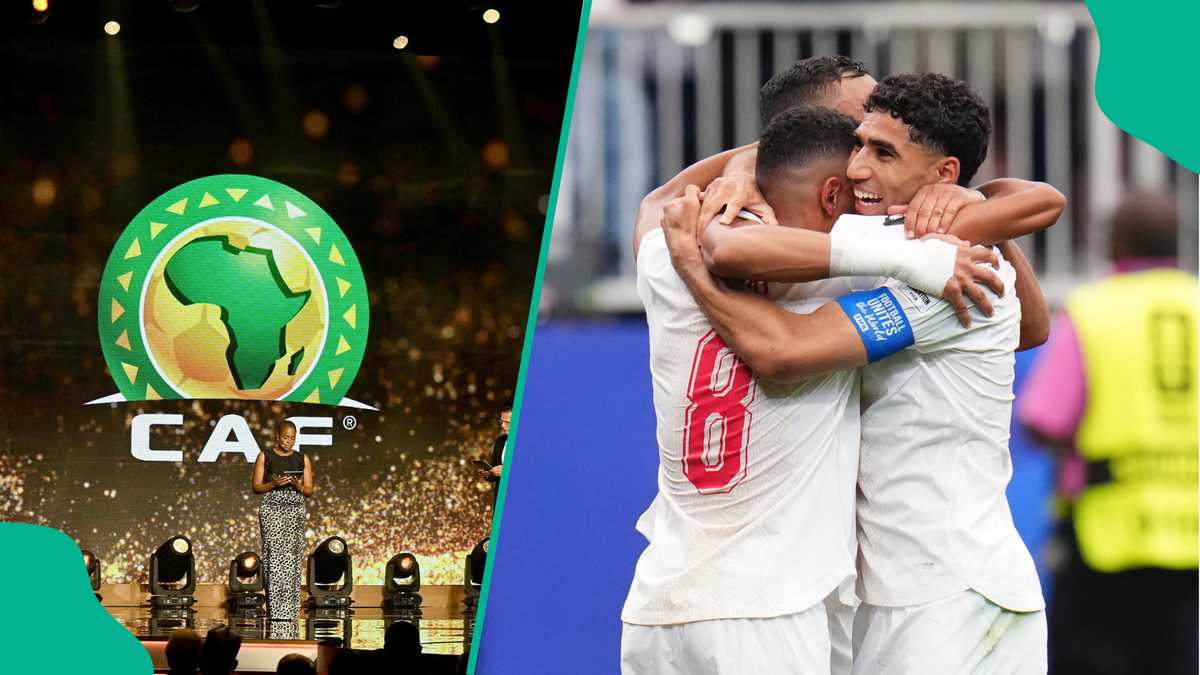
The Confederation of African Football wasted no time marking the occasion. CAF posted a congratulatory message on their official X account, saluting Morocco for becoming the first African nation to reach back-to-back World Cup quarter-finals. The achievement is not a footnote — it is a structural shift in how African football must now be assessed on the global stage. Morocco reached the semi-final in Qatar in 2022, the furthest any African side had ever gone. They now stand on the threshold of matching that milestone, and the football world is paying attention.
What makes this run so striking is the consistency behind it. This is not a fluke built on favourable draws or a single inspired goalkeeper performance. Morocco are organised, tactically disciplined and possess genuine quality across the pitch. They are the product of a coherent footballing project, and the results are speaking for themselves in the most consequential competition on earth.
Canada’s Courage Was Real, But Quality Was the Difference
Canada head coach Jesse Marsch was candid in his assessment after the final whistle, and there was no bitterness in his words — only the honest reckoning of a man who knows his side gave what they had. “They made a couple more plays than us but cranking up the intensity was not the issue,” he told FIFA. “It’s just they have a little bit more quality in the final third and we lacked a bit of ability to make a play when we needed it.” He went further, insisting that Canada were the better side for long stretches of the contest — and he was not wrong. The first half belonged to the hosts in terms of energy and intent. The difference, ultimately, was what Morocco did when it mattered.
Morocco coach Mohamed Ouahbi acknowledged as much, offering Canada genuine respect rather than the hollow platitudes that so often follow big tournament victories. “I have to recognise that Canada were impressive — they played a top match,” he said. “But in the second half we were able to profit from the space they left us — that was the key.” It is worth pausing on that. A World Cup quarter-finalist, reflecting on a 3-0 win, crediting his opponents. That is the mark of a team that knows exactly where it stands and feels no need to inflate its own legend.
What Comes Next — and What Morocco Are Missing
Morocco will face the winner of the Round of 16 tie between France and Paraguay in the quarter-final. It is a fixture that carries enormous weight. France, if they advance, bring the full force of a squad built to win this tournament. Paraguay, should they cause an upset, would represent a different but no less demanding challenge. Either way, Morocco have earned the right to face whoever comes through.
The one shadow hanging over the camp is the injury to Ismael Saibari, who suffered a hamstring problem during the Canada match and will miss the quarter-final. His absence is a blow, but Morocco have demonstrated throughout this tournament that their strength lies in the collective rather than any single individual. They have the depth, the structure and the belief to cope.
Africa’s Stake in This Run
It is also worth stating plainly what Morocco’s continued progress means for the continent. Seven African nations were eliminated in the Round of 32 — a brutal cull that left only Morocco and Egypt to carry the flag into the knockout rounds. Egypt subsequently exited in the Round of 16, leaving Morocco as Africa’s sole representative in the last eight. The pressure that places on them is real, but so is the pride. Every time the Atlas Lions take the field from here, they do so as the standard-bearers for a continent of well over a billion people who understand, better than most, what it means to be taken seriously on the world stage.
Morocco have earned that seriousness. Not through narrative or sentiment, but through results — clean, hard, undeniable results. The quarter-final awaits, and Africa will be watching.