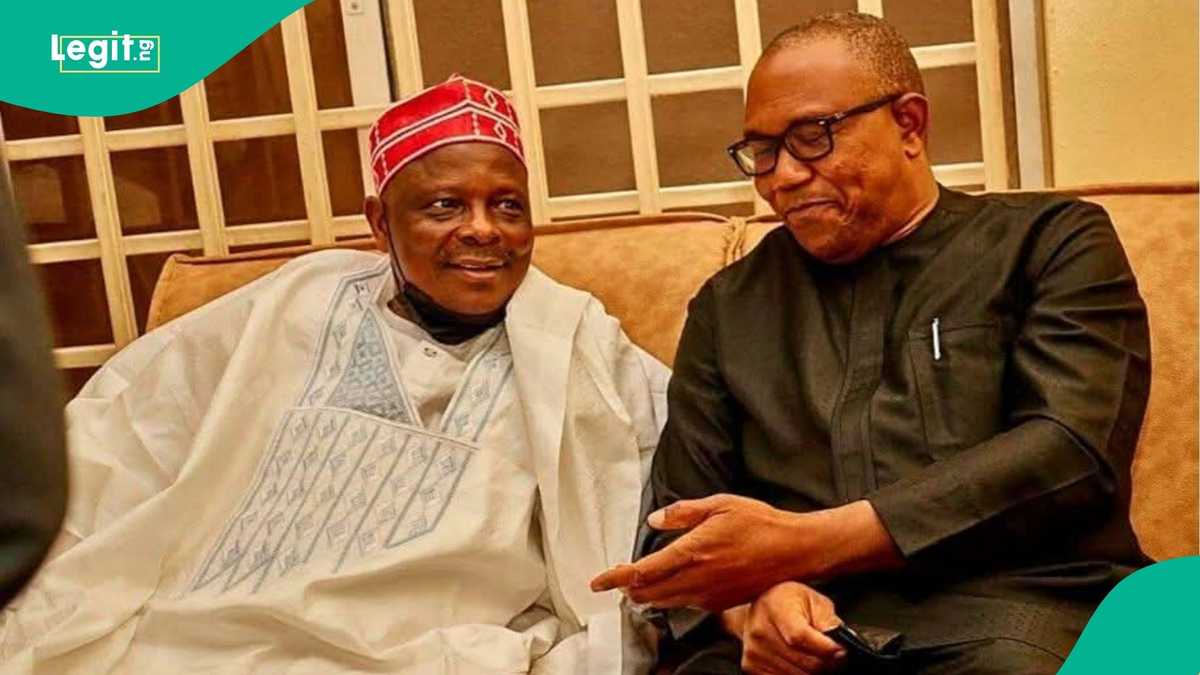
On a Tuesday morning in late September, Rabiu Kwankwaso sat before the cameras at Arise TV and said something that will resonate across petrol queues from Kano to Lagos: “We are bringing subsidy in our own way.” It was a carefully chosen phrase, and it signals where the opposition is heading as the 2027 election campaign takes shape.
Kwankwaso, the vice presidential candidate of the Nigeria Democratic Congress, was speaking about what a government led by Peter Obi would do about fuel prices — one of the most combustible issues in Nigerian politics since President Bola Tinubu uttered those three words at his inauguration on 29 May 2023: “Subsidy is gone.”
A Different Kind of Subsidy
The NDC’s position is not a straightforward call to restore the old subsidy regime. Kwankwaso was explicit that the party intends to approach the problem differently, through direct government investment in refinery infrastructure to increase domestic fuel production and drive prices down to what he described as a “reasonable” level.
“If individuals in this country could build refineries, I see no reason why government, under certain circumstances, will not build a refinery or refineries to the extent that we achieve the minimum requirement,” he told Arise TV.
He pointed to the Dangote refinery as proof that large-scale domestic refining is achievable. The argument is straightforward enough: if the private sector can do it, the state can too. Whether that logic holds in a country with a long history of underperforming public investment is another matter entirely — but as a campaign message, it lands cleanly.
“We, in the NDC, will do whatever it takes, really, to put the price of oil down,” he added.
The Tinubu Critique
Kwankwaso did not spare the President. He acknowledged that Tinubu, Atiku Abubakar and Peter Obi had all campaigned in 2023 on ending the subsidy — he made no attempt to pretend otherwise. His attack was not on the policy itself, but on its execution.
It is a fair point, even if it is politically convenient. Petrol prices surged from below ₦200 per litre to well above ₦500 in many parts of the country within weeks of Tinubu’s announcement. Transport costs followed. Food prices followed. The cost of living climbed sharply for millions of Nigerians who were already stretched thin.
Tinubu addressed the nation in July 2023 and conceded that the removal had raised living costs. He argued, however, that the subsidy had become fiscally unsustainable and that the savings would be redirected to other public priorities. His government has maintained that position since.
The Political Arithmetic of Fuel
What makes Kwankwaso’s remarks particularly significant is the timing. An SBM Intelligence survey found that 67.4 per cent of Nigerians want the petrol subsidy restored. The survey also ranked fuel as the second-most cited national problem and rated the subsidy removal as Tinubu’s worst policy, scoring just 1.69 out of 4.
Atiku Abubakar has already seized on those numbers to push his own 2027 campaign promise of a transparent production subsidy for domestically refined fuel. The opposition is clearly reading the same data and drawing the same conclusion: fuel prices are a wound that has not healed, and voters will remember it.
For the NDC, positioning on this issue is not simply about economics. Kwankwaso was specifically asked whether the party would struggle to campaign in the North-West, where calls for subsidy restoration are particularly loud. His dismissal of that concern was brisk and confident. The message to northern voters is clear: the NDC hears you.
What It Means for 2027
Nigeria’s opposition parties are still in the early stages of shaping their economic arguments for the next election, but the contours are becoming visible. The debate is no longer about whether the subsidy should return — it is about what form any intervention should take and who can be trusted to deliver it without making things worse.
That is a more sophisticated argument than simply promising to reverse Tinubu’s policy, and it reflects a political landscape that has been permanently altered by three years of high prices and squeezed household budgets. Ordinary Nigerians are not interested in ideological positions on market liberalisation. They want to fill their tanks and afford their food.
Kwankwaso’s refinery-investment argument may or may not survive contact with the realities of public finance and project delivery. But it gives the NDC something concrete to campaign on — and in a country where the price of petrol shapes the price of almost everything else, that is not nothing.