
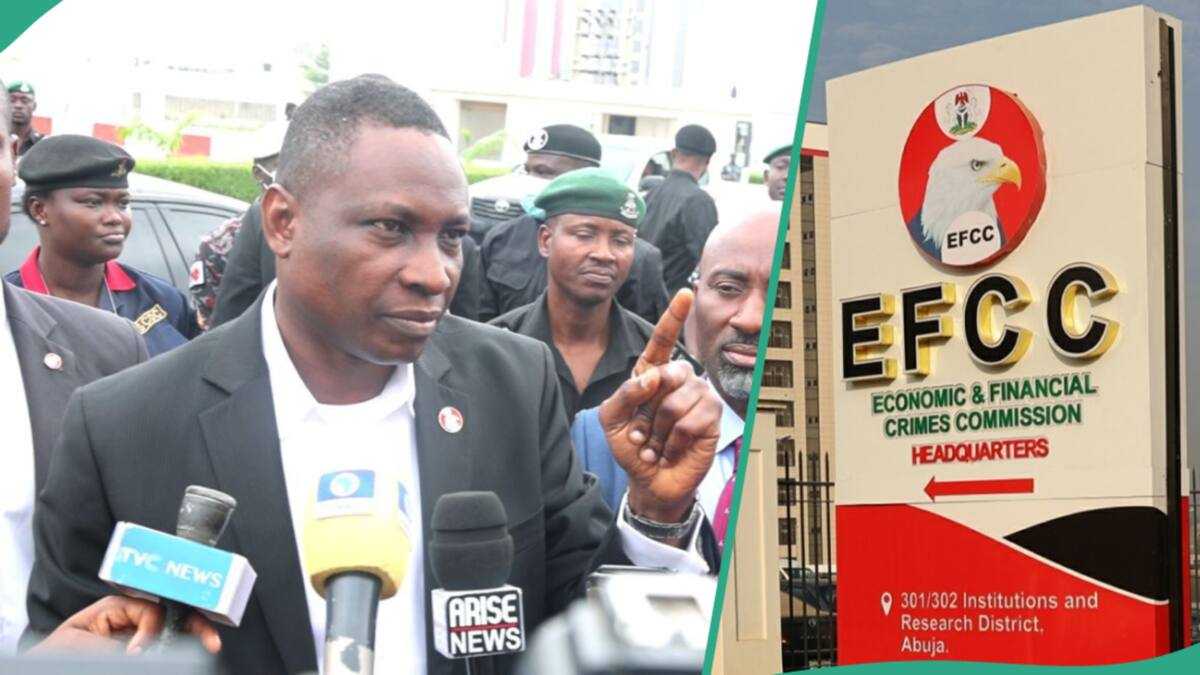
Nigeria’s anti-corruption machinery is grinding through some of the most consequential cases in the country’s recent history. Six former senior public officials — including a central bank governor, an attorney general, a state governor and several ministers — are either standing trial or have already been convicted over allegations totalling more than N394 billion in diverted public funds, fraudulent contracts and money laundering. The sheer scale of what is alleged, and the seniority of those implicated, makes this a defining test of whether Nigeria can hold its most powerful figures genuinely accountable.
The Economic and Financial Crimes Commission (EFCC) is driving the bulk of these prosecutions across multiple federal and FCT high courts. One conviction has already been secured. Forfeiture orders covering assets worth hundreds of billions of naira have been issued. And fresh evidence continues to emerge in several ongoing trials. The question is no longer whether the system can file charges — it is whether it can see these cases through to their conclusions without political interference or procedural collapse.
The Cases in Detail
Ahmed Idris, former Accountant-General of the Federation, was arrested by the EFCC in May 2022 over the alleged diversion of approximately N109.5 billion through fraudulent contracts. He is standing trial on 14 counts before an FCT High Court in Maitama, alongside Geoffrey Akindele, Mohammed Kudu Usman and Gezawa Commodity Market and Exchange Limited. Idris has pleaded not guilty, and proceedings are continuing. The volume of funds allegedly involved — channelled through what the EFCC describes as fictitious contract arrangements — places this among the most serious financial crime cases in the country’s administrative history.
Saleh Mamman, former Minister of Power, is the one name on this list that has already passed through the courts to a verdict. He was convicted on all 12 counts brought against him, relating to the diversion of N33.8 billion connected to the long-delayed Mambilla hydropower project. The court sentenced him to seven years on 10 of the counts, three years on count four and two years on count five. Properties traced to the proceeds of the crime were also ordered forfeited. His conviction is significant precisely because it demonstrates that prosecution can, in fact, end in a sentence — a reminder the other defendants would do well to absorb.
Abubakar Malami, former Attorney General of the Federation, faces a 16-count charge alongside his wife and two sons — Abdulaziz and Abiru Rahman Malami — over alleged money laundering of N8,713,923,759.49. In January 2026, a court ordered the interim forfeiture of 57 properties allegedly linked to Malami and two of his sons, with the EFCC valuing those assets at N213,234,120,000. All defendants deny wrongdoing. The fact that a former chief law officer of the federation now faces prosecution is not without its own pointed irony, and the property forfeiture order — if upheld — would represent one of the largest single asset recoveries in the EFCC’s history.
Godwin Emefiele, former Governor of the Central Bank of Nigeria, faces criminal charges over an alleged N154.39 billion fraud, to which he has pleaded not guilty. In a separate proceeding, a federal high court has already ordered the permanent forfeiture of 753 housing units linked to him to the federal government; the EFCC transferred those duplexes to the Ministry of Housing and Urban Development in 2025. Emefiele’s case is arguably the highest-profile on this list, given the CBN’s central role in the economy and the policy controversies that marked his tenure.
Hadi Sirika, former Minister of Aviation, is on trial over an alleged N8.06 billion contract fraud. The EFCC charged him alongside his brother Ahmad Abubakar and Enginos Nigeria Limited on eight counts, accusing him of awarding contracts worth N19.4 billion to Enginos while serving as minister. Both defendants deny the charges. The case touches on a pattern that Nigerians have grown wearily familiar with — ministers steering public contracts towards entities with personal connections — and the prosecution, if successful, would send a clear signal about the limits of that impunity.
Yahaya Bello, former Governor of Kogi State, is facing a 19-count charge of money laundering involving approximately N80.2 billion in public funds allegedly diverted during his time in office. He is also standing trial on a separate 16-count charge alongside Umar Shuaibu Oricha and Abdulsalami Hudu, covering criminal breach of trust and money laundering involving a further N110.4 billion. In January 2026, the EFCC tendered fresh bank records in the ongoing trial. Bello’s case has attracted particular public attention, not least because of the protracted drama surrounding his initial arrest.
What This Moment Demands
Taken together, these cases represent an extraordinary concentration of prosecutorial effort against individuals who, not long ago, controlled vast levers of Nigerian state power. That is worth acknowledging plainly. The EFCC under Chairman Ola Olukoyede has moved with a degree of institutional confidence that was not always evident in previous administrations of the agency, and Nigeria’s recent exit from the Financial Action Task Force grey list reflects, in part, the credibility those efforts have generated internationally.
But convictions matter more than charges, and speed matters more than fanfare. The Mamman conviction shows that the courts can deliver results when proceedings are managed properly. The other five cases must now be pressed to conclusion with the same rigour — free from the delays, technicalities and political pressures that have historically allowed Nigeria’s most powerful suspects to outlast the legal process. The country is watching, and so, increasingly, is the world.