
A Lead That Dissolved
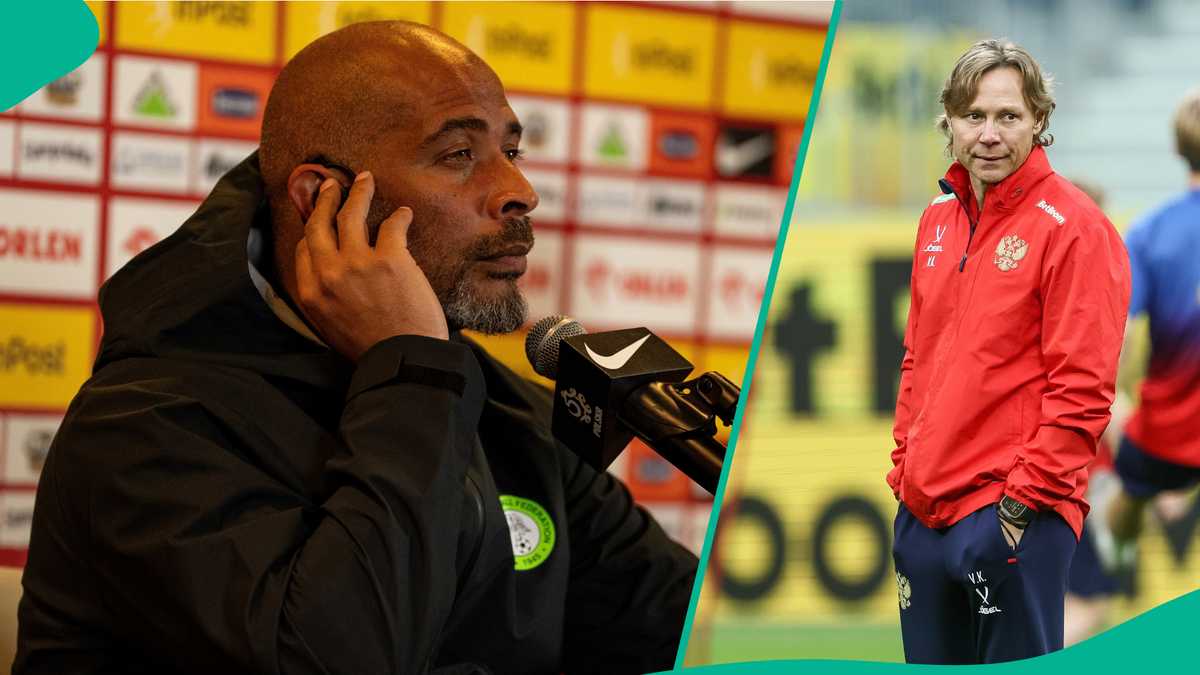
Russia head coach Valery Karpin has flatly rejected Eric Chelle’s claim that tactical adjustments from the Nigeria bench drove the Super Eagles’ dramatic comeback in their 3-3 international friendly draw. The match, played as the two nations met for only the second time, produced one of the more remarkable late recoveries in recent Nigerian football, yet the two managers left the ground with sharply different readings of what actually happened.
Nigeria made the brighter start. Kelechi Iheanacho opened the scoring and gave the Super Eagles early control of the contest, only for Russia to seize the initiative and reel off three goals to lead 3-1. At that point, a comfortable Russian victory looked the likeliest outcome, and few would have argued otherwise. The match appeared to be drifting towards a straightforward result, but two late strikes changed everything.
The Comeback That Sparked the Argument
Substitute Peter Edokpolor pulled one back deep in the second half, and Akor Adams followed to level at 3-3, rescuing a point that had looked well beyond Nigeria’s reach. The recovery was striking, and Chelle wasted no time in taking credit at the post-match press conference. He told journalists, as cited by the Russian Football Union, that he had altered his side’s attacking shape at the interval and that the adjustment proved decisive. “In the second half, we adjusted our attacking play slightly, and it worked,” Chelle said. “We managed to score twice in the final minutes to tie the game.”
It was a reasonable claim to make after such a turnaround, and coaches routinely point to their half-time instructions when results swing in their favour. Karpin, however, was having none of it.
Karpin Hits Back Without Ceremony
The Russian head coach was direct and unsparing when asked about Chelle’s remarks at his own post-match briefing. “What tactical changes?” Karpin replied. “He fielded different players, and that was it. What other tactical changes were there?” The response left little room for diplomatic ambiguity — Karpin was not prepared to credit the Nigerian bench with engineering the collapse that cost his side two points.
Instead, Karpin turned the lens squarely on his own players and their defensive errors. He described Russia’s concession of the equalising goals as accidental rather than the product of any Nigerian ingenuity. “It was an accident. Absolutely. The first goal, it was clear what happened. The episode with the third goal was quite strange,” he said. In Karpin’s reading, Russia handed the game away rather than Nigeria taking it — a distinction that matters considerably when assessing where the blame truly lies.
Youth on Show, Questions for Chelle
Nigeria’s squad for the fixture was notably young and makeshift. Chelle had fielded a side shorn of most senior players, who either withdrew through injury or were withheld by their clubs. The result was a youthful lineup that performed with enough resilience to earn a share of the spoils, and Chelle acknowledged afterwards that several of the Under-23 players had done enough to put themselves in contention for the full senior squad. It was a silver lining from a game that could easily have ended in defeat.
The 3-3 result follows a 1-1 draw between the same two nations in June 2025, making it two meetings and two draws. Whether the debate over who deserves credit for Nigeria’s late recovery will linger beyond a news cycle is doubtful, but Karpin’s refusal to accept Chelle’s narrative is itself instructive. Russia’s coach is essentially admitting that his side’s own defensive frailty, not any tactical brilliance from the opposing dugout, gifted Nigeria their comeback — and in doing so, he may have offered Chelle’s young squad more of a compliment than he intended.