
On a Tuesday morning in August, a civil society statement landed quietly in Abuja newsrooms. No fanfare, no press conference — just a measured assessment from the Centre for Social Justice, Equity and Transparency, known as CESJET, commending the federal government for what it described as measurable progress in Nigeria’s long and painful fight against terrorism. The statement pointed to Washington, to courtrooms, and to the bush — three theatres where, its authors argued, something was finally beginning to shift.
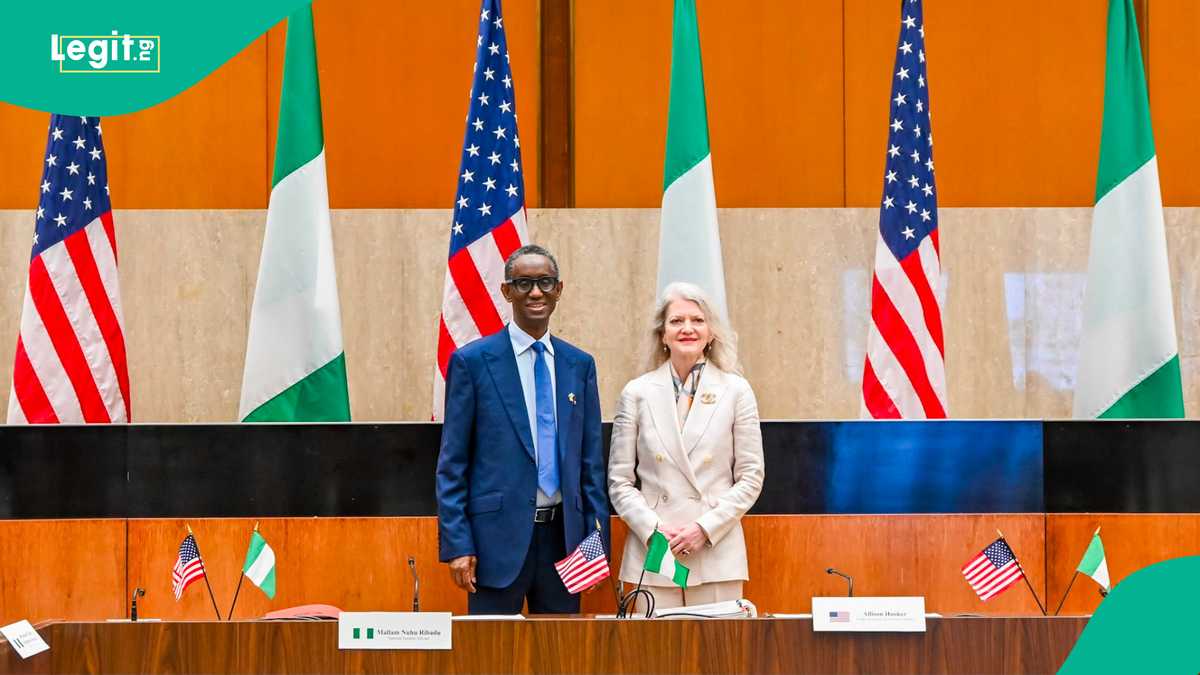
The backdrop matters. Nigeria remains on the United States’ list of Countries of Particular Concern — a designation that carries diplomatic weight and reflects Washington’s documented unease over the treatment of religious communities, particularly Christians in the Middle Belt. It was against that uncomfortable context that the second session of the US-Nigeria Joint Working Group convened on 12 August in Washington, hosted by US Under Secretary of State for Political Affairs Allison Hooker. National Security Adviser Nuhu Ribadu led the Nigerian side.
What came out of that room, according to CESJET’s executive director Comrade Charles Abakpa, was more than the usual diplomatic choreography. The discussions moved, the group said, “from diplomatic concerns to practical cooperation on intelligence, counter-terrorism, accountability and protection of vulnerable communities.” That is a meaningful distinction. Nigeria has attended plenty of international security forums over the years and returned home with little to show for them. The question, as always, is whether this time is different.
CESJET believes it might be. The organisation pointed to Chief of Defence Staff General Olufemi Oluyede as a key figure in reshaping how Nigeria’s armed forces operate together, crediting him with improving coordination across services. “The fight against terrorism cannot be won by one service acting alone,” the group stated. “The growing integration of intelligence, air power, ground operations and other security capabilities is critical to degrading terrorist networks and protecting communities.” That is not a controversial observation — it is simply true, and for too long Nigeria’s security architecture has struggled to act on it.
The prosecution figures are striking. In April, a new phase of terrorism trials commenced involving more than 500 suspects. Hundreds of convictions have already been recorded. Military operational reports from a single month showed troops neutralising 317 terrorists and criminal elements, arresting 314 suspects, and rescuing 221 kidnapped civilians. These are not trivial numbers. They represent real operations, real courtrooms, and — for those 221 people — real lives pulled back from catastrophe.
None of this, though, means the job is done.
CESJET was careful to say so. “Security gains must ultimately be measured by the safety of ordinary Nigerians,” the organisation warned. “The government must sustain the momentum, protect civilians and ensure that perpetrators of violence, regardless of their affiliation, are brought to justice.” That final clause — regardless of their affiliation — carries its own quiet force. Accountability in Nigeria has historically been selective. If this prosecution drive is to mean anything lasting, it cannot be.
The group also raised the question of internally displaced persons, welcoming ongoing discussions about resettling communities that have been driven from their homes by years of violence. Safe, sustainable returns are a concrete test of whether security improvements are real or merely statistical. People vote with their feet. When displaced Nigerians begin going home in significant numbers, that will be a more honest measure of progress than any press release.
On the diplomatic front, Ribadu’s Washington visit extended beyond the joint working group. He held separate high-level talks with US Vice President J.D. Vance and Secretary of State Marco Rubio, focusing on counter-terrorism cooperation across West Africa — a region under mounting pressure from jihadist groups pushing southward from the Sahel. Nigeria, as the region’s largest country and economy, cannot afford to be a passive actor in that fight.
CESJET’s position is clear: deepen the partnership with the United States, but keep Nigeria firmly in control of its own security response. That is the right instinct. Foreign partnerships are tools, not substitutes for sovereign will. Nigeria’s security crisis was not created in Washington, and it will not be solved there. What Washington can offer — intelligence sharing, military cooperation, diplomatic pressure — is valuable, but the hard work happens here, in the courts, in the field, and in communities that have been waiting far too long for the state to show up and mean it.