
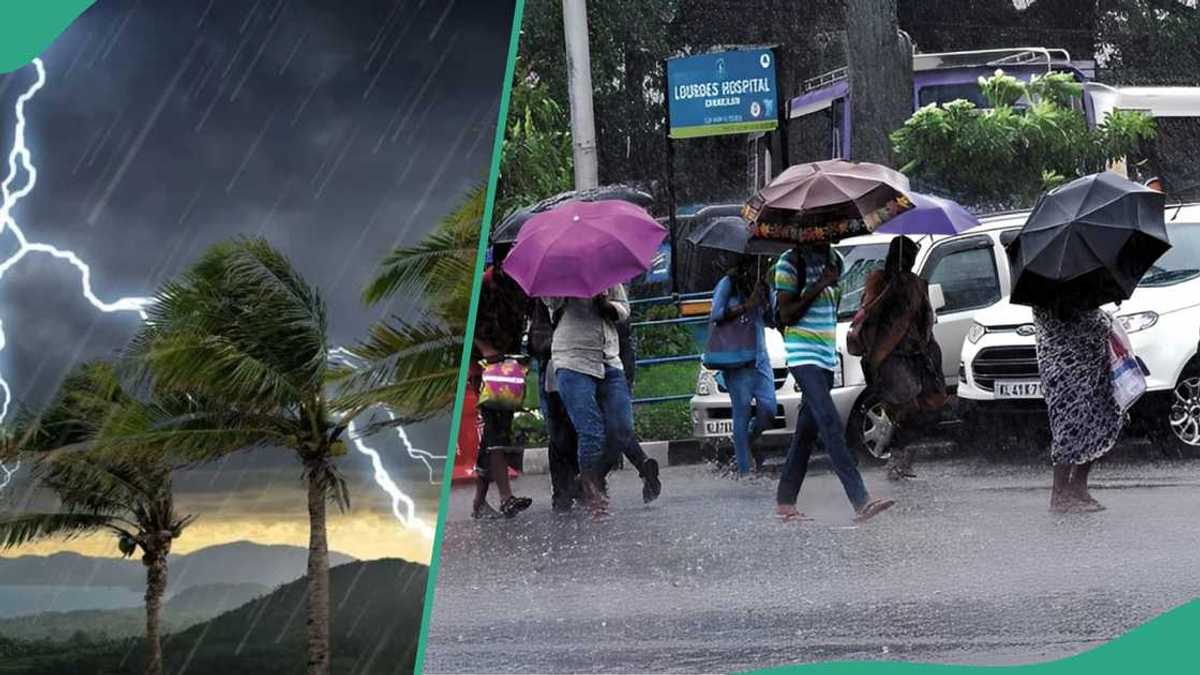
Nigeria is in the path of a fast-moving storm system. The Nigerian Meteorological Agency issued a severe thunderstorm alert at 4:00 p.m. on Monday, 14 September 2026, warning that dangerous weather conditions were already tearing through eight northern states and would reach 26 states and the Federal Capital Territory within one to six hours.
At the moment NiMet published the alert on its official X page, active thunderstorms had already been recorded over Borno, Yobe, Adamawa, Taraba, Plateau, Kano, Jigawa and Kaduna. The system is tracking westward, and its reach is considerable. States in its projected path span the full breadth of the country — from the far north to the Niger Delta coast — taking in Kano, Gombe, Bauchi, Jigawa, Kaduna, Katsina, Zamfara, Kebbi, Sokoto, Plateau, the FCT, Niger, Nasarawa, Kogi, Benue, Enugu, Abia, Imo, Delta, Bayelsa, Anambra, Ebonyi, Rivers, Cross River and Akwa Ibom.
The agency described the primary features of the incoming weather as strong winds ahead of rainfall, moderate to heavy precipitation and frequent lightning strikes. That combination alone is enough to cause serious disruption. But NiMet went further, flagging a set of secondary hazards that residents and authorities cannot afford to ignore.
Flash flooding in low-lying and flood-prone areas is a real and immediate risk. Falling tree branches and loose objects displaced by wind add to the danger on the ground. Power disruptions and electrical hazards are expected, as are reduced visibility and slippery road surfaces — a lethal combination for motorists who underestimate wet-weather driving. Farmers face a specific threat: fields where fertilisers or pesticides have recently been applied could lose those nutrients as heavy rain washes through the topsoil, undermining harvests that communities depend on.
NiMet’s guidance to the public is practical and worth heeding. Loose items left outdoors should be secured before the storms arrive. Motorists are advised to reduce speed during rainfall and to avoid driving through flooded roads entirely — a caution that experience shows too many Nigerians disregard until it is too late. Electrical appliances should be unplugged from sockets during thunderstorms, and people are urged to keep well away from tall trees and structurally weak buildings. Airline operators received a separate advisory, with NiMet urging them to obtain airport-specific weather reports to support safe flight planning.
The alert sits within a broader picture of flood risk building across Nigeria this season. Earlier warnings flagged the imminent release of water from the Lagdo Dam in Cameroon, prompting the federal government to put 11 downstream states on notice. The National Emergency Management Agency has been conducting flood simulation exercises in Adamawa state — a sign, at least, that preparedness is being taken more seriously than in previous years. NEMA Director-General Zubaida Umar noted that Nigeria can no longer afford to wait for disasters to strike before acting. Monday’s NiMet alert is a test of whether that posture holds in practice. Residents across the affected states should treat this warning as exactly what it is: urgent, credible and not to be dismissed.