
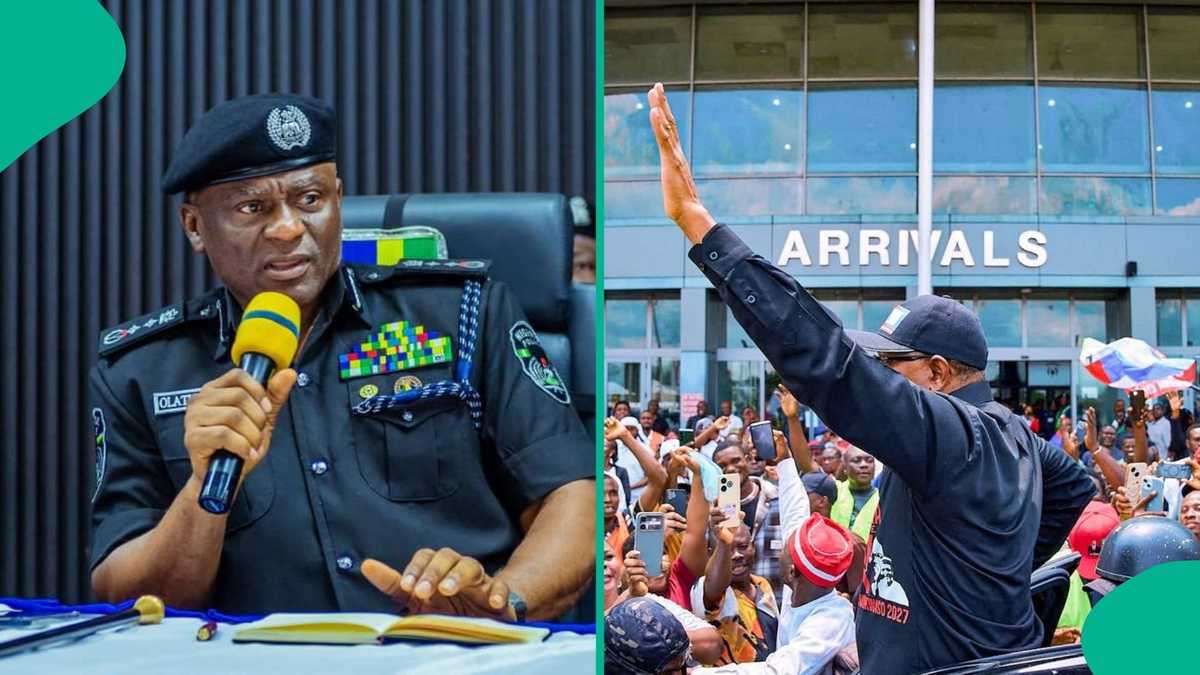
There is something deeply telling about a political movement spending over ₦20 million to mobilise supporters across 31 local government areas, only to be told — hours before the event — that permission has been revoked. That is precisely what happened to the Akwa Ibom State chapter of the Obidient Movement on the eve of Nigeria’s Independence Day, and the episode raises questions that go well beyond a cancelled march.
The movement had planned a two million-man solidarity march in Uyo on 1 October 2026, organised in support of Peter Obi, the presidential candidate of the New Nigeria Democratic Congress, and his running mate, Rabiu Kwankwaso. By all accounts, the event had gone through the proper channels. Approval had been granted. Logistics had been arranged. Supporters from across the state had been mobilised, transported and readied. Then, on 30 September, the Akwa Ibom State Commissioner of Police, CP Baba Azare, issued a blanket directive ordering all political parties, groups and associations to reschedule any activities previously approved for Independence Day.
The stated justification was credible intelligence suggesting that unnamed individuals planned to exploit the gatherings to cause civil unrest. Police Public Relations Officer DSP Timfon John confirmed the directive in a statement circulated to journalists in Uyo. The language was careful and procedural, as these things always are. But the timing was not.
That timing is exactly what the Obidient Movement finds indefensible. Speaking at a press conference in Uyo on Thursday, Benjamin Smith, the state director of the movement, said the reversal amounted to an afterthought — and a costly one. He placed the movement’s financial losses from the cancellation at more than ₦20 million, money spent on logistics, communications and mobilisation efforts across all 31 local government areas before the directive landed. Smith also revealed that movement representatives, including the state party chairman, the director of media for the march and the head of event security, had attended a formal meeting with police on 29 September — the very day before the ban. During that meeting, CP Azare reportedly told them the Nigeria Police Force lacked sufficient personnel to secure two million people on the streets of Uyo, particularly given that the PDP had already received approval to hold its own rally from 1 to 3 October, raising fears of clashes between rival supporters.
That explanation, however reasonable it might sound on its face, does not sit comfortably with the sequence of events. If manpower limitations and rival rally concerns were foreseeable — and they surely were — why was approval granted in the first place? Why were those concerns not raised before the movement had committed millions of naira to the exercise? These are not rhetorical questions. They deserve direct answers from the police command.
Smith was unsparing in his assessment. Flanked by Obidient Movement officials and NDC chieftains, he accused the police of violating both the Police Act and the Nigerian Constitution, which guarantees freedom of assembly. “Without the Constitution of Nigeria and laws,” he said, “we are just a banana republic.” It is a blunt statement, but not an unfair one given the circumstances. The right to peaceful assembly is not a privilege dispensed at the discretion of a commissioner of police. It is a constitutional guarantee, and last-minute reversals of lawfully granted permissions — whatever the intelligence cited — demand a far higher standard of transparency and justification than was offered here.
The movement has vowed to resist any further cancellations and promised to announce a new date in due course, urging supporters to remain law-abiding in the interim. Whether that patience holds, and whether the authorities will handle any rescheduled event with greater consistency, remains to be seen.
What is already clear is the broader pattern this incident fits into. Political movements in Nigeria — particularly those operating outside the two dominant parties — frequently encounter institutional friction that their better-connected rivals do not. Whether that friction is deliberate or merely the product of a stretched and under-resourced police force is a question only the evidence can answer. But when a movement loses over ₦20 million because of a last-minute ban, and when the ban arrives hours after a formal police meeting at which no such ban was signalled, the burden of explanation rests squarely with the authorities. Nigerians deserve to know whether their constitutional rights are being protected or managed.