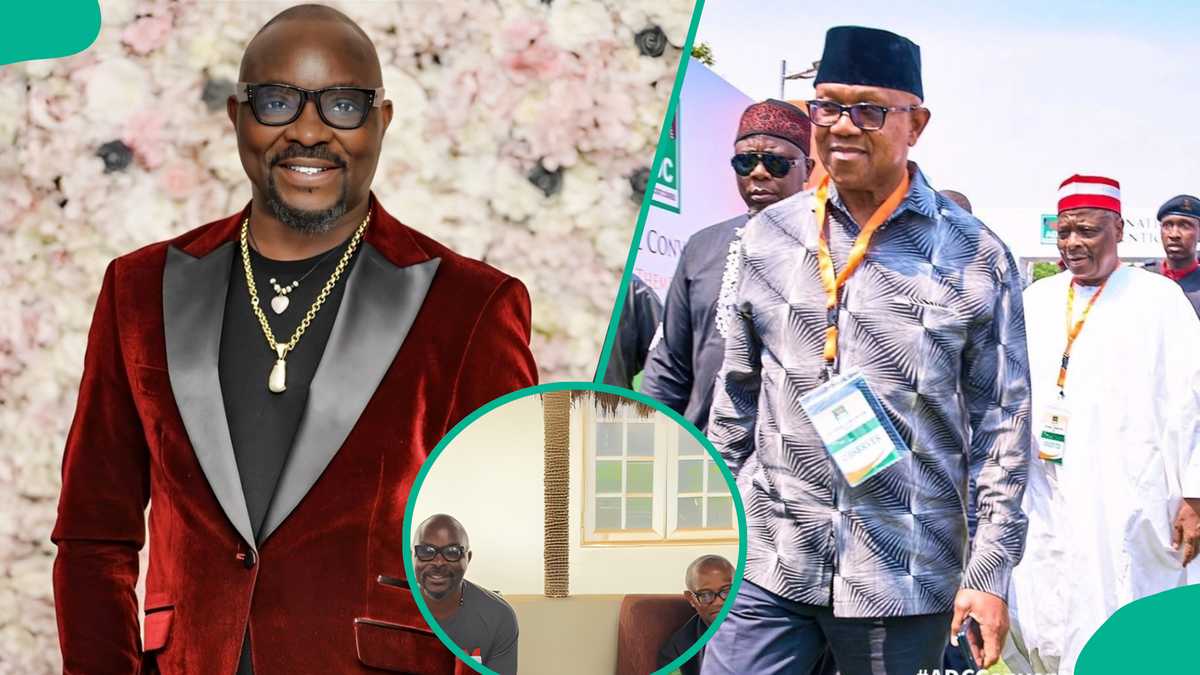
Peter Obi, the Labour Party presidential candidate and former Anambra governor, paid a personal visit to businessman and social media personality Isaac Fayose on Friday, 17 April 2025, days after Fayose publicly called him out over the conduct of his 2023 presidential campaign. Fayose shared footage of the encounter on his Instagram page, and the video spread rapidly across Nigerian social media, drawing a sharp mix of admiration and scepticism.
The visit came against a backdrop of online tension. Fayose had drawn the ire of Obidients — the label adopted by Obi’s most vocal online supporters — after he was photographed in the company of Seyi Tinubu. Rather than offer an apology, Fayose pushed back at his critics and challenged them to examine where their loyalties actually lay. That defiance caught considerable attention, and it appears Obi decided to respond not with a statement, but with a personal appearance.
A Show of Respect
In the video, the two men sit together in what appears to be an informal, relaxed setting. Fayose wasted little time making his position clear, telling Obi directly that he remained 100% Obidient and hailing him as Nigeria’s incoming president. The declaration was unequivocal.
Obi received the words with his characteristic composure. Rather than revisiting the controversy, he turned the conversation towards the kind of leadership he says he aspires to embody, telling Fayose that if he ever falls short or stops doing the right thing, Fayose should hold him to account. He went further still, stating plainly that any leader who believes he already knows everything is simply an idiot — a remark that landed with some force given the circumstances.
The visit appeared, at least on the surface, to draw a line under the public friction between Fayose and Obi’s online base.
A Divided Public Reaction
Responses to the video were immediate and sharply divided. Some viewers praised Obi for showing the humility and strategic intelligence they expect of a serious presidential contender. One user, @olapholawears, wrote that Obi had “quenched” the controversy with the visit and urged supporters to focus on ideology rather than tribal sentiment. Another, @babainno4, took a broader view, arguing that no public figure should be above constructive criticism and that holding leaders accountable is every citizen’s responsibility.
Not everyone was impressed. @ossaioviesuccess dismissed the visit as a wasted exercise, arguing that Fayose, whatever his social media presence, cannot deliver a single polling unit for Obi in Ekiti State. The comment cut to a genuine strategic question: whether Obi’s campaign is investing too much in online visibility and too little in the ground-level political machinery that actually moves votes on election day.
Others kept their distance from the politics altogether. @dkokopee simply noted that, political considerations aside, Fayose remains a respected mentor in real estate and business circles — a reminder that the man occupies more than one lane in public life.
Fayose’s Wider Political Positioning
The episode adds a fresh layer to Fayose’s increasingly prominent role in Nigerian political commentary. He has previously used his platform to weigh in on state-level politics, including in Abia State, where he publicly backed Governor Alex Otti and warned residents not to allow what he called the “Egyptians they saw before” — a pointed reference to former governors — to reclaim power in the state.
Whether Friday’s meeting amounts to a genuine rapprochement or simply good content for both men’s audiences remains an open question. What is clear is that the encounter has forced a conversation about the limits of online activism, the nature of political loyalty, and what it actually takes to build a winning coalition in Nigeria.